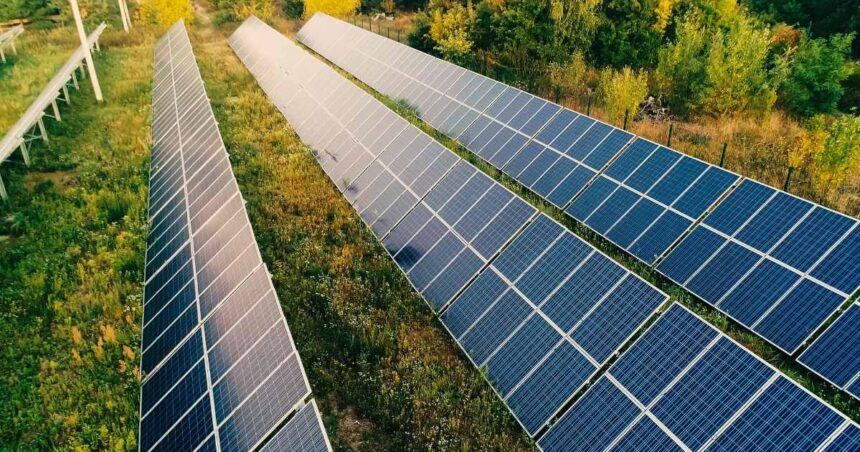
In an effort to drive rural electrification through renewable power, the Federal Government has restated its commitment to expand electricity access through solar energy across Nigeria.
Minister of Power, Joseph Tegbe, announced this in Abuja. He spoke at the launch of the Africa Mini-grids Programme (AMP).
The United Nations Development Programme (UNDP) runs the initiative with the Rural Electrification Agency (REA). In the first phase, the programme will deploy 23 solar mini-grids. These systems will serve about 50,000 households nationwide.
Tegbe said the government now treats solar power as a core energy source. Previously, authorities viewed it as a backup option.
However, that position has changed. Renewable energy now forms part of Nigeria’s main power structure. It sits alongside hydro and wind energy.
“Renewable energy is not an alternative source of power,” he said. “It is part of our national power architecture.”
In addition, he disclosed that Nigeria now operates a 200-megawatt solar farm. According to him, this marks a major step in clean energy deployment.
Tegbe explained that the programme focuses on communities without access to the national grid. These areas lack transmission lines and distribution infrastructure.
As a result, the government will deploy solar mini-grids. These systems will supply electricity directly to homes and businesses.
Furthermore, they will support schools, hospitals and small enterprises. This approach will improve services in rural communities.
Importantly, he said the government will match energy solutions to local needs. This strategy will ensure efficient deployment across regions.
Meanwhile, Managing Director of REA, Aliyu Abba, said electricity access drives economic productivity. He explained that energy and development must work together.
He noted that the programme blends public funding with private investment. Consequently, it will accelerate rural electrification.
Many rural communities remain underdeveloped due to poor electricity supply. Therefore, solar mini-grids will help unlock their economic potential.
In particular, small businesses will benefit from stable power supply. Over time, this will also create jobs and improve incomes.
Similarly, UN Resident and Humanitarian Coordinator, Mohamed Malick Fall, stressed the importance of clean energy. He said it is essential for sustainable development.
Electricity, he noted, powers hospitals, schools and businesses. In addition, it strengthens local economies.
“Energy is not just about electricity,” he said. “It powers hospitals, schools and businesses.”
Moreover, he added that energy access creates jobs for young people. It also supports long-term economic growth across communities.
Overall, the Africa Mini-grids Programme forms part of Nigeria’s broader energy transition plan. It aims to close the electricity access gap using renewable energy.
The first phase will reach about 50,000 households. Eventually, the government hopes to scale the programme nationwide.
Meanwhile, officials say the initiative will reduce dependence on diesel generators. In turn, it will improve living standards in rural areas.
Finally, stakeholders argue that the programme represents a key step toward sustainable and inclusive energy access in Nigeria.