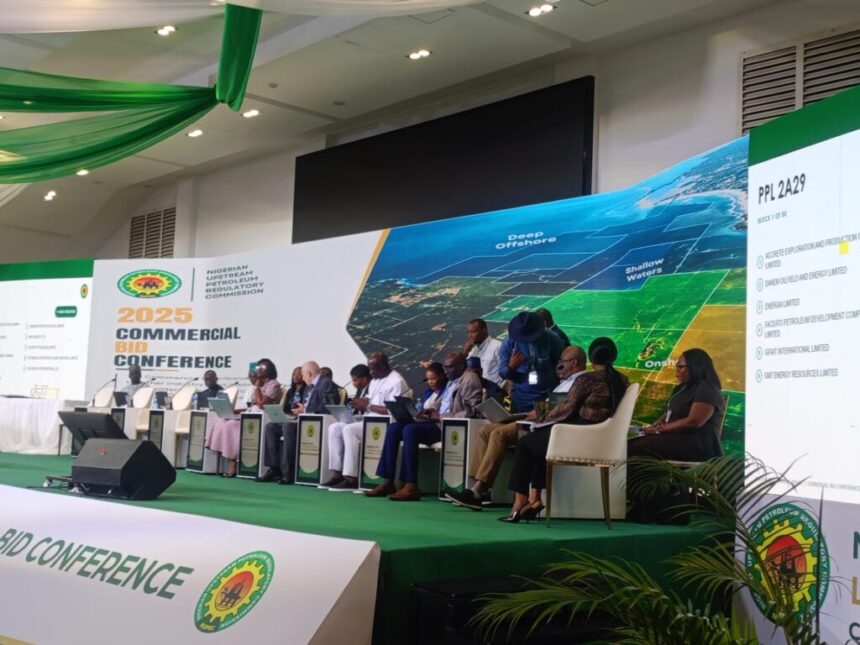
Nigeria is expecting between $30 billion and $50 billion in fresh investment in its upstream oil and gas sector, as 22 major offshore projects are projected to commence between now and 2030.
The expected investment is part of a broader expansion in Africa’s oil and gas industry, with countries across the continent increasing spending on crude production, pipelines, terminals and liquefied natural gas (LNG) infrastructure.
The Chief Executive Officer of the Nigerian Upstream Petroleum Regulatory Commission (NUPRC), Oritsemeyiwa Eyesan, disclosed the projection at the Society of Petroleum Engineers’ annual conference in Lagos.
Eyesan said the NUPRC had approved more than $57 billion in Field Development Plans (FDPs) since 2024, with some of the projects already progressing towards Final Investment Decisions.
“Since 2024, the NUPRC has approved over US$57 billion in field development plan(s) (FDPs), some of which have translated to final investment decisions,” Eyesan said.
The anticipated investment in Nigeria comes amid a wider surge in energy-sector investment across Africa.
Industrial Info Resources (IIR), which tracks energy projects across the continent, said more than 800 active capital projects covering oil and gas production, pipelines and terminals are currently under development in Africa.
The projects have a combined investment value exceeding $221 billion, according to the research firm.
Gordon Gorrie, Senior Vice President of Research, Oil & Gas, at Industrial Info Resources, said the investment drive was not limited to Nigeria.
He said growing energy-security concerns were encouraging African countries to expand investment across the oil and gas value chain, including production, midstream infrastructure and export facilities.
According to Gorrie, the next 12 to 18 months will be crucial for major oil and gas projects across Africa, with several sanctioned but delayed upstream and LNG developments expected to move towards first production.
Offshore oil and LNG projects attract major investments
Much of the expected investment is concentrated in offshore oil developments, alongside new LNG liquefaction capacity.
Gorrie said uncertainties in global energy markets were also increasing international interest in African LNG as buyers sought alternatives to supplies from the Middle East.
In Mozambique, TotalEnergies has restarted construction of its 12.9 million-tonne-per-annum Mozambique LNG project, which is scheduled for completion in 2030.
ExxonMobil is also targeting a Final Investment Decision in 2026 for the 18-MTPA Rovuma LNG project in Mozambique, according to Industrial Info Resources.
The project, which began in 2017, was delayed by the COVID-19 pandemic before a restart was announced in June.
Nigeria remains Africa’s leading oil producer
Across Africa, oil and gas investment is projected at about $41 billion in 2026, while crude oil production is expected to reach approximately 11.4 million barrels per day, according to Gorrie.
Nigeria remains the continent’s leading oil producer, with crude production rising to 1.71 million barrels per day between April 2025 and April 2026.
The management of the Nigerian National Petroleum Company Limited (NNPCL) has also said Nigeria could increase crude production by another 100,000 barrels per day by the end of 2026.
The additional output is expected to partly compensate for production disruptions linked to tensions around the Strait of Hormuz.
Bonga South West/Aparo project gains momentum
One of Nigeria’s major deepwater developments is Shell Plc’s Bonga South West/Aparo project, which has gained renewed momentum following fiscal incentives and government support under President Bola Ahmed Tinubu.
The project is expected to produce approximately 150,000 barrels of crude oil per day when completed.
The anticipated wave of investment could strengthen Nigeria’s crude production capacity, improve supporting infrastructure, generate additional government revenue and contribute to the country’s energy security.
However, the delivery of the projects will depend on sustained regulatory certainty, investor confidence and the timely development of supporting infrastructure.
For Nigeria, the planned offshore developments could represent a significant opportunity to attract long-term capital into the oil and gas sector and reverse years of declining investment in upstream projects.