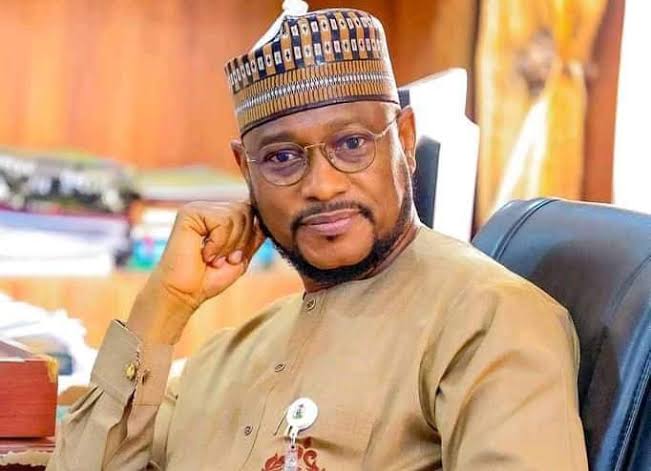
Zamfara State Governor, Dauda Lawal, has called on the Federal Government to suspend the creation of additional states, arguing that attention should instead be focused on strengthening Nigeria’s existing 36 states.
Lawal made the call in Gusau during an interaction with media executives as part of activities marking the 30th anniversary of Zamfara State.
The governor said the financial difficulties confronting many states had made it necessary for policymakers to reconsider whether creating additional states would deliver the administrative and developmental benefits being sought by proponents.
According to him, several existing states are already struggling to function effectively because of limited financial resources, making further fragmentation potentially unsustainable.
“Having realised the financial challenges, even the states that have already been created now find it very difficult to function effectively because of finances,” Lawal said.
He acknowledged that state creation had historically brought government closer to communities, while also stimulating employment, urbanisation and economic activity.
However, the governor argued that the current economic realities require a different approach.
“So, I think it is something we need to really think through before we begin to agitate for the creation of additional states,” he said.
Lawal’s position comes amid the ongoing constitutional review process of the National Assembly, where demands for the creation of new states have featured prominently.
The House of Representatives’ constitutional review process received 56 requests for the creation of new states across Nigeria’s six geopolitical zones.
However, the proposals face stringent constitutional requirements before any new state can be established.
Section 8 of the 1999 Constitution prescribes a detailed process for state creation, including support from affected federal and state legislators, local government councils and a referendum involving the affected communities.
The Zamfara governor therefore urged policymakers to prioritise the financial and administrative viability of the existing states before considering further restructuring.
“But for me, for now, I think we need to put it on hold and let the existing states function effectively,” Lawal said.
Despite his opposition to the immediate creation of additional states, Lawal acknowledged the benefits Zamfara has derived from its establishment.
Zamfara was created from the old Sokoto State in October 1996 by the military administration of the late General Sani Abacha, with Gusau as its capital.
The governor said the creation of the state brought government institutions closer to communities that previously operated from the periphery of the old Sokoto State.
He said the development had contributed to employment generation, urban development and improved access to government institutions, although significant challenges remained.
Lawal attributed part of Zamfara’s development trajectory to differences in leadership approaches adopted by successive administrations.
He said his administration was working to address longstanding deficits in infrastructure, education, healthcare and agriculture while taking advantage of the state’s economic potential.
The governor said his administration’s “Rescue Mission” was anchored on six priority areas: security, education, healthcare, agriculture, infrastructure and human development.
He claimed that implementation of the agenda had reached between 60 and 70 per cent.
Beyond agriculture, Lawal said his administration was seeking to diversify Zamfara’s economy through the development of its solid mineral resources, particularly critical minerals.
“Today in Nigeria, if you speak about critical minerals, Zamfara is number one. We have seen it, tested it and we have the data,” he said.
He said improving infrastructure and creating a conducive environment for investment remained central to the administration’s efforts to reposition the state and change perceptions about Zamfara.
Fiscal data also indicate an improvement in the state’s revenue profile, although Zamfara remains substantially dependent on public revenue transfers.
According to BudgIT’s 2025 State of States report, as published by the Zamfara State Government, the state’s total revenue increased from N144.95 billion in 2023 to N315.53 billion in 2024, while its internally generated revenue stood at N25.46 billion.
Lawal argued that developing such economic potential should take precedence over creating additional administrative units.
“We need to make sure the ones that are already there are comfortable and are bringing the kind of development that people expect,” the governor said.