About 70 per cent of Nigerian children under the age of 10 cannot read and understand a simple sentence, highlighting the depth of the country’s learning crisis and raising concerns about the future quality of its workforce.
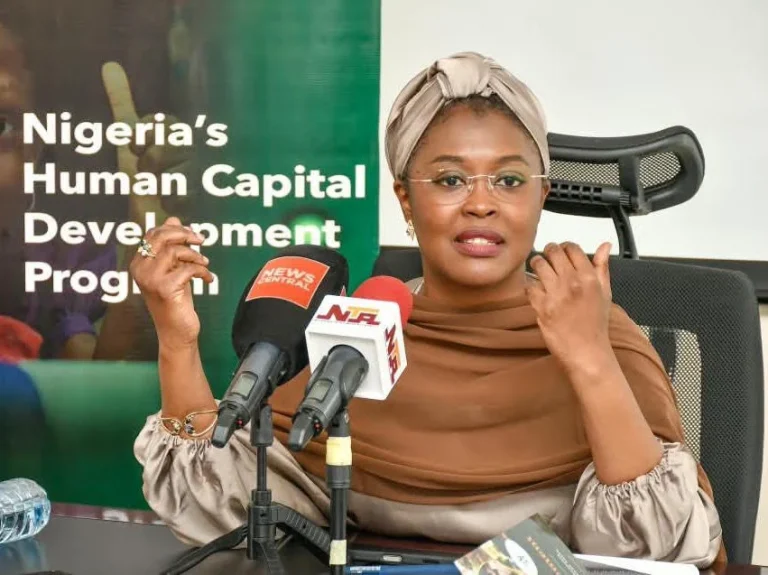
The National Coordinator of Human Capital Development 2.0 and Special Adviser to the President of the National Economic Council on Human Capital and Climate Change, Rukaiya el-Rufai, disclosed this on Monday in Abuja during a media engagement on Nigeria’s human capital development strategy.
El-Rufai said the situation was particularly concerning because being enrolled in school does not necessarily mean that children are acquiring the basic literacy and numeracy skills required to participate productively in the economy.
She described the level of learning poverty in Nigeria as alarming, noting that World Bank estimates put the proportion of children lacking adequate basic learning skills even higher.
“The one that worries me and scares me is that learning poverty is so high. It’s about 70 per cent,” she said.
She added that the World Bank’s estimate for basic numeracy and English skills among children aged between 10 and 12 was about 85 per cent.
According to her, the figures demonstrate that Nigeria’s education crisis is not only about getting children into classrooms but also ensuring that they acquire meaningful skills while in school.
Learning Crisis Threatens Workforce
El-Rufai said weak foundational education could undermine Nigeria’s ability to develop the sophisticated workforce required by industries and emerging sectors of the economy.
She illustrated the problem with the experience of the Dangote Refinery, explaining that certain highly technical jobs require workers to have strong foundational knowledge in subjects such as mathematics and geometry.
She said Nigerian workers could not simply be trained for some specialised technical roles without first addressing gaps in basic education.
According to her, the situation could leave young Nigerians physically present in schools but without the skills necessary to secure productive and well-paying employment.
“So some of, even the sophisticated skills and some of the jobs that meet the needs of our industries and our sectors, you can’t even sell that with the current level,” she said.
El-Rufai also linked the learning crisis to the wider challenge of young Nigerians who are not in employment, education or training.
Human Capital Programme Targets Six Areas
The Human Capital Development 2.0 programme is focusing on health, education, skills and livelihoods as part of efforts to improve Nigeria’s human capital outcomes.
El-Rufai said six priority indicators had been identified for monitoring.
They include under-five mortality, childhood stunting, immunisation, out-of-school children, learning poverty and young people not in employment, education or training.
She said the programme had shifted from measuring activities and inputs to tracking measurable outcomes capable of improving Nigeria’s Human Capital Index.
The initiative is being implemented through the National Economic Council, which brings together the Federal Government and state governments.
States To Develop Localised Plans
El-Rufai said Nigeria’s human capital challenges vary significantly across regions and states, making a uniform approach ineffective.
She said the programme had therefore been engaging states through regional sessions to enable them to identify their specific challenges and develop appropriate human capital development plans.
“We have been having regional sessions with the states in regional blocks because the results are so polarised,” she said.
According to her, states are now expected to develop plans based on their individual circumstances rather than simply adopting a single national template.
She cited differences in school enrolment and other human capital indicators as examples of how the challenges vary from one part of the country to another.
The programme also intends to rely more heavily on data to identify areas requiring urgent intervention and guide the allocation of resources.
Media Urged To Track Government Spending
The Director of Advocacy and Communications at the Human Capital Development programme, Doosuur Zasha, said investment in human capital remained fundamental to Nigeria’s economic development.
She urged the media to play a stronger role in monitoring government interventions and holding authorities accountable for spending on human capital development.
According to Zasha, the programme is ultimately concerned with ensuring that Nigerians have access to quality healthcare, children acquire meaningful learning outcomes and young people and adults develop skills that enable them to earn decent livelihoods.
She also emphasised the importance of ensuring that people facing social and economic barriers can participate fully in the Nigerian economy.
Nigeria’s Human Capital Challenge
The Human Capital Development 2.0 programme is an evolution of the earlier Human Capital Development initiative established through the National Economic Council.
It is supported by development and private-sector partners, including the Bill & Melinda Gates Foundation and the Aliko Dangote Foundation.
The latest figures have renewed concerns over Nigeria’s ability to translate rising school enrolment into actual learning outcomes.
For policymakers, the challenge is therefore no longer simply about getting children into classrooms but ensuring that they can read, write, count and develop the foundational skills needed for further education and employment.
With a large young population and growing demand for skilled workers, stakeholders say addressing learning poverty will be critical to Nigeria’s long-term productivity, economic growth and human capital development.