In Nigerian politics, yesterday’s fiercest opponents often become today’s closest allies. Politicians who once exchanged harsh words on campaign stages frequently find themselves sitting at the same negotiation table, sharing party platforms, endorsing one another, or even serving in the same government.
The phenomenon has become one of the defining characteristics of Nigeria’s Fourth Republic, raising questions about political ideology, accountability, voter loyalty and the future of democratic governance.
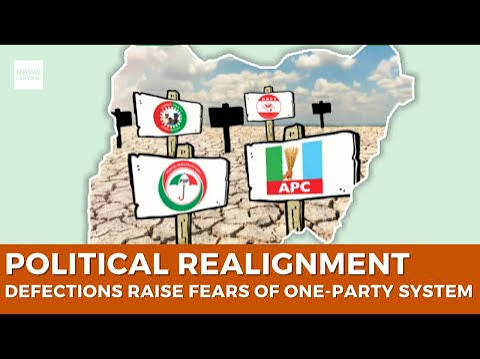
From Kano to Gombe, Rivers to Lagos, and from the Peoples Democratic Party (PDP) to the All Progressives Congress (APC), political defections and unexpected alliances have become so common that many Nigerians now view them as an inevitable part of the country’s political culture.
Political analysts argue that while coalition-building is normal in every democracy, Nigeria’s version is often driven more by personal ambition and access to power than by shared ideology or policy objectives.
Politics Without Permanent Enemies
The famous political saying, “There are no permanent friends or enemies in politics, only permanent interests,” appears to define much of Nigeria’s democratic experience since 1999.
Unlike many established democracies where political parties are distinguished by clear ideological differences, Nigerian parties often share similar manifestos, making defections relatively easy.
As a result, politicians frequently move from one party to another with little explanation beyond “consultations with supporters” or “the interest of the people.”
For ordinary voters, however, these political realignments often create confusion and erode trust.
Kano: Kwankwaso and Ganduje
One of Nigeria’s most prominent political rivalries emerged in Kano State between former Governor Rabiu Musa Kwankwaso and his former deputy, Abdullahi Umar Ganduje.
The two politicians once enjoyed one of the strongest political relationships in northern Nigeria.
Ganduje served as deputy governor under Kwankwaso for eight years before succeeding him as governor in 2015.
Their relationship later deteriorated into one of Nigeria’s fiercest political feuds.
Supporters of both camps regularly engaged in verbal attacks, public confrontations and political propaganda.
The rivalry eventually divided Kano politics into two major blocs.
Political observers, however, note that despite years of hostility, Nigeria’s political history demonstrates that alliances once considered impossible can become realities when political interests align.
Many analysts believe such possibilities remain open because political calculations often outweigh previous disagreements.
Gombe: Former Allies Become Opponents
Gombe State also provides important lessons.
Several politicians currently contesting influence in the state once belonged to the same political family.
Leading figures such as Prof. Isa Ali Pantami, Governor Muhammadu Inuwa Yahaya, Dr. Jamilu Isiyaku Gwamna and other prominent politicians have, at different periods, shared political platforms or worked together in advancing common political objectives.
Today, many of these relationships have changed as different political ambitions emerge ahead of the 2027 governorship election.
Political scientists caution supporters against turning political disagreements into personal hatred because alliances can shift rapidly after elections.
They argue that many supporters continue fighting political battles long after politicians themselves have reconciled.
Rivers State: Wike and Fubara
Perhaps no recent political conflict illustrates this reality better than the dispute between former Rivers State Governor Nyesom Wike and Governor Siminalayi Fubara.
Fubara emerged as governor with Wike’s backing.
Months later, both men became political rivals in a crisis that divided the state’s political structure.
The conflict affected governance, legislative activities and public administration.
Yet analysts note that Nigerian politics has repeatedly shown that bitter rivals can eventually negotiate settlements when political interests demand compromise.
Tinubu and Atiku
President Bola Ahmed Tinubu and former Vice President Atiku Abubakar have occupied different sides of Nigeria’s political divide for decades.
However, both politicians have, at various times, worked within similar political coalitions during Nigeria’s democratic evolution.
Their political journeys reflect the fluid nature of Nigerian party politics, where alliances change as electoral circumstances evolve.
Atiku Abubakar: Nigeria’s Most Famous Defector
Few politicians demonstrate Nigeria’s fluid political system more than former Vice President Atiku Abubakar.
Since 1999, Atiku has belonged to several major political parties, including the PDP, Action Congress (AC), APC and later returned to the PDP before becoming associated with broader opposition coalition efforts.
Each movement was justified as being in the national interest or necessary for democratic development.
Critics, however, argue that frequent defections weaken party ideology and reduce public confidence.
Bukola Saraki
Former Senate President Bukola Saraki also moved between the PDP and APC during his political career.
His defection significantly influenced national political alignments, especially during the formation of the Eighth National Assembly.
Peter Obi
Labour Party presidential candidate Peter Obi began his national political career in the All Progressives Grand Alliance (APGA), later joined the PDP before moving to the Labour Party ahead of the 2023 elections.
His political movement reflected changing political opportunities within Nigeria’s evolving democratic environment.
A Common Pattern Across Nigeria
Political defections have occurred in nearly every state.
Governors, senators, House of Representatives members and state lawmakers have crossed party lines shortly before elections or immediately after major political disagreements.
According to data from election observers and political researchers, party switching has become one of the most persistent features of Nigeria’s Fourth Republic.
Experts argue that weak internal democracy within political parties often encourages defections.
When politicians lose party primaries or disagree with party leadership, many simply join another party where opportunities appear more favourable.
Why Politicians Become Allies
Political scientists identify several reasons behind changing political alliances.
These include:
• Competition for political power.
• Access to government resources.
• Weak party ideology.
• Personal political survival.
• Electoral calculations.
• Internal party disputes.
• Regional and ethnic bargaining.
• Coalition-building before elections.
Dr. Samuel Egwu, a political scientist and former Director-General of the Governance Institute, has argued that Nigerian political parties are largely personality-driven rather than ideology-driven, making defections relatively easy.
Similarly, Prof. Jibrin Ibrahim of the Centre for Democracy and Development (CDD-West Africa) has repeatedly noted that weak institutional structures encourage elite bargaining above policy consistency.
The Cost to Democracy
Political analysts warn that constant political realignment comes with significant consequences.
Among them are:
Loss of public trust
Many citizens struggle to understand why politicians who once described one another as corrupt or incompetent later become political partners.
Weak political ideology
When politicians move freely between parties, ideological distinctions become blurred.
Voter confusion
Supporters who passionately defend politicians often become confused when former rivals suddenly unite.
Political violence
Supporters frequently engage in violence defending politicians who later reconcile without addressing the damage caused.
Declining accountability
Politicians rarely explain contradictory political positions after changing alliances.
Youth manipulation
Young supporters often become instruments for online abuse, misinformation and political intimidation while political leaders negotiate behind closed doors.
Case Study: Supporters Left Behind
Political observers point to numerous elections where supporters engaged in violent confrontations only for political leaders to later embrace publicly.
Across several states, youths have suffered injuries, arrests, job losses and even death defending political interests that eventually changed.
This recurring pattern has led civil society organisations to call for greater political education and responsible campaign conduct.
How the Problem Can Be Addressed
Experts recommend several measures.
Strengthen party ideology
Political parties should clearly define ideological principles that distinguish them from competitors.
Enforce internal democracy
Transparent primaries and fair dispute resolution mechanisms can reduce defections.
Political education
Citizens, especially young people, should understand that loyalty belongs to democratic values rather than individual politicians.
Issue-based campaigns
Candidates should debate policies instead of attacking personalities.
Regulate hate speech
The Independent National Electoral Commission (INEC), the National Broadcasting Commission (NBC) and security agencies should enforce laws against incitement and political violence while protecting freedom of expression.
Promote civic responsibility
Civil society organisations, religious leaders and traditional institutions should continue encouraging peaceful participation.
Hold politicians accountable
Political leaders who defect should publicly explain the reasons behind their decisions and demonstrate how such moves benefit their constituents rather than personal ambitions.
Read More: Gombe Stakeholders Unite Behind Gwamna Ahead of 2027 Elections
Nigeria’s Fourth Republic has repeatedly demonstrated that political rivalry is rarely permanent. Alliances change, parties merge, opponents reconcile and new coalitions emerge as elections approach. While negotiation and coalition-building are legitimate aspects of democratic politics, the absence of strong ideological foundations has made political defections increasingly commonplace.
For citizens particularly young people the enduring lesson is that political competition should never justify hatred, violence or lifelong enmity. Politicians may eventually work together under the same platform, but the social divisions and personal losses suffered by their supporters can take years to heal. A more mature democracy requires issue-based politics, stronger institutions and an electorate that prioritises policies and governance over personalities.