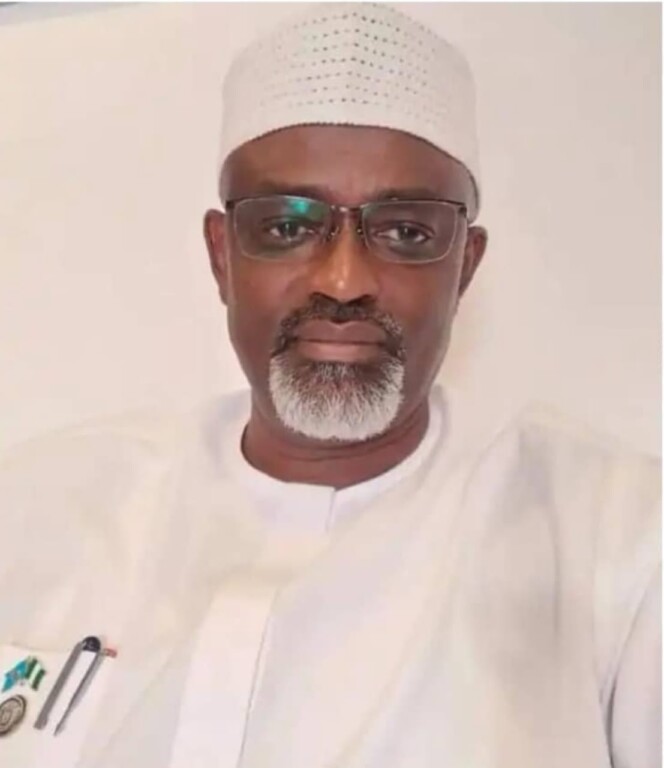
Nigeria needs stronger institutions, credible elections, accountability, justice and inclusive economic opportunities to achieve sustainable peace and good governance, according to a policy commentary by Amb. Hussaini H. Coomassie.
In his commentary titled “Mechanisms Needed to Ensure Peace and Good Governance in Africa: Nigeria in Focus,” Coomassie argued that peace and good governance do not happen by accident but require deliberate institutions, responsible leadership, justice, accountability, economic opportunity, social inclusion and an informed citizenry.
He noted that Africa’s natural and human resources alone cannot guarantee prosperity, stressing that the ability of political and institutional systems to convert those resources into security, economic opportunity, justice and improved living standards remains critical.
According to him, Nigeria’s position as Africa’s most populous country and a major political and security actor in West Africa makes its governance challenges and successes important beyond its borders.
Coomassie identified strong and independent institutions as the first mechanism for sustainable peace and good governance.
He argued that countries become vulnerable when political institutions depend excessively on the personality, discretion or goodwill of individual leaders.
He called for institutions such as the legislature, judiciary, electoral commissions, civil service, audit bodies, anti-corruption agencies and security services to operate according to established laws and professional standards.
He said Nigeria should focus on strengthening existing institutions by giving them professional autonomy, adequate resources and enforceable mandates, rather than simply creating more agencies and laws.
“The principle should be clear: institutions must govern the country, not individuals,” he stated.
Credible Elections Key to Democratic Stability
The commentary also identified credible, free and transparent elections as essential to building public trust.
Coomassie said elections should be based on ideas, competence, character and public policy rather than money, intimidation, vote buying, ethnic mobilisation or manipulation of electoral institutions.
He proposed several mechanisms, including genuine operational independence for electoral management bodies, transparent voter registration and results transmission, effective campaign finance regulation and stronger punishment for electoral violence and vote buying.
He also called for transparent party primaries, rapid resolution of electoral disputes and continuous civic education.
According to him, political parties must evolve into genuine institutions for democratic recruitment rather than platforms where financial influence and political connections determine access to public office.
Accountability Must Continue Beyond Elections
Coomassie argued that public officials should remain accountable throughout their time in office rather than only during elections.
He called for open budgeting, electronic procurement, independent auditing, accessible public financial information, asset declaration and verification, whistle-blower protection and effective legislative oversight.
He also advocated stronger anti-corruption institutions and timely prosecution where wrongdoing has been established.
The commentary identified inconsistent implementation of laws as one of the major weaknesses affecting governance in many African countries.
For Nigeria, he recommended moving from a reactive approach to corruption towards systems focused on prevention, detection and predictable enforcement.
Justice and Equality Must Apply to Everyone
The commentary further argued that sustainable peace cannot exist when citizens believe that justice is reserved for the wealthy and powerful.
Coomassie said politicians, businessmen, civil servants, traditional rulers, security officers and ordinary citizens should be subject to the same legal principles.
He called for justice systems that are independent, accessible, affordable and reasonably expeditious.
He also linked prolonged litigation with declining public confidence, arguing that delayed justice can encourage citizens to seek alternative and sometimes violent methods of resolving disputes.
Security Must Come With Accountability
While acknowledging the importance of security institutions in combating terrorism, organised crime, trafficking, banditry and communal violence, Coomassie warned that security without accountability can itself become a source of instability.
He called for stronger intelligence coordination, modern communication systems, effective border management, forensic capabilities, personnel training and improved welfare for security personnel.
At the same time, he stressed that security agencies must operate within the law, respect fundamental rights and remain politically neutral.
“The appropriate mechanism is therefore security with accountability,” the commentary stated.
Inclusive Governance Can Strengthen National Cohesion
Coomassie identified exclusion as another major driver of political instability.
He argued that when citizens believe ethnicity, religion, region, gender, political affiliation or social connections determine access to opportunities, national cohesion is weakened.
He said Nigeria’s diversity should instead become an asset for national development.
According to the commentary, inclusive governance should combine representation, competence, equity, integrity and accountability, ensuring that citizens across the country have a fair sense of belonging while maintaining competent institutions.
Leadership Should Be Measured by Performance
The commentary also called for a political culture that rewards leaders for delivering public value rather than simply winning elections.
Coomassie suggested that political leaders should be assessed through measurable outcomes, including jobs created, schools improved, healthcare delivered, infrastructure completed, security enhanced, investment attracted, poverty reduced and institutions strengthened.
He argued that the greatest test of leadership is not how leaders treat their supporters but how they treat critics, political opponents and ordinary citizens without political influence.
Economic Development Is Part of Peacebuilding
According to Coomassie, economic development should be treated as part of Nigeria’s peacebuilding strategy.
He said poverty and exclusion can create conditions in which criminality, extremism, political violence and social unrest flourish.
The commentary identified agriculture, solid minerals, manufacturing, the digital economy, creative industries and renewable energy as areas that could support economic diversification.
It argued that Nigeria’s challenge is not simply to exploit its natural resources but to establish mechanisms that ensure resource wealth translates into broad-based development.
Youth Employment Is a Security Priority
Coomassie also called for youth employment to be treated as a national security priority.
He said young people with access to education, employment, entrepreneurship opportunities and a sense of belonging can become a major development resource.
Conversely, prolonged unemployment, poverty and exclusion can increase vulnerability to criminal networks, violent extremism and political thuggery.
He recommended greater investment in vocational education, apprenticeships, technology training, agricultural enterprise, creative industries, start-up financing and market access.
The objective, he said, should be to move young Nigerians from recipients of government programmes to producers, entrepreneurs, professionals and employers.
Stronger Local Governments Needed
The commentary stressed that good governance must also be visible at the grassroots.
Coomassie said citizens should experience government through functioning schools, primary healthcare centres, roads, water supply, sanitation, agricultural support and local economic opportunities.
He called for predictable and transparent local government funding, accountable administration, transparent procurement, community participation, public disclosure of projects and expenditures, citizen monitoring and stronger local electoral accountability.
Protect the Press and Civic Space
Coomassie described the press, civil society organisations, academics, professional associations and community organisations as important mechanisms for holding governments accountable.
He argued that governments that cannot tolerate criticism risk losing touch with reality.
At the same time, he said freedom should be accompanied by professional responsibility, warning that deliberate misinformation, incitement, hate speech and fabricated allegations can also threaten peace.
He therefore advocated freedom with responsibility.
Civic Education Can Strengthen Democracy
The commentary also called for systematic civic education to help citizens understand their constitutional rights, responsibilities and the long-term consequences of political choices.
Coomassie argued that citizens should gradually move from asking, “What will I get from this politician?” to asking, “What kind of society are we building?”
He identified vote buying and identity-based political mobilisation as challenges that can be addressed partly through better civic education.
He recommended that civic education should begin in schools and continue through universities, media organisations, civil society, traditional institutions and community structures.
Early Warning Can Prevent Conflict
Rather than waiting for violence to erupt, Coomassie proposed stronger early-warning and conflict-prevention systems.
Such systems, he said, should monitor communal tensions, political violence, hate speech, displacement, competition over land and natural resources, religious tensions, youth mobilisation, organised criminal activity and economic grievances.
He also called for traditional rulers, religious leaders, community organisations, women, youth representatives, security agencies and civil society groups to participate in local early-warning networks.
Nigeria Needs Stronger Regional Cooperation
The commentary noted that modern security threats do not respect national borders.
Terrorism, trafficking, illegal migration, arms smuggling, organised crime, cybercrime and violent extremism often operate across countries.
Coomassie therefore called for stronger cooperation between Nigeria, neighbouring countries, ECOWAS and the African Union through intelligence sharing, coordinated border management, joint security operations, conflict prevention and diplomatic engagement.
Resource Wealth Must Translate Into Development
Another key recommendation was transparent and fair management of natural resources.
Coomassie argued that oil-producing and mining communities should see legitimate benefits from resources extracted from their environments.
He called for transparent licensing, competitive procurement, environmental protection, community participation, revenue transparency, effective taxation and responsible corporate conduct.
According to the commentary, Nigeria’s experience demonstrates that natural-resource wealth without effective governance can coexist with poverty, environmental degradation, insecurity and social grievances.
Traditional and Religious Institutions Have a Role
The commentary also recognised the influence of traditional rulers, religious organisations and community leaders in promoting peace.
Coomassie said these institutions can contribute to mediation, reconciliation, peace education, community mobilisation and early warning.
He proposed structured mechanisms through which traditional institutions, religious leaders, civil society and government agencies can work together to address emerging conflicts while remaining complementary to constitutional government.
Governance Should Be Measured by Results
Coomassie argued that governance should be assessed through measurable outcomes rather than political speeches and policy announcements.
He proposed national performance dashboards that allow citizens to monitor areas such as public expenditure, project completion, employment, school enrolment, healthcare outcomes, poverty reduction, security, judicial performance and corruption cases.
The central question, according to the commentary, should be: What measurable difference has an administration made in the lives of citizens?
Nigeria Must Move From Political Survival to National Development
Coomassie concluded that Nigeria’s governance challenge is not simply a lack of laws or policies but, in many cases, the failure to consistently implement existing laws, respect institutions and impose consequences for wrongdoing.
He called for a political culture that rewards competence, service, integrity and national interest rather than sycophancy, self-enrichment and sectional interests.
He also urged Nigeria to learn from the experiences of other African countries without attempting to copy any one model wholesale.
The commentary pointed to Ghana’s electoral competition, Botswana’s institutional continuity, Mauritius’ constitutionalism, Rwanda’s community-based reconciliation, Senegal’s civic engagement and South Africa’s constitutional institutions as different examples from which Nigeria can draw lessons.
Africa Needs Mechanisms, Not Slogans
The commentary ultimately argues that peace and good governance require functioning systems rather than political promises alone.
Such systems include institutions stronger than individuals, trusted elections, equal justice, accountable security agencies, transparent management of public resources, economic opportunities, functional local governments, empowered young people, a responsible and free media and informed citizens.
For Nigeria, the broader challenge is to demonstrate that credible elections, independent institutions, impartial justice, professional security and accountable leadership are possible.
The commentary ends with a call for a political and social order in which nobody is above the law, nobody is below justice, no public resource is without accountability and no citizen is excluded from the national project.
The message is clear: Nigeria cannot secure lasting peace through security operations or political promises alone. Sustainable peace and good governance require institutions, accountability, economic opportunity, inclusion and citizens empowered to demand results from those who govern them.