
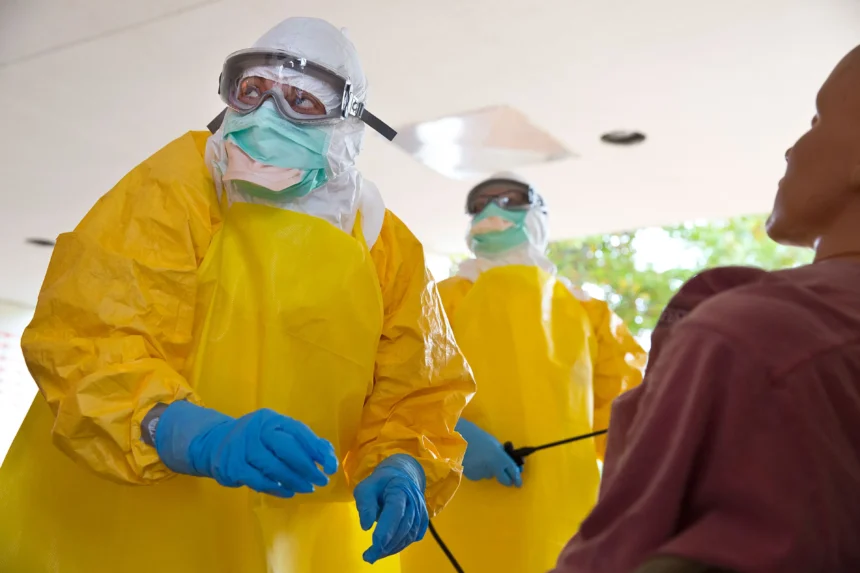
More than a decade after Ebola caused panic in Nigeria, the deadly virus is once again creating fear across Africa, fresh outbreak in the Democratic Republic of the Congo (DR Congo) has put health officials on alert, with experts fearing that the disease could spread if authorities fail to contain it early.
For many Nigerians, memories of 2014 still feel close. That year, one infected traveler arrived in Lagos from Liberia and triggered a health emergency, hospitals rushed to respond, health workers faced major risks, and authorities fought to stop the disease from spreading in a city of millions.
Today, a new outbreak in Central Africa is raising similar concerns, cases have already crossed borders, creating fears that another regional health crisis could emerge.
The current outbreak centers on Ituri Province in eastern DR Congo, health officials confirmed eight Ebola cases as of May 16, 2026, authorities also recorded 246 suspected cases and 80 suspected deaths.
The affected areas include Bunia, Rwampara and Mongbwalu areas in Congo . Health workers have also reported unusual clusters of deaths in several communities. Many victims showed symptoms linked to Bundibugyo virus disease.
Health experts believe the real number of infections may be much higher. Early testing showed eight positive results from only 13 samples. Such a high positivity rate often suggests wider transmission. Reports of suspected infections have also increased in nearby North Kivu Province.
Concerns grew after Uganda confirmed two Ebola cases in Kampala within 24 hours. Both individuals had traveled from DR Congo.
The cases immediately raised fears about movement across borders. In many parts of Central and East Africa, people travel daily for trade, work and family activities. Health officials worry that movement between communities could help the virus spread further.
Investigators are still trying to understand how the infections connect. However, experts say early signs suggest a bigger outbreak than current figures show.
Health workers have also suffered losses during the outbreak. Reports show that at least four healthcare workers died after developing symptoms linked to viral hemorrhagic fever.
These deaths raise concerns about transmission inside hospitals and clinics. Weak infection control systems and shortages of protective supplies can increase risks for doctors and nurses.
Past outbreaks have shown how health facilities can become transmission centers. When health workers lack proper protection, hospitals can quickly become areas where infections spread.
The latest outbreak brings back memories of Nigeria’s Ebola response in 2014. After the virus entered Lagos, authorities moved quickly to stop transmission.
Officials activated an Emergency Operations Center and launched an aggressive response plan. Teams traced contacts, monitored symptoms and isolated suspected cases. Authorities identified almost 900 contacts and carried out thousands of face-to-face visits.
Health experts later credited that strategy for helping Nigeria avoid a much larger disaster.
Authorities in DR Congo and neighboring countries have already stepped up response efforts. Health teams are tracing contacts, tracking travelers and studying possible chains of transmission.
Uganda has increased surveillance after confirming imported cases. International health agencies are also supporting emergency efforts in affected areas.
However, experts remain worried about one major challenge. The current outbreak involves the Bundibugyo strain of Ebola. Unlike some other strains, there is no approved vaccine or treatment designed specifically for it.
As Africa watches the outbreak unfold, Nigeria’s experience remains an important lesson.
As fears grow over the Ebola outbreak in DR Congo and the confirmed cases reported in Uganda, the Nigerian government has moved quickly to prevent a repeat of the 2014 health crisis. Although the country has not recorded any confirmed case, authorities have placed the nation on high alert and activated emergency preparedness systems across the country. Health officials say early action remains critical, especially after the painful lessons from Nigeria’s previous battle with the deadly virus.
To reduce the risk of importation, the Federal Ministry of Health, through Port Health Services and the Nigeria Centre for Disease Control and Prevention, has strengthened surveillance at international airports, seaports and land borders.
Authorities have also placed Public Health Emergency Operations Centres on heightened alert while surveillance systems, testing laboratories and rapid response teams remain on standby. Public and private hospitals have received updated guidelines to quickly identify and report suspected cases.
The government is also focusing on infection prevention and public awareness. State authorities have been directed to ensure isolation facilities are equipped with medical supplies, protective equipment and trained personnel.
Health officials are also urging Nigerians to maintain good hygiene, avoid contact with bodily fluids of sick persons, stay away from bushmeat and dead animals, and rely only on verified information as authorities continue efforts to stop any possible spread before it reaches the country.