
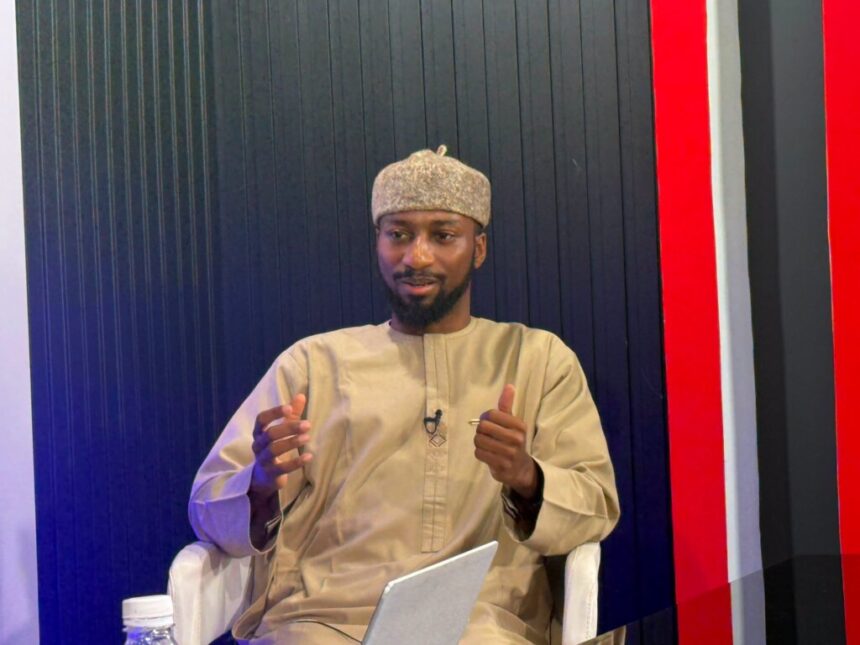
People think I am perfect, but I am not, motivational speaker, author and youth advocate Umar Gana has said, stressing that those who inspire others are also human and capable of making mistakes.
Gana made the remarks while speaking as a guest on Sportlight on S24 TV, where he reflected on his journey into content creation, the influence of Islam on his life, and the growing responsibility of social media influencers in shaping society.
Speaking during the interview, Gana revealed that his passion for creating inspirational content began during his university days in the United Kingdom, where he first discovered the power of using digital platforms to reach and influence people positively.
According to him, many people wrongly assume that motivational speakers or content creators who preach discipline and purpose live flawless lives.
“People think I am perfect, but it is not like that. Just because I create motivational videos does not mean I cannot make mistakes,” he said.
He explained that the purpose of his content is not to portray perfection but to encourage people to strive for personal growth while acknowledging that everyone has weaknesses and challenges.
Prophet Muhammad Remains His Greatest Role Model
Gana said the greatest influence in his life remains Prophet Muhammad (peace be upon him), whose teachings continue to shape his understanding of life, purpose and success.
According to him, Islam has provided him with a framework for viewing the world beyond material achievements.
He said the religion taught him that success should never be measured solely by wealth, fame or possessions.
Instead, he argued that true success lies in how individuals utilise the time and opportunities Allah has entrusted to them.
“Islam made me understand many things. Success goes beyond wealth and material possessions. A successful person is someone who uses his or her time positively,” he stated.
He noted that this understanding has significantly influenced both his personal life and the messages he shares with his audience.
Beyond Motivation
During the interview, Gana challenged the growing culture of consuming motivational content without translating inspiration into meaningful action.
According to him, motivation alone cannot transform lives unless it is followed by discipline, consistency and practical effort.
“Motivation without action is nothing,” he said.
He observed that while millions of people watch inspirational videos daily, genuine transformation only occurs when individuals apply what they learn.
Gana maintained that motivation should serve as a catalyst for action rather than an end in itself.
Social Media Must Become a Force for Good
The youth advocate also expressed concern over the growing misuse of social media, saying many societal problems are fuelled by harmful online content.
He urged content creators to recognise the enormous influence they wield and to prioritise producing content that educates, inspires and contributes positively to society.
According to him, creators with large followings have a responsibility that extends beyond entertainment or generating online engagement.
He called on influencers to promote values capable of building responsible citizens and strengthening communities.
“Let people consume things that are positive and good at all times,” he urged.
Gana argued that social media should be viewed as a tool for solving problems, spreading knowledge and encouraging positive behaviour rather than amplifying negativity.
Inspiration in a Digital Age
During the programme, the discussion also explored the evolving role of motivational voices in society.
The show’s introduction noted that while previous generations found inspiration through religious leaders and conference speakers, today’s generation increasingly turns to smartphones and social media for guidance.
It questioned whether motivation has become a form of entertainment, particularly at a time when many young people continue to face unemployment, economic hardship, anxiety and depression despite consuming large volumes of inspirational content.
The discussion examined whether positive thinking alone can overcome difficult economic realities and what responsibilities accompany becoming a trusted public voice.
Responding, Gana maintained that inspiration remains valuable but must always be accompanied by practical action, resilience and personal responsibility.
He encouraged young people not to limit themselves to consuming motivational content but to develop skills, embrace discipline and take deliberate steps toward achieving their goals.
The interview concluded with a renewed call for content creators to use their platforms responsibly, reminding audiences that meaningful influence is measured not by the number of followers one has, but by the positive impact made on people’s lives.