
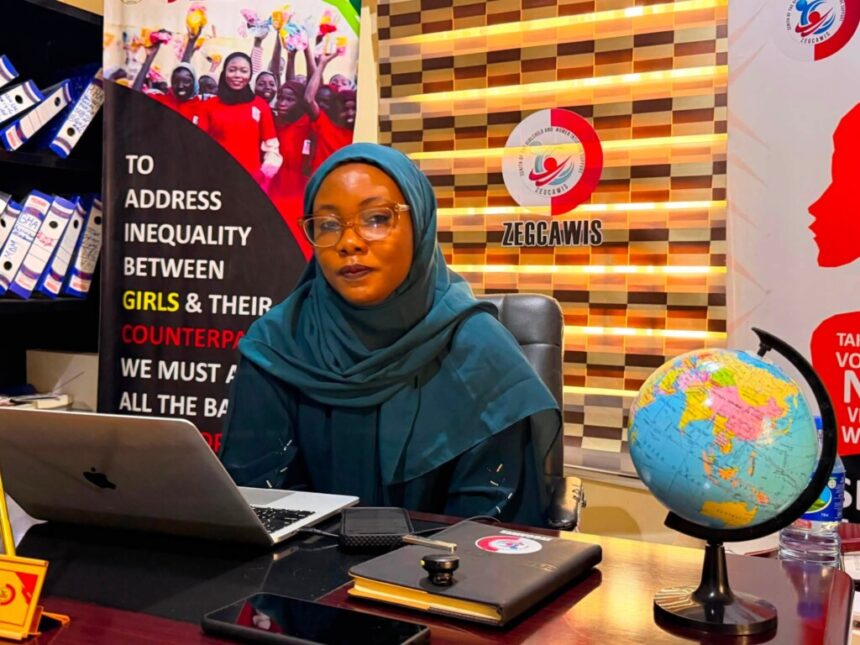
Aishatu Kabu has called on President Bola Ahmed Tinubu to redirect the benefits of fuel subsidy removal towards social protection programmes and hold state governors accountable for addressing poverty across Nigeria.
Kabu, in a post on her verified Facebook page, acknowledged Tinubu’s daring nature but criticised aspects of his administration’s policies, particularly what she described as misplaced priorities, continued borrowing and inadequate attention to the economic hardship facing citizens.
“One thing I like about President Tinubu is his daring nature,” she wrote.
Kabu explained that the removal of fuel subsidy was initially the reason she opposed Tinubu’s re-election, although she supported the policy in principle if the savings could be channelled into programmes that directly improve the lives of Nigerians.
She identified social protection for vulnerable citizens, affordable housing for civil servants, accessible healthcare, improved minimum wages and large-scale infrastructure development as areas that should benefit from the savings.
According to her, although delivering all these interventions within three years could be challenging, the administration should demonstrate a clear commitment to reducing the economic burden on Nigerians.
Kabu Faults Government’s Spending Priorities
The critic said her concerns about the administration grew over what she described as misplaced spending priorities, including the acquisition of a new presidential aircraft, budgetary allocations for sports utility vehicles for members of the National Assembly, poor budget implementation and continued borrowing.
She also faulted the government’s defence of policies that, in her view, have worsened the economic conditions of ordinary Nigerians.
Kabu urged Tinubu to undertake a mid-term review of his administration’s policies, arguing that leaders should be willing to evaluate their performance, identify shortcomings and make adjustments where necessary.
She maintained that reviewing government policies should be seen as an important part of nation-building rather than an admission of failure.
Calls for Local Government Autonomy
Beyond economic management, Kabu urged Tinubu to take decisive steps towards ensuring full autonomy for local governments across the country.
She proposed the establishment of a Citizen Participatory Democracy Fund to empower civil society organisations and grassroots groups to monitor local government activities and demand accountability from elected officials.
According to her, strengthening grassroots participation would help citizens scrutinise public spending and ensure that government resources are used to address community needs.
Kabu argued that the President should challenge state governors to demonstrate greater commitment to poverty reduction rather than allowing the distribution of additional revenue following subsidy removal to serve as the principal justification for the policy.
‘Stop Handing Over Subsidy Savings to Governors’
Expressing her dissatisfaction with the handling of subsidy savings, Kabu said the federal government should not rely solely on the additional funds available to state governments as evidence that subsidy removal is benefiting Nigerians.
“To remove subsidy and hand over the savings to 36 governors and keep referencing that as a defence is what I will never tolerate,” she stated.
She further accused state governors of failing to do enough to tackle poverty, arguing that their policy choices and management of public resources could significantly influence the welfare of their citizens.
“Mr. President, I am saying this for the second time: Nigerian governors are the greatest enemy of Nigerians,” Kabu wrote.
She added that governors could make substantial progress in ending poverty if they made it a priority, accusing them of treating the problem as though they had become comfortable with its persistence.
Kabu concluded by urging Tinubu to stop relying on the distribution of subsidy savings to governors as a defence of his economic policy and instead demand measurable results in poverty reduction and improvements in living standards.
Her comments add to the ongoing national debate over the consequences of fuel subsidy removal, the distribution and use of public revenue, and the responsibilities of federal and state governments in addressing Nigeria’s economic challenges.