
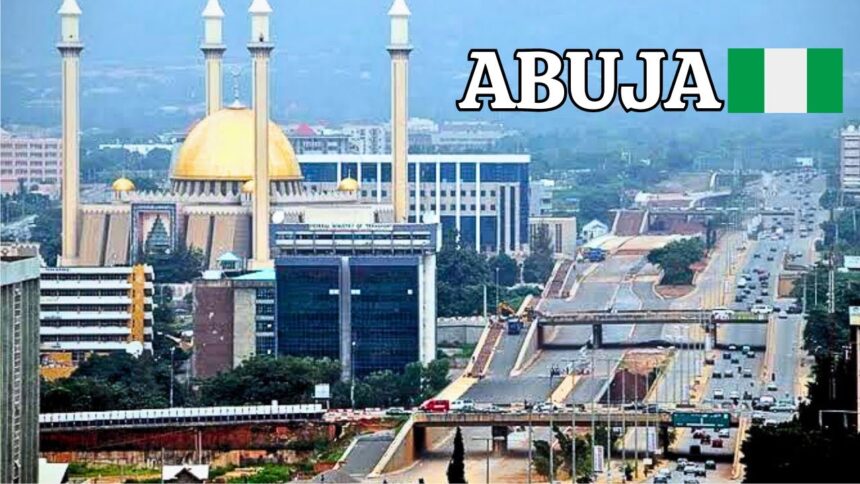
Long before Abuja became Nigeria’s seat of power, the name belonged to an ancient town with deep historical roots linked to the old Zazzau Kingdom and the turbulent period of the 19th-century Fulani jihad.
The story of Abuja is not only the story of a modern capital city established by government decree in 1976; it is also the story of migration, resilience, royal heritage and a name that has survived nearly two centuries of political transformation.
The Man Behind the Name “Abuja”
Historical accounts trace the origin of the name Abuja to a Hausa prince known as Abu Ja, a shortened form of Abubakar, who was the brother of Muhammadu Makau, the last Hausa Emir of Zazzau, present-day Zaria in Kaduna State.
The title “Ja” was reportedly given to Abubakar because of his fair complexion, as the Hausa word “Ja” is associated with redness or light skin. Over time, the combination of his name and nickname—Abu and Ja—formed “Abu Ja,” which later evolved into Abuja.
According to historical records, following the Fulani jihad that swept across many parts of northern Nigeria in the early 1800s, Muhammadu Makau and members of the Zazzau royal family fled southward in search of safety.
The group first settled in areas around present-day Zuba before establishing a more secure settlement around 1828. Abu Ja later succeeded his brother and became ruler of the new settlement, which eventually took his name.
The town became known as Abuja Emirate, a Hausa kingdom that maintained its identity and resisted external conquest for decades.
The Migration from Zazzau
The fall of Zazzau to Fulani forces in 1804 marked a turning point in the history of the region.
Muhammadu Makau, the last Hausa ruler of Zazzau, reportedly led his followers away from the ancient kingdom to establish a new homeland. Their migration southwards eventually resulted in the creation of the Abuja Emirate, which became an important political and cultural centre.
Historical accounts suggest that the emirate developed into a strong and independent kingdom that retained much of its Hausa identity despite the major political changes taking place across northern Nigeria at the time.
The original Abuja town, located in present-day Niger State, remained the seat of the emirate for generations and became a symbol of continuity for descendants of the Zazzau royal family.
Why Nigeria Chose Abuja as Its Capital
More than a century after the founding of the old Abuja Emirate, Nigeria embarked on a search for a new federal capital.
By the 1970s, Lagos, then the nation’s capital, was experiencing rapid population growth, congestion and infrastructural challenges.
In February 1976, the military administration of General Murtala Mohammed promulgated Decree No. 6, creating the Federal Capital Territory (FCT) in the geographical centre of the country.
The decision was based on several considerations, including Abuja’s central location, accessibility, moderate climate and the desire to establish a neutral capital that belonged to all Nigerians regardless of ethnicity or religion.
Large portions of land from neighbouring communities, including the historic Abuja Emirate, were incorporated into the new Federal Capital Territory.
How Abuja Became Suleja
The creation of the FCT created a unique challenge: two places would bear the same name—Abuja.
To avoid confusion, an agreement was reached between the federal authorities and the traditional institution of the emirate.
The historic town of Abuja in present-day Niger State was renamed Suleja in honour of the then Emir, Suleiman Barau.
Historical accounts indicate that the new name combined “Sule,” derived from Suleiman, and “Ja,” retained from the original Abuja title.
While the ancient town became Suleja, the newly established Federal Capital Territory adopted the name Abuja, which has since become recognised worldwide as Nigeria’s capital city.
A Legacy That Lives On
Today, millions of people know Abuja as the political headquarters of Africa’s most populous nation.
However, behind the modern city of government institutions, diplomatic missions and sprawling infrastructure lies a much older story—one rooted in royal migration, survival and the legacy of a fair-complexioned prince named Abu Ja.
The history of Abuja and Suleja reflects the interconnected nature of Nigeria’s past, where ancient kingdoms, colonial transitions and modern state-building have shaped identities that endure across generations.
Nearly 200 years after Abu Ja established his settlement, his name continues to define one of Africa’s most important cities, preserving a historical legacy that stretches from the old Zazzau Kingdom to the heart of contemporary Nigeria.