
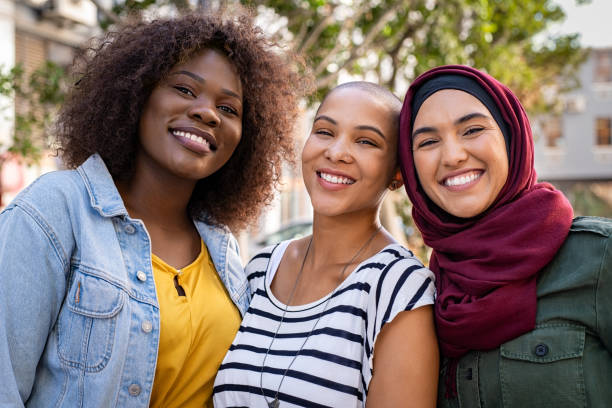
Beyond the celebrations and awareness campaigns, millions of girls still navigate a world that questions their ambitions, limits their choices and often expects them to prove they deserve opportunities others take for granted.
She was twelve when she first learnt that being a girl could mean having to explain her dreams.
She wanted to become a doctor. She imagined travelling the world, speaking confidently in rooms filled with important people and making decisions that mattered. More than anything, she wanted to become someone her younger self would admire. Her mind brimmed with questions, and her imagination stretched far beyond the boundaries of her immediate world.
Yet whenever she spoke about her ambitions, someone would laugh gently, wave a hand dismissively or remind her that she was still a girl. Nobody explicitly told her to stop dreaming, but the repeated suggestions that certain ambitions were unsuitable for her gradually taught her to question what she believed was possible.
The boys around her spoke confidently about their futures. Their families encouraged them to explore opportunities, take risks and aim higher. When they made mistakes, people urged them to learn and try again. Her experience, however, came with conditions. She could dream, provided she remained realistic. She could speak, provided she stayed respectful. She could succeed, provided she never became too much.
Eventually, she began to master the art of making herself smaller.
Her story may be imagined, but the experience it represents is familiar to many girls whose ambitions are shaped not only by their abilities, but also by the expectations of the families and communities around them. For some, the restrictions are direct and unmistakable. For others, they emerge through everyday comments, unequal responsibilities, missed educational opportunities and the quiet assumption that certain futures belong more naturally to boys.
On October 11, as the world marks the International Day of the Girl Child, her story offers a reason to look beyond the familiar celebrations and ask a more difficult question: how many girls are learning to lower their expectations of themselves simply because society has not made enough room for them to grow?
When the World Begins to Limit Her
Girls do not always lose their confidence overnight. Sometimes, self-doubt develops gradually through the dreams people dismiss, the questions they discourage and the opinions they teach girls to keep to themselves. Over time, a girl who once spoke freely may begin to second-guess her ideas, while one who once imagined endless possibilities may start choosing only those that others consider acceptable.
Society does not always have to tell a girl that she cannot achieve something. Sometimes, it simply convinces her that she should not even try.
Consider the girl who sits quietly at the back of a classroom, afraid to share the ideas racing through her mind. She may have the ability to excel academically, but years of being told to remain quiet have made silence feel safer than participation. Another girl may have the determination to pursue higher education, yet her family’s financial difficulties, household responsibilities or expectations surrounding early marriage could place that ambition beyond her immediate reach.
There is also the girl who smiles through experiences she cannot explain because nobody has created a safe space for her to speak. Her struggles may never attract public attention, but they can influence how she understands herself, her rights and her place in the world.
These experiences are different, and no single story can represent every girl. Yet they reveal a common concern: a girl’s opportunities can be restricted long before she has the chance to discover the full extent of her abilities.
The Reality Behind the Numbers
Across the world, millions of girls continue to encounter barriers to education, safety, healthcare and equal participation in society. Poverty, child marriage, gender-based violence, discrimination and harmful social norms remain serious concerns, although their effects vary across countries, communities and individual circumstances.
In Nigeria, these challenges intersect with economic hardship, insecurity and unequal access to essential services. For a girl growing up in a disadvantaged household, the question may not simply be whether she wants to attend school, but whether her family can afford to keep her there. In communities affected by insecurity, the journey to a classroom may involve fears that other children should never have to consider.
Even when girls gain access to education, other barriers can persist. Some face pressure to prioritise domestic responsibilities over their studies. Others encounter stereotypes about the subjects they should pursue, the careers they should choose or the leadership positions they should occupy.
The consequences extend beyond individual disappointment. When girls cannot develop their abilities or participate fully in society, families and communities also lose opportunities to benefit from their knowledge, creativity and contributions.
However, it is important not to portray girls exclusively through the difficulties they encounter. Girls are also learners, innovators, entrepreneurs, athletes, artists and community leaders. They demonstrate determination and ingenuity in circumstances that often demand far more from them than they should have to give.
The problem, therefore, is not that girls lack ambition or potential. It is that too many must overcome unnecessary obstacles before they can put those qualities to use.
The International Day of the Girl Child provides an opportunity to confront these inequalities, celebrate girls’ achievements and reaffirm their rights. But its significance should extend beyond a single day of speeches, hashtags and awareness graphics. The real measure of progress lies in whether the conversations lead to meaningful improvements in girls’ everyday lives.
Empowerment Must Begin at Home
A society that wants girls to believe in themselves must first examine the messages it sends them.
Consider the difference between telling a boy to be brave and telling a girl to be careful. Between encouraging a boy to become a leader and reminding a girl to be accommodating. Between praising a boy for being assertive and describing a girl with the same qualities as difficult or disrespectful.
Such expectations may appear harmless in isolation, but repeated messages can shape how children understand their abilities and the roles available to them.
Families are among the first places where these lessons take root. Parents and guardians can help girls develop confidence by listening to their questions, encouraging their interests and allowing them to explore opportunities beyond traditional gender expectations. They can also teach boys to respect girls as equals and share responsibilities fairly at home.
Schools have an equally important role to play. A supportive learning environment should enable girls to participate confidently, access educational resources and explore fields such as science, technology, engineering and mathematics without being made to feel that they do not belong.
Teachers can challenge stereotypes through their everyday interactions, while school administrators can strengthen safeguards against harassment, discrimination and abuse. Governments, meanwhile, must invest in education, healthcare, social protection and justice systems that protect girls’ rights and address the barriers preventing them from accessing essential services.
Communities also have a responsibility to examine harmful practices and traditions that limit girls’ choices. Respect for culture should not become a justification for denying a child safety, education or the opportunity to develop her abilities.
Empowerment, in this sense, is not simply about telling girls that they are powerful. It is about building environments in which they can exercise their rights, make informed choices and pursue their ambitions without facing avoidable restrictions because of their gender.
A Fair Chance Is Not a Special Privilege
If we listened closely to girls, we might discover that many are not asking for extraordinary things. They want the opportunity to learn, the freedom to feel safe and the confidence to express themselves. They want to explore their interests without constantly hearing that certain ambitions belong exclusively to boys.
Above all, they want a fair chance.
A fair chance means that a girl’s education should not become less important because she is expected to perform more household duties than her brothers. It means that her safety should not depend on her ability to avoid situations in which others might harm her. It means that her opinions should be considered on their merits, rather than dismissed because of her age or gender.
It also means recognising that equality does not require girls and boys to compete against each other. Instead, it requires society to stop using gender as a basis for determining who receives encouragement, who assumes responsibility and who gets access to opportunities.
Boys and men have an important role in this process. Fathers can demonstrate equality through their treatment of family members. Male teachers, community leaders and public officials can challenge discriminatory attitudes and support policies that expand opportunities for girls. Young boys can learn that respect, care and shared responsibility are not signs of weakness, but essential parts of healthy relationships and communities.
Girls should not have to fight alone for a society that recognises their rights. Creating that society is a shared responsibility.
Changing the Narrative: The Power of Being Heard
Beyond homes, schools and public institutions, the media plays a powerful role in shaping how society understands girls and how girls perceive themselves.
The stories we publish, the language we use and the images we share can either reinforce harmful stereotypes or challenge them. When girls appear in public conversations only as victims of abuse, poverty or discrimination, audiences may overlook their achievements, ideas and capacity to influence change.
Responsible storytelling offers another possibility. Journalists can investigate the barriers girls face, examine institutional failures and hold decision-makers accountable. They can also tell stories about girls developing innovative solutions, leading community initiatives, excelling in education and contributing to public life.
Such coverage should not ignore hardship or turn every story into an uncomplicated celebration of success. Rather, it should present girls as complete human beings whose lives contain challenges, ambitions, achievements, doubts and possibilities.
Equally important is the need to let girls speak for themselves. Awareness campaigns and advocacy programmes should create meaningful opportunities for them to express their experiences, identify their needs and contribute to decisions affecting their lives.
There is a difference between speaking about girls and creating space for girls to speak for themselves. The first can raise awareness; the second can help ensure their perspectives inform the solutions intended to support them.
This is where communication becomes more than the delivery of information. It becomes a means of challenging assumptions, questioning unequal expectations and expanding the possibilities society allows girls to imagine.
When girls see people like themselves represented as thinkers, creators, professionals and decision-makers, they encounter examples of what their futures might hold. Representation alone cannot remove structural barriers, but it can help challenge the belief that those barriers define the limits of their potential.
Beyond October 11
The true significance of the International Day of the Girl Child lies not in how loudly the world celebrates girls on October 11, but in what happens after the day has passed.
Do families continue encouraging their daughters to pursue their interests? Do schools provide safe and inclusive learning environments? Do governments strengthen the systems needed to protect girls and expand their opportunities? Do media organisations continue reporting on issues affecting them after public attention shifts elsewhere?
These questions matter because meaningful change requires consistency. A single campaign cannot compensate for years of discrimination, just as a motivational speech cannot replace access to education, healthcare, protection and justice.
Progress also requires listening. Girls understand many of the challenges they encounter, and their experiences can help families, institutions and policymakers develop more effective responses. Their participation should not be limited to appearing in photographs or delivering prepared messages at public events. They deserve opportunities to contribute to the conversations and decisions that shape their futures.
Most importantly, society must recognise that girls do not need to be extraordinary to deserve equal rights. They do not have to become celebrated doctors, award-winning scientists, successful entrepreneurs or influential public figures to justify investment in their education and well-being.
Every girl deserves dignity, protection and opportunity simply because she is human.
A World Where She Can Become
And what of the twelve-year-old girl who wanted to become a doctor?
With the right support, she might achieve that dream. Perhaps she will become a journalist, an engineer, an artist, a teacher or a policymaker. She might discover a passion that nobody around her has imagined yet. Her ambitions may even change as she grows, and that should be her choice, too.
What matters is that she has the freedom to discover who she wants to become, rather than being forced to negotiate her future around limitations imposed on her because she is a girl.
Somewhere, another girl is learning to dream. Another is wondering whether her voice matters. Somewhere else, a girl is waiting for someone to recognise her potential and help her access the opportunities she deserves.
Their futures should not depend on whether society considers their ambitions convenient, familiar or acceptable. They should have the freedom to learn, explore, make mistakes, change direction and grow into people whose possibilities are not predetermined by gender.
This October 11, let us look beyond the celebration and remember the girl behind the cause. Let us think of the girl whose education remains uncertain, whose voice people overlook, or whose circumstances have forced her to postpone her dreams. Let us also remember the girl who is still discovering herself and deserves the time, safety and freedom to grow.
Girls do not need society to rescue them from their own potential. They need communities willing to remove the barriers standing in their way.
Let us build a world where no girl has to make herself smaller to fit into it, where she does not have to fight for opportunities simply because she is a girl, and where her voice is heard before decisions about her future are made.
Because when we change the story of one girl, we begin to change the story of many.
Every girl deserves a story in which she gets to become.