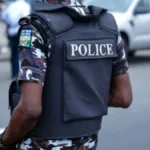
The Kano State Commissioner of Police, Ibrahim Adamu Bakori, has defended the police blockade of the venue of a planned meeting by members of the ‘Tinubu Must Go’ (TMG) movement, saying the action was motivated by security concerns and the need to protect participants and residents.
Bakori said the police did not intend to prevent the group from exercising its civic rights but wanted to understand the nature of the gathering and make adequate security arrangements to prevent a possible breakdown of law and order.
The development followed complaints by members of the movement, who accused the police of preventing them from accessing a private venue they had reportedly paid to use for their meeting on Sunday.
In a live video shared on his verified Facebook page, one of the movement’s conveners, Abba Hikima, alleged that more than 10 mobile police vehicles had been stationed around the venue to prevent members from entering.
Hikima described the action as a violation of their civic rights, arguing that Nigerian citizens do not require prior permission from security agencies to organise lawful gatherings.
He maintained that the group was entitled to assemble and express its political views, adding that the police action had strengthened the movement’s resolve to continue its activities.
“The Court of Appeal decision stands. I do not need to inform any security agent to hold my rallies,” Hikima said, warning that the group would consider holding protests and demonstrations in the future.
He also accused the Inspector-General of Police, Olatunji Rilwan Disu, and the Kano State Commissioner of Police of allowing political considerations to interfere with their statutory responsibilities.
Why Kano Police Blocked the Venue
Speaking in an interview with DCL Hausa, Bakori acknowledged that the TMG members had the right to organise a gathering but argued that notifying the police would have helped the command provide security for the organisers, participants and other residents.
According to him, he became aware of the planned meeting through social media and subsequently contacted Hikima to seek clarification about the event.
Bakori said Hikima informed him that the group intended to hold a meeting, after which the commissioner advised him to notify the command so that appropriate security arrangements could be made.
The police commissioner explained that the gathering was expected to attract approximately 700 people, making it necessary for the command to establish the nature of the event and obtain relevant information to facilitate security planning.
He said he asked Hikima to postpone the meeting and visit his office for discussions, but the convener reportedly said he would consult other members of the group before responding.
Bakori further claimed that he made several subsequent calls to Hikima but received no response.
He said the command was concerned about the possibility of tension arising from a large gathering whose participants, accommodation arrangements and activities were not known to the police.
The commissioner added that political groups from different parties had previously organised activities in Kano and that such events were generally accompanied by communication with the police to facilitate security arrangements.
Police Cite Previous Security Incident
Bakori also referred to an incident in Sabon Gari about two weeks earlier, claiming that the police had seized weapons and arrested some individuals who allegedly said they had come to Kano for political activities.
He said the previous incident informed the command’s decision to take preventive measures over the planned TMG gathering.
According to the commissioner, the police were not suggesting that the movement’s members had criminal records but were seeking to prevent potential security threats before they emerged.
“We need to protect them and the residents of the state. That is what happened,” he said.
Bakori maintained that the matter could have been resolved through dialogue between the movement’s organisers and the police, stressing that the command’s primary responsibility was to protect everyone involved.
He also argued that individual rights must be exercised with consideration for the rights and safety of other citizens.
However, the commissioner did not provide details in the interview establishing that the TMG gathering itself posed a specific security threat.
Bakori Denies Political Motive
The Kano police commissioner rejected allegations that the command’s action was politically motivated, insisting that the police were acting within their responsibility to maintain peace and security.
He said the command had previously received complaints from Hikima and had investigated them, taking appropriate action where necessary.
Bakori further stated that the police had provided security for activities organised by the same group on previous occasions.
“There is nothing political about this. It is about understanding the situation and protecting the people of Kano State and Nigeria,” he said.
He reiterated that the police did not seek to prevent citizens from expressing their opinions or organising lawful events, arguing that prior communication would have enabled the command to make adequate security arrangements.
Civic Rights and Police Responsibilities
The disagreement between the police and the TMG movement raises questions about the relationship between citizens’ rights to peaceful assembly and the responsibility of security agencies to maintain public order.
While the police have a duty to prevent violence and protect lives and property, any restriction on a peaceful political gathering must also be assessed against the constitutional protections for freedom of expression and peaceful assembly.
The Nigerian Constitution guarantees freedom of expression under Section 39 and the right to peaceful assembly and association under Section 40. The application of these provisions to a particular gathering depends on the circumstances and any relevant legal restrictions.
Consequently, the question is not only whether the police had security concerns, but also whether the measures taken were lawful, necessary and proportionate to an identifiable risk.
The accounts presented by Bakori and Hikima differ over the significance of notifying the police and the justification for restricting access to the venue. An independent assessment would require further details about the police operation, the circumstances surrounding the planned meeting and any applicable court decisions.
For now, Bakori maintains that the command acted to prevent a potential security challenge, while Hikima insists that the group’s civic rights were violated.
The incident highlights the need for security agencies and political movements to resolve disagreements through lawful procedures, transparent communication and respect for fundamental rights, particularly as political activities ahead of the 2027 general elections gather momentum.