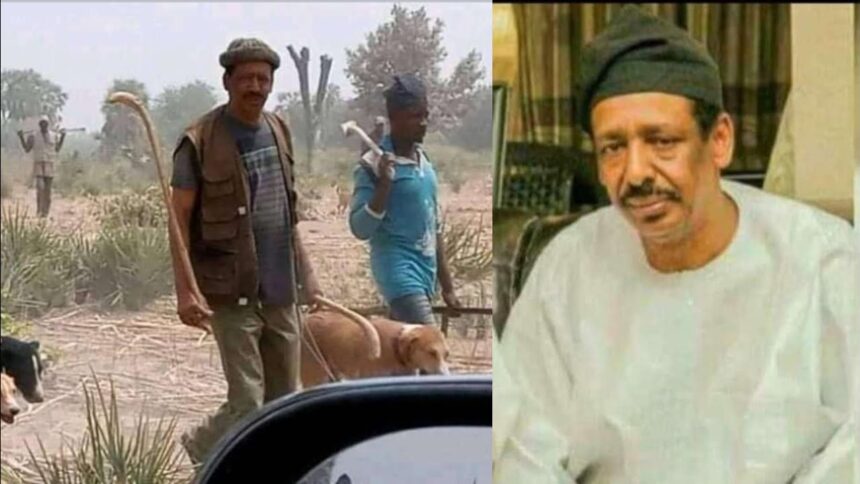
For years, criminals across Northern Nigeria knew one name they feared: Ali Kwara.
He was not a police officer. He did not wear a uniform or carry an official badge. Yet, armed with courage, experience, and a rifle, Ali Kwara became one of the region’s most respected crime fighters, pursuing kidnappers, armed robbers, and bandits through forests where many security personnel feared to go.
Known by nicknames such as “Belshazzar” and “The Lion of Azare”, Ali Kwara built a reputation as a fearless hunter who could track criminals through difficult terrain and uncover hideouts before many official security agencies could respond.
Born in Azare, Bauchi State, Ali developed his hunting skills from a young age. However, his targets later moved beyond animals as he turned his attention to fighting violent criminals terrorising communities across the North.
One of the most famous chapters of his career was his pursuit of notorious highway robber Alain Barkeji in the late 1990s. Barkeji had gained notoriety for attacking travellers and residents around Azare.
Ali Kwara tracked him through forests and eventually captured him after a gun battle. However, controversy followed after Barkeji was handed over to the authorities, with Ali questioning reports that the suspect later died while allegedly attempting to escape.
Beyond his operations against criminals, Ali Kwara frequently criticised security failures and warned that corruption within security institutions was allowing criminal groups to grow stronger.
Reports said he raised concerns about the involvement of some security personnel in criminal activities during meetings with senior government officials, including former Presidents Umaru Musa Yar’Adua and Muhammadu Buhari.
As insecurity worsened in parts of Northern Nigeria, communities increasingly turned to Ali Kwara when conventional security measures failed. Some state authorities reportedly sought his assistance in cases involving kidnappings, bandit attacks, and criminal hideouts.
Among his notable operations was the recovery of weapons hidden in forests, including the discovery of dozens of rifles in Bura Forest. He also assisted in the arrest of suspected kidnappers and helped recover ransom money and other items linked to criminal activities.
Ali Kwara was also credited with exposing alleged cases of security personnel supplying weapons to criminals, further strengthening his reputation as someone willing to confront both criminals and those accused of protecting them.
Despite his fearsome image among criminals, Ali Kwara was remembered in Azare not only as a hunter but also as a philanthropist. Residents said he supported widows, orphans, and vulnerable people by providing food supplies, paying school fees, and assisting families in need.
His supporters described him as a man who combined bravery with generosity, saying his influence extended beyond security operations.
Later in life, Ali Kwara suffered health challenges, including heart-related issues and injuries from previous accidents. He died on November 6, 2020, in Abuja.
His remains were returned to Azare, where thousands gathered for his funeral. Traditional rulers, government officials, and residents paid tribute to a man many described as a symbol of courage and community protection.
Although Ali Kwara is gone, his legacy continues through his younger brother, Ahmad Kwara, who has remained involved in efforts against criminal activities.
For many residents of Northern Nigeria, Ali Kwara represented a rare figure — a man without a badge who became a symbol of resistance against criminals. His story remains one of courage, controversy, and a life dedicated to confronting insecurity.