
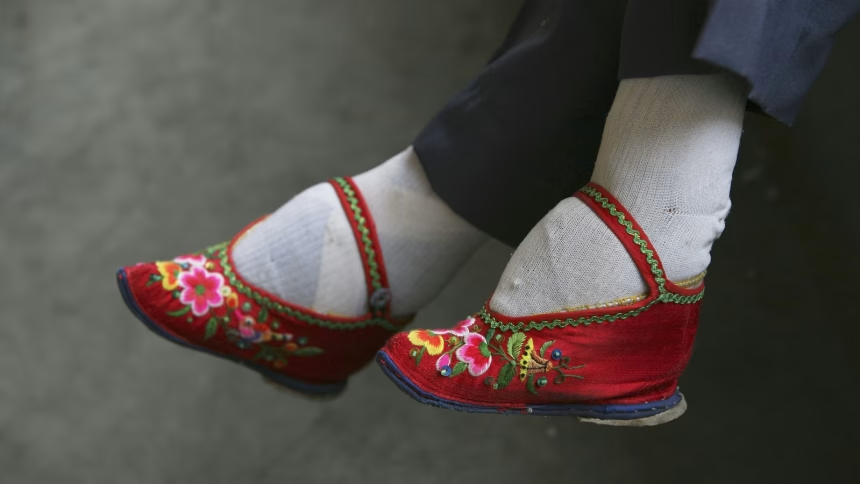
Foot Binding in China stands among the most extreme beauty standards in human history, for almost 1,000 years, millions of Chinese girls underwent the painful practice of foot binding to achieve tiny “lotus feet,” which many families viewed as symbols of beauty, status and marriageability.
Although Foot Binding in China disappeared during the 20th century, its history continues to show how powerful social expectations can shape women’s lives, historians believe foot binding started during the 10th century.
According to popular stories, a court dancer named Yao Niang wrapped her feet into the shape of a crescent moon and performed a graceful dance for Emperor Li Yu. The emperor admired her movements, and soon wealthy women began copying the style.
At first, only members of the elite practiced foot binding. Gradually, the custom spread throughout Chinese society. By the Qing Dynasty, many families viewed tiny feet as essential for securing a good marriage.
As a result, families often saw foot binding as an investment in a daughter’s future.
The procedure usually began when girls were between four and nine years old.
First, family members soaked the child’s feet in warm water. Next, they cut the toenails and bent the smaller toes underneath the sole. They then broke the toes and wrapped the feet tightly with long strips of cloth.
Afterward, they pulled the bindings tighter and tighter over time. The pressure forced the foot into a much smaller shape. Families regularly removed and replaced the bandages to maintain the desired form.
Consequently, the process caused intense pain and permanent physical changes.
Many girls developed infections, while others struggled to walk for the rest of their lives. In severe cases, some lost toes because of poor circulation and disease.
Foot binding represented more than physical appearance.
For many families, small feet signaled social status and refinement. Wealthy households believed that women with bound feet demonstrated discipline, obedience and elegance.
Moreover, bound feet often suggested that a woman did not need to perform manual labour. Because of this belief, many families considered the practice a mark of prestige.
The custom also reflected broader social values. During the Song Dynasty, stricter social expectations encouraged women to remain within the home and focus on family duties. Therefore, foot binding became closely linked to ideas about femininity and proper behaviour.
Many people assume men alone enforced foot binding. The reality was more complicated.
Mothers, grandmothers and other female relatives often carried out the process. They believed that bound feet would improve a girl’s chances of marriage and social advancement.
Although the practice caused suffering, many women accepted it because society rewarded those who followed the tradition. In addition, refusing to bind a daughter’s feet could reduce her opportunities in life.
As a result, the custom survived for centuries.
Eventually, opposition to foot binding began to grow.
Chinese scholars criticized the practice, while reformers argued that it harmed women’s health and limited their potential. Missionaries and educators also campaigned against the custom.
By the late 19th century, anti-foot-binding societies had emerged across China. These groups encouraged families to leave their daughters’ feet unbound and challenged long-standing beliefs about beauty.
Later, the Chinese government officially banned foot binding in 1912.
Nevertheless, the practice did not disappear immediately. In some rural communities, families continued binding girls’ feet for several decades. Over time, however, attitudes changed and the custom gradually vanished.
Today, foot binding stands as one of history’s most striking examples of how beauty standards can shape lives.
Although the practice has disappeared, its story remains relevant. Modern societies still place pressure on people to alter their appearance through fashion, cosmetic procedures and social media trends.
Therefore, foot binding serves as a powerful reminder that beauty standards are not fixed. They change over time, and societies often reconsider practices that once seemed normal.
Ultimately, the tiny lotus shoes displayed in museums today tell a larger story. They reveal how deeply cultural expectations can influence people’s choices, bodies and lives.