
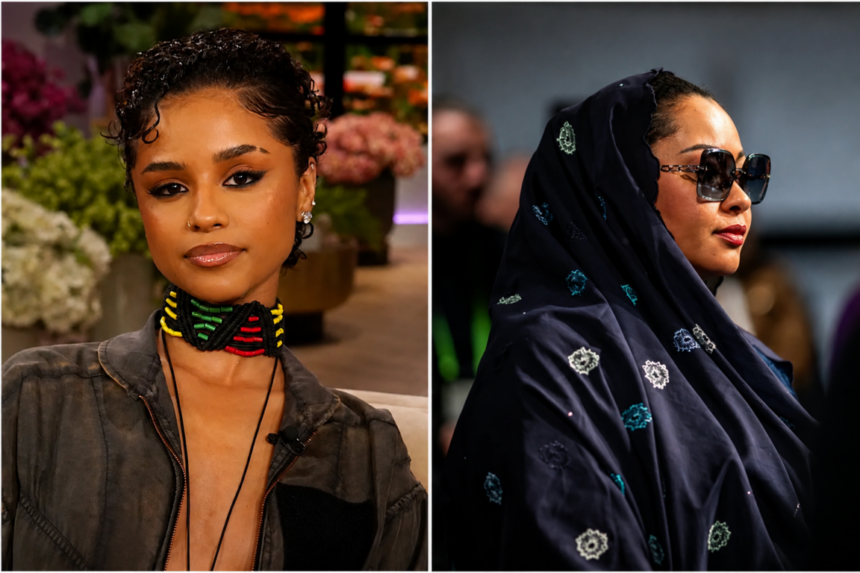
For years, Nigerians have celebrated South African music, welcomed South African entertainers and filled concert venues whenever major stars visited the country, but fresh calls for diplomatic reciprocity are raising a difficult question: should Nigeria continue extending open arms when its own artists and citizens often face barriers in South Africa?
That debate intensified after South African singer Tyla quietly removed Lagos from her APOP World Tour schedule. Although neither the singer nor her management has explained the decision, the development followed days of online backlash from Nigerians who accused the Grammy-winning star of remaining silent over recent xenophobic attacks against Africans, including Nigerians, in South Africa.
At the centre of the conversation, however, is not Tyla. It is Senator Natasha Akpoti-Uduaghan, whose call for equal treatment has shifted the discussion from entertainment to diplomacy.
Rather than focusing solely on Tyla’s cancelled Lagos concert, Senator Natasha Akpoti-Uduaghan has urged the Federal Government and the Nigeria Immigration Service to adopt a policy of reciprocity.
Her argument is simple. If Nigerian musicians and citizens face repeated visa challenges or restrictions in South Africa, South African entertainers should expect similar treatment when seeking entry into Nigeria.
According to the senator, reciprocity is not about revenge. It is about fairness and mutual respect between two African nations that share deep cultural and economic ties.
She stressed that her position was not a personal attack on Tyla but a broader call for balanced diplomatic relations.
While Tyla has not publicly commented on the recent xenophobic attacks, many Nigerians expected the singer to use her platform to condemn violence against fellow Africans.
Instead, her silence became the focus of criticism across X and Instagram.
Many users argued that public figures carry influence beyond music and should speak out when innocent lives are threatened.
The backlash grew stronger after memories resurfaced of Burna Boy’s cancelled South African concert and reports that visa issues prevented Ayra Starr from performing in the country.
For many Nigerians, these incidents created a feeling that cultural exchange between both countries has become one-sided.
Beyond Entertainment
The controversy has exposed deeper frustrations that extend far beyond concerts and celebrity culture.
Nigeria and South Africa remain two of Africa’s biggest entertainment markets. Their artists regularly collaborate, dominate streaming platforms and perform before international audiences.
Yet tensions over xenophobic attacks and visa restrictions continue to strain public opinion.
Many observers believe governments should strengthen diplomatic engagement while protecting citizens living abroad.
Others argue that artists also have a responsibility to promote unity during difficult moments.
A Question of Fairness
Whether Tyla eventually explains why Lagos disappeared from her tour schedule may no longer be the biggest issue.
Instead, Senator Natasha Akpoti-Uduaghan’s Nha reciprocity callatas has shifted attention to a larger conversation about fairness, diplomacy and respect between African nations.
As debates continue, many Nigerians hope future cultural exchanges will reflect not only shared music and entertainment but also shared responsibility, equal treatment and genuine African solidarity.