
President Bola Tinubu has warned Nigeria’s Regional Development Commissions against embarking on poorly conceived projects that consume public funds without delivering meaningful benefits to citizens.
Tinubu gave the warning on Monday while declaring open the first North Central Stakeholders Development Summit organised by the North Central Development Commission (NCDC) in Abuja.
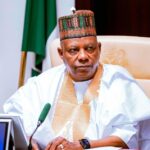
The President, who was represented at the event by the Secretary to the Government of the Federation, George Akume, said the regional commissions must prioritise projects with clearly defined objectives, realistic financing plans and measurable outcomes.
“The era of white elephant projects is over, and there is no excuse for the Commissions to become another conduit for wasting public funds,” Tinubu said.
He warned that the commissions must not become vehicles for corruption, political interference, marginalisation or ethnic considerations in the selection and execution of development projects.
According to the President, officials found to have violated the principles guiding the commissions would face appropriate sanctions.
Tinubu also directed the Federal Government to ensure the prompt release of funds due to the regional development commissions, stressing that adequate financing would be necessary for them to fulfil their mandates.
“Government will continue to give the NCDC and other Regional Development Commissions the political and financial backing to embark on key projects that will unlock the economic and industrial potentials of the nation,” he said.
“I therefore direct the Secretary to the Government of the Federation to ensure that all funds accruable to the Commissions are released as and when due.”
Beyond government funding, however, the President urged the commissions to explore alternative sources of financing, including private-sector investment, donor support and development finance.
He said relying solely on government allocations could limit the ability of the commissions to implement large-scale and sustainable development programmes across their respective regions.
Tinubu explained that the establishment of the regional development commissions was part of his administration’s Renewed Hope Agenda to address longstanding development disparities and create greater economic opportunities across the country.
“For us, the establishment of these Commissions is not an end in itself. Rather, it is our way of looking at why development gaps still exist and trying to close them up for the benefit of our people,” he said.
For the North Central region, the President identified agriculture, agro-processing, solid minerals, industrialisation, security, education and healthcare as key sectors requiring urgent intervention.
He urged stakeholders in the region to use the summit to develop a realistic and sustainable blueprint capable of guiding development over the long term.
The summit is focused on a proposed 20-year economic, infrastructure and social development plan for the North Central region.
It is being held under the theme, “The Great Leap Forward: A 20-Year Economic, Infrastructural and Social Development Plan for the North Central Region.”
The President’s warning comes as regional development commissions assume greater responsibility for addressing infrastructure deficits, unemployment, economic inequality and other development challenges across Nigeria’s geopolitical regions.
Tinubu said the success of the commissions would ultimately be measured not by the number of projects commissioned, but by their tangible impact on the lives and economic prospects of citizens.