
In a society where stories of fraud, corruption, dishonesty and abuse of trust often dominate public conversations, it is easy to begin believing that good people are becoming a minority.
But every now and then, an ordinary act of honesty reminds us that integrity is still alive.
A recent experience narrated by Aliyu Jalal has provided one of such reminders.
Jalal, in a post shared on his Facebook handle, recounted how a woman accidentally transferred ₦15,000 to his Opay account and later called repeatedly to ask for the money to be returned.
What followed was a simple decision to do what was right — but the reaction of the woman exposed something much deeper about the Nigerian society.
The Unexpected ₦15,000
According to Jalal, he woke up one morning to discover 17 missed calls from an unknown number.
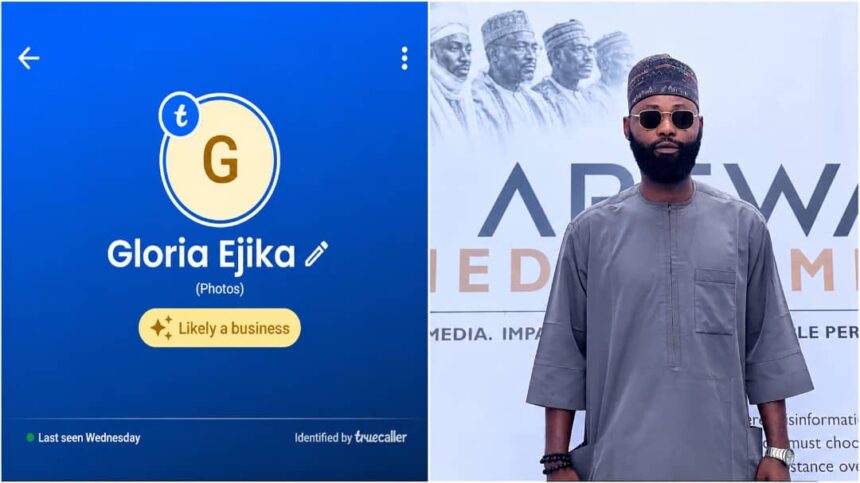
Curious about who had called him repeatedly, he checked the number on Truecaller before returning the call.
The number was registered in the name Gloria Ejika, a name he did not recognise.
When he eventually called back, a woman answered.
She greeted him politely and explained that she had mistakenly transferred ₦15,000 to his Opay account.
She pleaded with him to return the money.
According to Jalal, the woman even told him that he could keep ₦2,000 and return only ₦13,000.
It was an indication that she was not entirely certain that the stranger who received her money would voluntarily return all of it.
Jalal told her to give him a moment.
He switched on his internet connection and checked his account.
There it was.
A credit alert of ₦15,000 had indeed entered his Opay account from a person named Gloria Ejika, with details corresponding to the number that had called him.
There was no confusion about the transaction.
The money belonged to someone else.
So Jalal returned the full ₦15,000.
Not ₦13,000.
Not ₦14,000.
The entire amount.
He later called Gloria to inform her that the money had been returned.
“The Way She Appreciated Me”
Jalal said Gloria’s reaction surprised him.
He described the way she expressed her gratitude and showered prayers on him as though he had given her the ₦15,000 from his own pocket.
But he had not given her anything.
He had simply returned what belonged to her.
And that, according to Jalal, was the most important part of the experience.
The incident made him reflect on how much Nigerians have come to expect dishonesty from one another.
Why did Gloria offer him ₦2,000 to return her own money?
Perhaps because she was worried that he might refuse.
Perhaps because she had encountered people who would take advantage of such mistakes.
Or perhaps because she had come to believe that doing the right thing in Nigeria often requires a financial incentive.
Whatever the reason, the episode revealed a disturbing reality about trust in society.
When Honesty Becomes An Extraordinary Act
Jalal argued that what he did should not even be classified as an act of extraordinary kindness.
He simply returned money that did not belong to him.
Yet the woman’s reaction demonstrated how unusual such honesty can appear to people who have become accustomed to disappointment.
This raises a larger question about Nigerian society.
Have we reached a point where simple honesty is considered generosity?
Have we become so used to people taking advantage of one another that returning lost money is now regarded as a remarkable act?
And what happens to a society when people begin to assume that others will always choose self-interest over integrity?
The Bigger Nigerian Problem
For Jalal, the ₦15,000 story was not merely about a mistaken transfer.
He linked it to a much wider problem involving public and private life in Nigeria.
He pointed to the experience of citizens dealing with some government officials, arguing that there are situations where people are made to believe that they must offer something extra before receiving services they are already entitled to.
In such an environment, corruption can begin to feel normal.
A person may ask for a favour in exchange for a basic service.
A government official may expect gratification before doing an assigned duty.
A contractor may look for an opportunity to manipulate a process.
A citizen may begin to believe that honesty is foolishness because dishonest people appear to be benefiting.
Over time, these experiences can influence how people see one another.
The honest person becomes suspicious of everyone else.
The dishonest person becomes normalised.
And corruption begins to look less like an abnormal behaviour and more like an unavoidable part of everyday life.
But Nigeria Is Not Made Up Of Bad People Alone
This is where Jalal’s experience offers another perspective.
Nigeria has serious problems with corruption, fraud, dishonesty and abuse of public trust.
But it would be equally misleading to conclude that Nigerians are fundamentally dishonest.
There are millions of Nigerians who return lost property.
There are people who refuse bribes.
There are civil servants who perform their responsibilities without demanding anything in return.
There are traders who return excess money mistakenly paid by customers.
There are drivers who return forgotten belongings.
There are bank customers who report money mistakenly credited to their accounts.
There are neighbours who help one another without expecting compensation.
There are strangers who step forward to assist people in emergencies.
Most of these acts do not make the news.
That may be part of the problem.
Bad behaviour is often dramatic.
Honest behaviour is usually quiet.
A corruption scandal can dominate headlines for days.
But a person returning ₦15,000 may barely receive attention.
Yet society is built not only by the dramatic decisions of politicians and powerful individuals, but also by millions of ordinary choices made by ordinary people every day.
Honesty Is A Choice
Jalal also acknowledged that he is not perfect.
He described himself as a “grossly imperfect and deeply flawed human being.”
But he said he was not the kind of person who would knowingly keep Gloria’s money after she had explained what happened.
His reason was not that he had enough money.
It was that he could imagine himself in her position.
That simple act of empathy may be one of the most important lessons in the story.
Sometimes integrity begins with asking a simple question:
“What if this happened to me?”
What if the money mistakenly went to somebody else?
What if it was needed for food?
What if it was needed to pay school fees?
What if it was needed for medication?
What if it represented someone’s entire income for the week?
When people can put themselves in another person’s position, the temptation to exploit them may become weaker.
The Danger Of A Society That Expects The Worst
Gloria’s willingness to give away ₦2,000 simply to encourage the return of her own money demonstrates how deeply mistrust can become embedded in society.
She did not know Jalal.
She had no guarantee that he would return the money.
She apparently believed that offering him something might improve her chances.
Imagine the implications if such thinking becomes the norm.
If every Nigerian assumes that every stranger is dishonest, trust becomes increasingly difficult.
Businesses suffer.
Institutions become weaker.
Government services become transactional.
Communities become suspicious.
And people begin to justify their own dishonesty by pointing to the dishonesty of others.
A person may say:
“Everybody is doing it.”
“That is how Nigeria works.”
“If I don’t take it, somebody else will.”
Those statements are dangerous because they transform individual choices into social inevitability.
One Person Can Influence Another
Perhaps the most powerful part of Jalal’s reflection was his hope that the experience would influence Gloria.
He hoped the small act would inspire her to do the right thing whenever she found herself in a position to choose between honesty and personal gain.
That is how social values are transmitted.
One person behaves honestly.
Another person witnesses it.
That person remembers the experience.
Later, when faced with a similar situation, he or she makes the better choice.
The process may appear insignificant.
But repeated across thousands or millions of people, it can influence the culture of an entire society.
We Need More Stories About Good People
Nigeria’s public conversation frequently focuses on what is going wrong.
Corruption.
Fraud.
Kidnapping.
Political abuse.
Economic hardship.
Insecurity.
Dishonesty.
These are real problems and they must be reported.
But society also needs stories that remind people that integrity exists.
Not to cover up wrongdoing.
Not to pretend that Nigeria has no corruption.
But to prevent citizens from becoming convinced that everybody is bad.
Because once a society loses faith in the possibility of goodness, cynicism becomes powerful.
People stop trusting strangers.
They stop expecting integrity from leaders.
They stop believing that honesty matters.
And eventually, some begin to participate in the very behaviour they once condemned.
The Lesson From ₦15,000
Aliyu Jalal did not solve Nigeria’s corruption problem by returning ₦15,000.
He did not change government policy.
He did not reform a public institution.
He simply returned money that belonged to another person.
But sometimes that is where social change begins.
It begins with a person refusing to take what does not belong to them.
It begins with someone declining a bribe.
It begins with a worker doing a job without demanding an unofficial payment.
It begins with a citizen refusing to cheat another citizen.
It begins with someone choosing integrity even when nobody is watching.
The value of Jalal’s action was not the amount involved.
The ₦15,000 was important to Gloria, but the bigger value was the message.
Honesty still exists.
Empathy still exists.
Trust can still be earned.
And good people have not disappeared.
Nigeria Needs A Culture Of Integrity
The country does not need only stronger laws and tougher punishment for corruption.
It also needs a culture in which honesty is respected and dishonesty is not celebrated.
Parents must teach children that finding something does not mean owning it.
Schools must teach integrity alongside academic excellence.
Religious institutions must continue to emphasise ethical conduct.
Public officials must understand that government resources are not personal property.
Businesses must reject fraudulent practices.
And ordinary citizens must resist the temptation to exploit someone simply because they have the opportunity.
The ₦15,000 story is therefore bigger than a mistaken bank transfer.
It is a reminder that society is shaped by choices.
Some people will choose greed.
Some will choose dishonesty.
Some will abuse positions of trust.
But others will choose to do what is right.
And those people matter.
Because a society is not doomed simply because bad people exist.
It becomes doomed when good people stop believing that their choices matter.
Jalal’s decision to return Gloria Ejika’s ₦15,000 may have been an ordinary act of honesty.
But sometimes ordinary honesty is exactly what a society needs to see.