
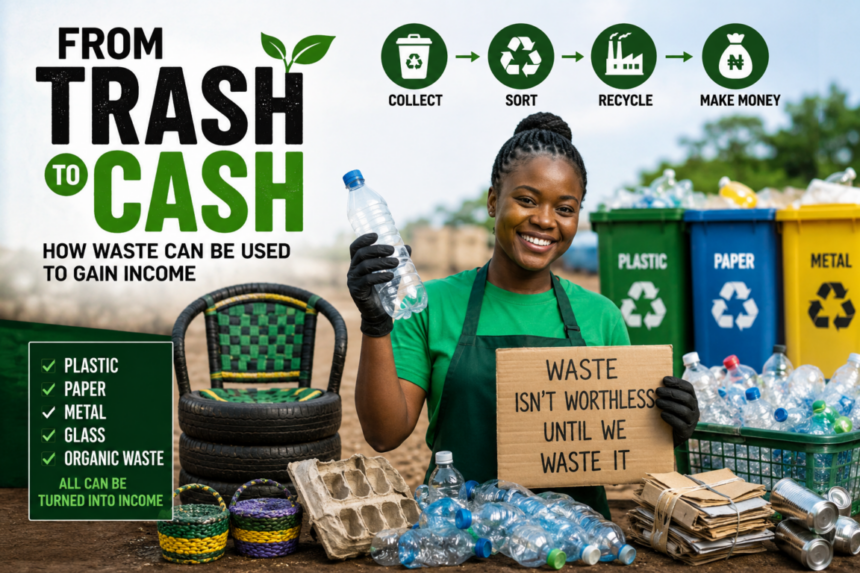
What many Nigerians throw away as useless waste could become a source of income as entrepreneurs across the country are collecting discarded plastics, tyres, bottles, paper, food waste and turning them into materials and products that can generate money.
Nigeria’s growing waste problem, particularly in urban areas, is creating opportunities for people who can collect, sort, process and reuse discarded materials.
Instead of allowing recyclable waste to end up on streets, in drainage channels or at dumpsites, individuals can turn some of these materials into valuable resources while helping to keep their communities cleaner.
Plastic Waste Can Become a Business
Plastic waste is one of the most common forms of waste found in Nigerian homes, markets, offices and public spaces.
Used bottles, containers and other plastic materials can be collected, sorted and sold to recycling companies or waste aggregators.
Some entrepreneurs take the process further by converting plastic waste into products such as furniture, paving materials, household items and decorative products.
For someone looking to start small, collecting plastic bottles from homes, offices, schools, events and neighbourhoods can provide an entry point into the recycling business.
The materials can then be properly sorted and sold to reliable buyers.
Food Waste Can Also Generate Income
Food waste does not necessarily have to end up in a landfill.
Vegetable peels, fruit waste and other organic materials can be processed into compost, which can provide nutrients for soil and serve farmers, gardeners and households growing vegetables.
Some organic waste can also support the production of animal feed and biogas when processed appropriately.
This creates opportunities for entrepreneurs who can safely collect and process organic waste.
Old Tyres Have Value
Used tyres are another type of waste that can be transformed into useful products.
With creativity and basic skills, old tyres can be converted into chairs, tables, flower pots, swings and other decorative items.
These products can be sold to households, schools, offices and businesses looking for affordable and creative designs.
Instead of treating old tyres as worthless waste, entrepreneurs can view them as raw materials for new products.
Paper, Bottles and Metal Can Be Sold
Paper and cardboard can also provide an income when collected and sorted properly.
Recycling companies need these materials as raw materials for producing new products. Glass bottles and scrap metal can similarly be collected and sold to businesses that reuse or process them.
However, proper sorting is important.
When recyclable materials are mixed with food waste and other rubbish, they become more difficult to recover and may lose their value.
How to Start a Waste Recycling Business
Anyone interested in turning waste into cash can start on a small scale.
The first step is to identify waste materials that have demand in the local market. This could include plastic bottles, cardboard, metal, glass or organic waste.
The next step is to identify reliable buyers, recycling companies or waste aggregators who can purchase the collected materials.
Proper sorting and storage can also help preserve the quality and value of the materials.
Entrepreneurs can gradually expand their operations as they gain experience, establish buyers and understand which types of waste offer the best opportunities in their area.
Waste Recycling Can Create Jobs
Turning waste into income can provide benefits beyond individual businesses.
A stronger recycling ecosystem can create jobs for people involved in collection, transportation, sorting, processing and manufacturing.
It can also reduce the amount of waste ending up on streets, in drainage systems and at disposal sites.
For communities struggling with waste management, recycling can therefore become both an economic opportunity and an environmental solution.
From Trash to Cash
The idea behind “From Trash to Cash” is simple: waste is not always the end of a product’s life.
With the right skills, creativity and access to a market, discarded materials can become valuable resources.
For Nigerians looking for small-business opportunities, waste recycling offers one way to earn income while contributing to cleaner communities.
What looks like waste to one person can become raw material, a product and a source of income for another.