
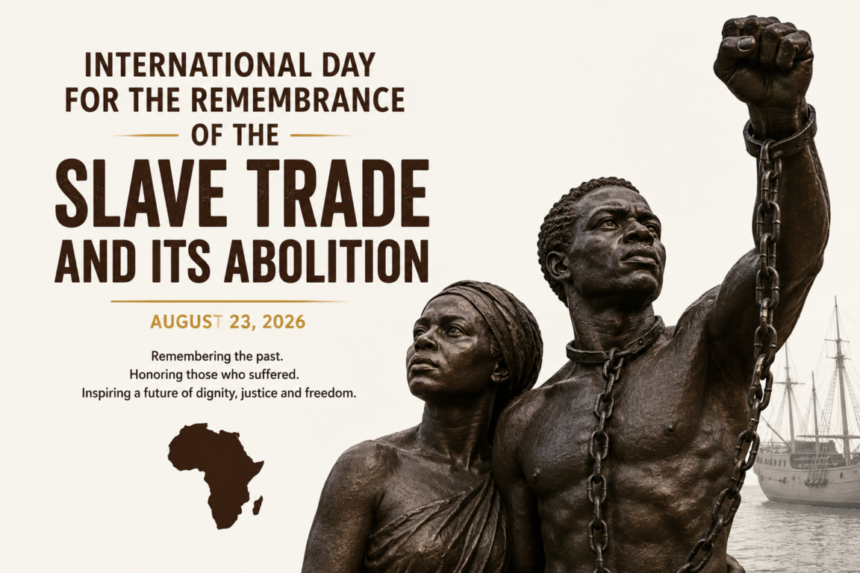
Every year on August 23, the world observes the International Day for the Remembrance of the Slave Trade and its Abolition, remembering the millions of Africans who suffered under the transatlantic slave trade and honouring those who resisted slavery and fought for freedom.
Established by UNESCO, the day promotes awareness of the history of the slave trade, remembers its victims and encourages reflection on its lasting impact on societies around the world.
August 23 marks the beginning of the Haitian Revolution in 1791, when enslaved people in Saint-Domingue, now Haiti, rose against French colonial rule and slavery.
The uprising developed into a major revolution that ultimately led to Haiti’s independence in 1804. Haiti became the first country to emerge from a successful slave revolt, making the revolution a powerful symbol of resistance to slavery and oppression.
Remembering the Victims
The transatlantic slave trade forcibly removed millions of Africans from their homes and transported them across the Atlantic to the Americas and other parts of the world.
Many died during the journeys, while survivors endured forced labour, violence and harsh living conditions. Families were separated and communities across Africa suffered significant social and economic losses.
Although slavery was eventually abolished, its consequences continue to shape societies today, including through racism, discrimination and inequality.
Nigeria’s Connection to the Slave Trade
Nigeria occupies an important place in the history of the transatlantic slave trade. Several coastal communities became major centres of the trade, with Badagry in Lagos State remaining one of the country’s best-known historical sites.
The town is home to sites such as the Badagry Heritage Museum and historic slave routes, which provide an opportunity to understand the experiences of Africans who passed through the region before being forcibly taken away.
Why the Day Still Matters
The International Day for the Remembrance of the Slave Trade and its Abolition is not only about looking back. It is also an opportunity to learn from history and confront the continuing effects of racism, discrimination and injustice.
For Nigeria and other African countries, the day provides an important platform to educate younger generations about the slave trade while highlighting the courage of those who resisted slavery and fought for their freedom.
As the world marks August 23, 2026, the commemoration offers an opportunity to remember the victims, honour those who resisted oppression and reflect on how understanding the past can help build a more equal and just future.