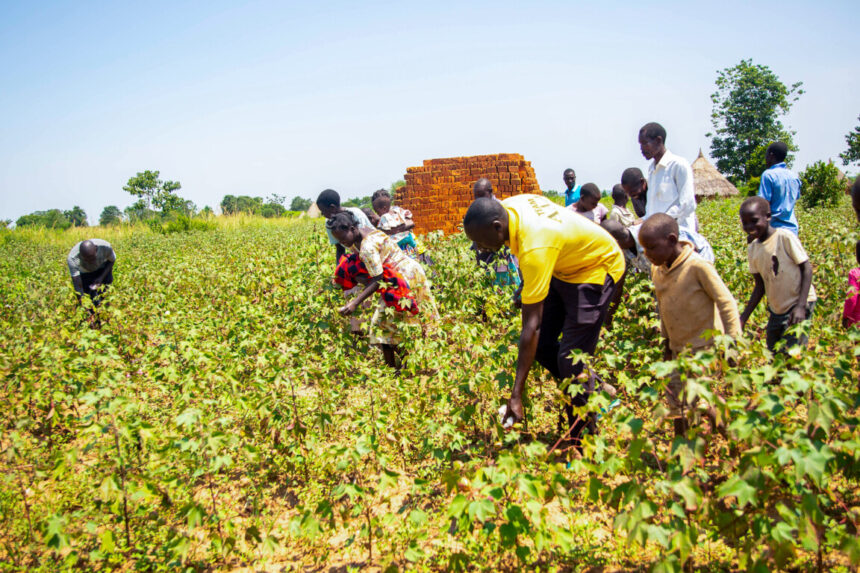
For cotton farmers in eastern Uganda, selling directly to ginneries is changing more than where they take their harvest—it is giving growers greater control over weighing, payment and access to markets, while helping some women turn seasonal cotton earnings into homes, education and productive assets.
For Nighty Acen, the decision to sell her cotton directly to Iki-Iki Cotton Ginnery in neighbouring Pallisa District marked a significant change in her farming journey.
Acen says bypassing village middlemen helped her avoid low prices and concerns over poorly maintained weighing scales. The income from her cotton harvest enabled her to build an iron-roofed house, contribute to her son’s marriage and purchase oxen.
The oxen have since become productive assets. She uses them to prepare her own fields and earns additional income by clearing land for other farmers.
Her experience reflects an emerging shift in eastern Uganda’s cotton trade, where farmers are increasingly organising through groups and cooperatives or establishing direct relationships with ginneries.
The approach is designed to secure known buyers, reduce losses between farms and ginneries and allow farmers to retain more value from their harvests.
Cotton Remains a Major Source of Rural Income
Cotton continues to play an important role in Uganda’s rural economy, supporting an estimated 150,000 to 200,000 smallholder households across more than 75 districts.
An African Development Bank project document cited in the report says Uganda produced approximately 1.22 million bales during the decade to 2023/24, generating about UGX1.045 trillion in farmer income and more than US$348 million in lint exports.
Northern Uganda remains the country’s main cotton-producing region, followed by eastern Uganda.
For many rural households, cotton’s seasonal income helps cover expenses that are difficult to meet through food crops alone.
But while women have traditionally provided much of the labour involved in cotton production, including planting, weeding, picking, carrying and sorting, decisions around marketing and prices were often controlled by men.
That dynamic is beginning to change.
Women Take a Bigger Role in Cotton Marketing
Jude Ongota, principal agricultural officer in Bukedea District, says women are playing a more visible role in organised cotton production and are increasingly involving their husbands.
He credits women with spearheading the initiative and bringing their families into cotton farming.
For farmers such as Aleje Modesta, cotton has evolved from a means of feeding her family into a commercial activity that has helped her acquire land and pay school expenses.
Modesta, who has grown cotton for nearly three decades, says her relationship with Lukonge Cotton Company Ltd provided improved seed, technical assistance and a market for her crop.
Her experience highlights what can happen when farmers are able to expand production while maintaining a reliable route to market.
Yet cotton farming remains labour-intensive. Farmers largely depend on rainfall, prepare their fields by hand, plant and weed their crops, manage pests and eventually pick the cotton over several weeks before receiving their seasonal income.
Farmer Cooperatives Strengthen Bargaining Power
One of the biggest changes taking place is the growing use of farmer groups and cooperatives.
Individual farmers often have limited negotiating power when traders arrive in rural communities. By combining their harvests, farmers can offer larger consignments and negotiate collectively with buyers.
The African Development Bank has similarly identified stronger farmer organisations and cooperative-based marketing as important mechanisms for improving market access and strengthening farmers’ bargaining position.
The Wawot-Anyim Cotton Farmers Group, for example, has established a relationship with Lukonge Cotton Company Ltd.
The group has 90 members, including 28 cotton growers—10 women and 18 men. Its members market their cotton collectively instead of negotiating individually with buyers.
For farmers, the arrangement can provide something particularly valuable: certainty.
Hellen Acham, chairperson of the Pallisa Farmers Association, says its formal agreement with Lukonge has provided participating farmers with greater certainty about where they can sell their cotton.
That can help farmers determine how much land and labour they can commit to production before planting begins.
Direct Sales Do Not Eliminate Farming Risks
While direct market access can improve farmers’ position after harvest, it cannot eliminate the challenges that occur before the cotton reaches the market.
Unreliable rainfall remains a major concern.
Hellen Ongaya, a farmer in Malera Town Council, says delayed rainfall affected her planting plans, with farmers in the area normally planting between March and April.
Other farmers point to declining yields, poor-quality seed, rising production costs and fluctuating cotton prices.
Florence Kadega, who has grown cotton since 2008, says she once earned more than UGX12 million, approximately US$3,150, from a single harvest. However, she says declining yields have since reduced her earnings.
Poor roads also add to farmers’ difficulties by making it more expensive to move cotton from farms to buyers.
Kadega is calling for improved roads and better access to quality seed and agricultural inputs. Such interventions could complement direct marketing by helping farmers increase production and reduce transportation costs.
Cotton Quality Determines Access to Global Markets
The challenges facing Uganda’s cotton industry extend beyond the farm gate.
Henry Kodaki Ojaro, secretary manager of the East Acholi Cooperative Union, says the price Uganda receives for cotton is influenced by international markets and the quality of its lint.
Uganda also remains heavily dependent on exports of raw cotton rather than domestic processing.
According to the African Development Bank document cited in the report, 93 per cent of Uganda’s cotton was exported as raw lint in 2023/24, while only about seven per cent was processed domestically.
The document counted 18 ginners, 26 ginneries, 13 cottonseed processors, six cotton-wool producers and two vertically integrated textile mills.
This means the future of Uganda’s cotton industry depends not only on producing more cotton but also on improving quality, strengthening local processing and ensuring farmers have access to appropriate seed and technical support.
Farmer groups could play an important role by helping growers access inputs, receive production advice, aggregate their harvests and maintain quality standards.
Cotton Income Is Creating Lasting Assets
For women such as Acen, the significance of direct cotton sales extends beyond the immediate payment received after harvest.
Acen says her cotton income has also supported the education of two children. Despite challenges including pests, low yields and market prices, she intends to continue growing the crop.
Her experience demonstrates the potential of cotton income to generate assets that continue providing value after the harvest has been sold.
For other farmers, cotton earnings have helped finance education, acquire land, build homes and purchase livestock.
The wider opportunity is therefore not simply about finding a better buyer. It is about giving farmers greater control over the commercial side of agriculture.
Can Direct Marketing Transform Uganda’s Cotton Industry?
The emerging direct-sales model offers a potential way for cotton farmers in eastern Uganda to shorten the distance between producers and processors.
If farmer organisations can negotiate collectively, ensure transparent weighing, secure prompt payment and provide reliable access to buyers, growers could retain more value from their harvests.
But the model will only succeed if it addresses the challenges that occur throughout the cotton value chain.
Farmers still need reliable rainfall or appropriate climate adaptation measures, quality seed, affordable inputs, technical support, good roads and access to transparent markets.
The next test will be whether direct-sales arrangements can be formalised, independently verified and expanded without simply replacing one powerful intermediary with another.
For women in particular, greater participation in marketing could ensure that their contribution to cotton production does not end when the crop is picked.
As eastern Uganda’s cotton farmers seek greater control over their harvests, the emerging model offers a simple but important lesson: producing the crop is only half the battle; having a fair and transparent route to the market can determine how much value farmers ultimately keep.
SEO Tags
Cotton farming, Uganda, eastern Uganda, agriculture, women farmers, farmer cooperatives, direct sales, cotton industry, rural development, African agriculture, market access, smallholder farmers.