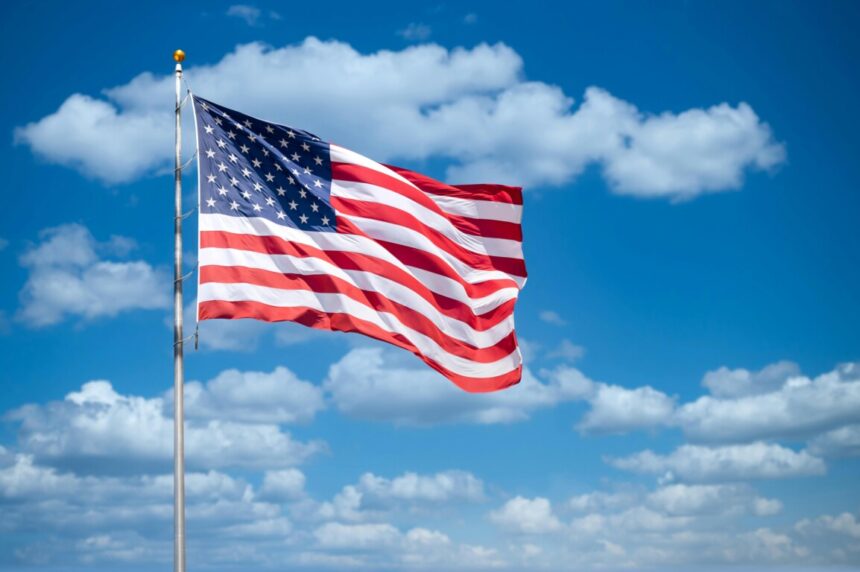
On July 4, 2026, the United States of America, USA marks its 250th anniversary, a milestone known as the Semiquincentennial.
From 13 British colonies that declared independence in 1776, America has grown into the world’s largest economy, the most powerful military force, and one of the most influential cultural and technological powers.
But behind the celebrations lies a more complicated story.
The United States has become a global symbol of democracy, innovation and opportunity, while also facing criticism over wars, racial inequality, political divisions and its influence in global conflicts.
So, after 250 years, how should America be judged?
The American story began with rebellion, In 1776, the colonies declared independence from Britain, arguing that all people are created equal and possess inalienable rights to life, liberty and the pursuit of happiness.
Those ideals became the foundation of the American republic.
Over the next two centuries, the nation expanded westward, fought a civil war that ended slavery, industrialised rapidly, and emerged from the Second World War as the world’s dominant economic and military power.
Following the collapse of the Soviet Union in 1991, America became the world’s sole superpower, shaping global politics, trade, finance and security.
THE GAINS: WHAT AMERICA HAS GIVEN THE WORLD
America’s influence extends far beyond its borders.
It remains the world’s largest economy, home to Silicon Valley and many of the world’s biggest technology companies.
The internet, GPS, modern computing, artificial intelligence, social media and numerous medical breakthroughs have all been driven significantly by American research and innovation.
Its universities consistently rank among the world’s best, attracting students from across the globe.
Hollywood dominates global entertainment.
American music, from jazz and blues to hip-hop and pop has shaped cultures worldwide.
The US dollar remains the world’s primary reserve currency, while institutions such as the International Monetary Fund and the World Bank have long reflected American economic leadership.
America has also played decisive roles in defeating Nazi Germany during World War II, rebuilding Europe through the Marshall Plan, containing Soviet expansion during the Cold War, and leading international responses to humanitarian crises and natural disasters.
THE SHORTFALLS: THE OTHER SIDE OF THE STORY
Yet America’s history is also marked by contradictions, the nation that proclaimed liberty was built partly on slavery.
For decades, African Americans faced segregation and systematic discrimination before the Civil Rights Movement forced legal reforms.
Native American communities were displaced through territorial expansion, today, debates over racial justice, immigration, policing and inequality remain unresolved.
Political polarisation has deepened in recent years, with sharp divisions over elections, abortion, gun rights and immigration.
Mass shootings continue to raise questions about America’s gun culture.
Healthcare remains among the most expensive in the world despite the country’s immense wealth.
Income inequality has widened, with enormous concentrations of wealth alongside persistent poverty.
AMERICA’S MANY WARS
Military power has become one of America’s defining characteristics.
Over 250 years, the United States has participated in dozens of wars and military interventions.
Among the most significant are:
- The War of 1812
- The Mexican-American War
- The American Civil War
- The Spanish-American War
- World War I
- World War II
- The Korean War
- The Vietnam War
- The Gulf War
- The Afghanistan War
- The Iraq War
- Military operations in Libya, Syria and against ISIS.
Since World War II, the United States has maintained hundreds of military bases across the globe and continues to spend more on defence than any other country.
Supporters argue these interventions have protected democracy, deterred aggression and maintained global stability.
Critics argue that some wars were based on flawed intelligence, caused widespread civilian suffering and produced long-term instability.
The Iraq War remains one of the most controversial examples, launched over claims that Saddam Hussein possessed weapons of mass destruction, claims that were never substantiated after the invasion.
The two-decade war in Afghanistan ended with the Taliban’s return to power in 2021, raising questions about the effectiveness of prolonged military intervention.
THE POWER OF PROPAGANDA
Military strength is only one part of American influence.
Throughout history, governments have used propaganda to shape public opinion during times of conflict, and the United States is no exception.
During both World Wars, posters, films and radio broadcasts encouraged enlistment, boosted morale and portrayed the enemy in negative terms.
During the Cold War, American media, cultural exports and international broadcasting promoted democracy and capitalism while challenging Soviet communism.
Following the September 11 attacks, public messaging emphasised the “War on Terror,” helping build domestic support for military operations in Afghanistan and Iraq.
In the digital era, propaganda has evolved.
Governments, media organisations, social media platforms and private actors all compete to shape public narratives.
The United States has often accused rivals such as Russia, China and Iran of conducting disinformation campaigns, while critics argue that Western governments and media have also framed conflicts in ways that advance strategic interests.
Media scholars generally distinguish between factual reporting, opinion, strategic communications and propaganda, though those boundaries can become blurred during wars.
Information has become a battlefield alongside land, sea, air, space and cyberspace.
AMERICA’S GLOBAL IMAGE
To many people, America represents freedom, innovation and opportunity.
Millions continue to migrate there seeking education, employment and a better life.
To others, America symbolises military intervention, economic dominance and geopolitical influence.
Its foreign policy has earned admiration from allies and criticism from opponents.
Often, the same action is interpreted differently depending on political perspective and national interest.
THE NEXT 250 YEARS
As America celebrates its 250th birthday, it faces new challenges.
China has emerged as its principal strategic competitor.
Artificial intelligence is transforming economies and warfare.
Climate change, cybersecurity, misinformation and global public health increasingly shape international security.
Domestically, questions remain about political unity, democratic institutions, economic inequality and social cohesion.
After two and a half centuries, the United States remains one of history’s most influential nations.
Its achievements in science, technology, education, medicine, culture and democratic governance have transformed the modern world.
At the same time, its history includes slavery, racial injustice, controversial wars and enduring political divisions.
The American story is neither one of unqualified triumph nor unrelenting failure.
It is the story of a nation that has repeatedly reinvented itself while grappling with the consequences of its immense power.
As the United States enters its next 250 years, the central question is no longer whether it can remain powerful, but how it chooses to use that power in war and peace, at home and abroad.