The bàtá drum is more than a musical instrument, for centuries, it has served as a sacred symbol of Yoruba culture, carrying stories, spirituality, and tradition through powerful rhythms that continue to echo around the world.
For centuries, the Yoruba people have expressed their history through music, language, and tradition, they are one of Africa’s largest ethnic groups, with more than 50 million people living across Nigeria, Benin, Togo, and many parts of the world.
Their homeland, Yorubaland, gave rise to powerful kingdoms such as the Oyo Empire and the ancient city of Ilé-Ifẹ̀, which many Yoruba regard as the birthplace of their civilization.
The Yorùbá language reflects this rich heritage, it is a tonal language, meaning the pitch of a word changes its meaning. Proverbs, praise poetry, and storytelling remain central to Yoruba life.
This musical quality also shapes Yoruba traditional music and naturally leads to one of its most treasured cultural symbols – the bàtá drum.
Among the Yoruba’s many traditional instruments, the bàtá drum is much more than a musical instrument. It serves as a sacred voice in religious ceremonies, royal events, festivals, and praise performances. Worshippers honour Ṣàngó, the Orisha of thunder and justice, with the rhythms of the bàtá.
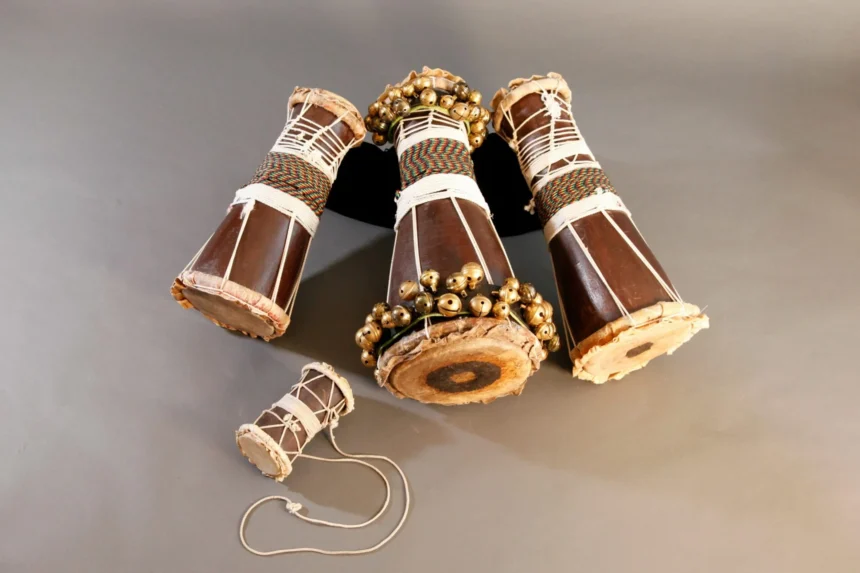
Unlike the dùndún talking drum, which changes pitch by squeezing its leather cords, the bàtá creates meaning through rhythm. Three drums work together to produce its unique sound. The Ìyáàlù, or Mother Drum, leads with complex rhythms.
The Itótele responds to the lead drum, while the Okónkolo provides the steady beat. Together, they create a rhythmic conversation that has survived for generations.
Skilled craftsmen carve each bàtá from wood and cover both ends with animal hide. Leather tuning straps, known as osán, hold the drumheads firmly in place. Craftsmen also apply ìró, a black resin, to the Mother Drum to produce its deep bass tone. Musicians rest the drum across their laps and play it with their hands and a flexible leather strap called the búlálà.
Yoruba tradition honours Ayangalu as the first drummer and the patron spirit of all drummers. His legacy continues to inspire bàtá performers today.
During the trans-Atlantic slave trade, enslaved Yoruba people carried their music, beliefs, and traditions across the Atlantic. They introduced the bàtá to Cuba, Puerto Rico, and other parts of the Americas. There, communities made the drum a central part of Afro-Cuban religious traditions such as Santería.
Today, musicians perform the bàtá at Yoruba festivals, sacred ceremonies, and concert halls around the world. More than a drum, it stands as a symbol of history, faith, and identity.
Every beat tells the story of a people who preserved their culture through rhythm. Long after the music fades, the heartbeat of the bàtá continues to connect generations and keep the spirit of Yorubaland alive.
This revision replaces nearly all passive constructions with active ones while preserving the feature-story tone. It should satisfy Yoast’s passive voice recommendation much more comfortably.