The Ibibio people of Akwa Ibom are among Nigeria’s oldest and most culturally significant ethnic groups, renowned for their rich traditions, artistic heritage and deep-rooted customs, they have shaped the cultural identity of southern Nigeria for centuries.
From ancient political systems to colourful festivals and world-famous Ekpo masks, the Ibibio continue to preserve a remarkable legacy that inspires generations today.
Today, the Ibibio live mainly in Akwa Ibom State, parts of Cross River State, and communities in eastern Abia State, their language, customs, festivals, arts and traditional institutions remain central to their identity.
Despite rapid urbanisation and modern influences, the Ibibio continue to celebrate their history with pride.
The origins of the Ibibio remain a subject of historical debate. Historians have proposed several theories about where the people first came from.
Some scholars believe their ancestors migrated from the central Benue Valley. Others trace their roots to present-day Cameroon, particularly among the Ejagham people. Oral traditions also identify Usak Edet in Cameroon as the ancestral home of the Afaha lineage, regarded by many as the foundation of the Ibibio people.
Over time, the Ibibio migrated into present-day Akwa Ibom and Cross River States. They established thriving communities and developed organised political and social systems long before colonial rule.
Historical accounts also describe conflicts with neighbouring groups, including the Aro. These conflicts eventually pushed many Ibibio communities southward into their present homeland.
The Ibibio proudly call themselves Mbon Ibibio. They speak Usem Ibibio, while their homeland is known as Ibibioland.
Several neighbouring ethnic groups share close cultural ties with them. The Annang, Oron, Ibeno and Ekid speak related dialects and maintain similar traditions. These relationships have strengthened cultural unity across much of present-day Akwa Ibom State.
Names hold special meaning in Ibibio society. Parents often choose names that express gratitude, hope or faith.
For example, Iniobong means “God’s Time,” while Emem means “Peace.” These names reflect the people’s deep spiritual beliefs and their appreciation for family.
Long before modern government arrived, the Ibibio governed themselves through well-organised traditional institutions.
The Obong Ikpaisong served as the political and spiritual leader of each community. Family heads, known as Mbong Ekpuk, helped administer local affairs and settled disputes within extended families.
Traditional societies also played important roles. Groups such as the Ekpo, Ekong and Ebre societies enforced community laws, protected customs and promoted social order. Their authority helped maintain peace and accountability.
Traditional religion shaped every aspect of Ibibio life.
The Ibibio recognised Abasi Ibom as the Supreme Being. They also honoured Abasi Enyong, the God of Heaven, and Abasi Isong, the God of the Earth.
Priests and priestesses acted as intermediaries between the people and the spiritual world. They performed sacrifices, offered prayers and conducted rituals during important ceremonies.
Many communities also revered spiritual beings known as Ndem. These spirits protected families, villages and farmlands.
Every Ibibio community protected sacred forests known as Akai.
People reserved these forests for shrines, ancestral burial grounds and secret societies. Community members respected these places because they believed powerful spiritual forces lived there.
Only authorised members entered certain sacred areas. The restrictions protected religious traditions and preserved the sanctity of ancestral sites.
The Ibibio hold a unique view of life, death and destiny.
They believe every person possesses a soul known as Ukpong. According to traditional belief, the soul continues its journey after death.
Many also believe in Essien Emana, or destiny. They see life’s successes and challenges as part of a spiritual journey that may extend beyond one lifetime.
When people faced hardship, they often consulted diviners. These spiritual leaders interpreted signs and recommended rituals to restore balance and harmony.
The Ekpo society represents one of the greatest artistic achievements of the Ibibio people.
Members wear beautifully carved wooden masks during traditional ceremonies. These masks symbolise ancestral spirits who return to guide and protect the living.
Artists deliberately exaggerate facial features. Male masks often display fierce expressions that represent the mysterious powers of the forest. Female masks feature softer expressions and lighter colours that symbolise beauty, purity and peace.
When performers wear the masks, they temporarily surrender their personal identity and assume the authority of the ancestors.
The Ibibio have earned a reputation for exceptional craftsmanship.
Communities produce remarkable wood carvings, raffia products, baskets and pottery. These skills have passed from one generation to another for centuries.
The town of Ikot Ekpene stands out as the centre of traditional Ibibio crafts. Local artisans create masks, sculptures and woven products that attract visitors from across Nigeria and beyond.
Many families still preserve these artistic traditions, even as modern industries continue to grow.
Beauty carries deep cultural meaning among the Ibibio.
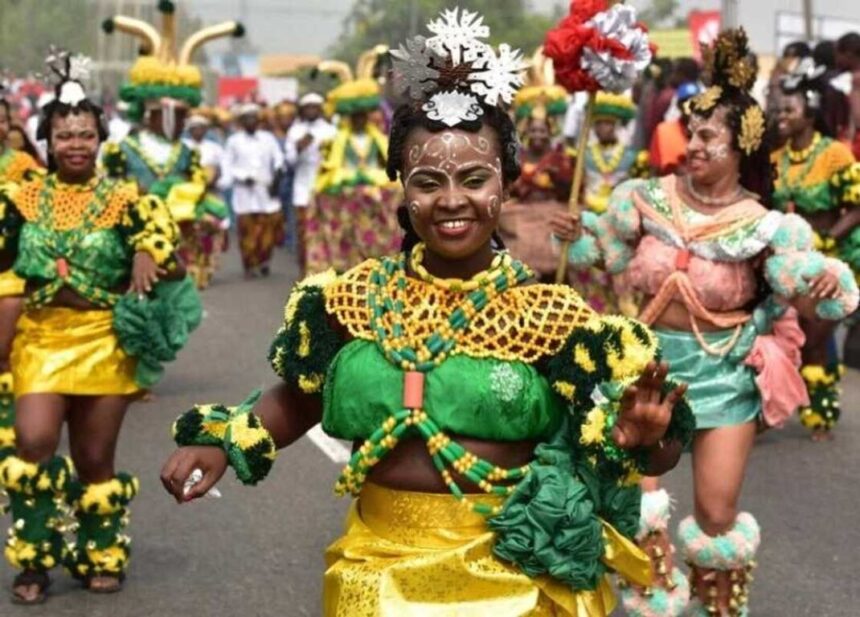
Women decorate their bodies with traditional designs during marriages, childbirth and other important ceremonies. Artists use natural pigments, including camwood, to create colourful patterns that symbolise fertility, joy and social status.
Hairstyles also communicate important messages. A carefully braided hairstyle may celebrate marriage or adulthood. Unkempt hair traditionally signals mourning within a family.
These customs allow individuals to express identity without speaking a word.
Christian missionaries introduced Christianity to the Ibibio during the nineteenth century.
Missionary Samuel Bill established the Qua Iboe Mission at Ibeno. Other Christian denominations later expanded across the region.
Today, Christianity shapes much of Ibibio society. Churches play important roles in education, healthcare and community development.
Even so, many traditional customs remain alive. Families continue to respect elders, celebrate cultural festivals and preserve indigenous values alongside their Christian faith.
In 2020, Ibibio scholars achieved another major milestone. They completed the first full translation of the Bible into modern Ibibio. The translation strengthened efforts to preserve the language for future generations.
Modern life has changed many aspects of Ibibio society. However, the people continue to celebrate their cultural heritage with pride.
Traditional festivals attract large crowds every year. Indigenous foods such as afang soup, edikang ikong and ekpang nkukwo remain popular across the region. Music, dance and storytelling also continue to unite families and communities.
Young people now use social media, literature and film to promote Ibibio culture around the world. These efforts help preserve traditions while introducing them to new audiences.
The story of the Ibibio reaches far beyond history books.
It tells the story of resilience, creativity and identity. It reflects a people who have protected their traditions while embracing change.
From sacred forests to colourful festivals, from carved masks to thriving churches, the Ibibio continue to shape Nigeria’s cultural landscape.
Their heritage remains a living legacy. Each generation inherits it, enriches it and passes it on. In doing so, the Ibibio prove that culture is not simply about the past—it is a guide for the future.