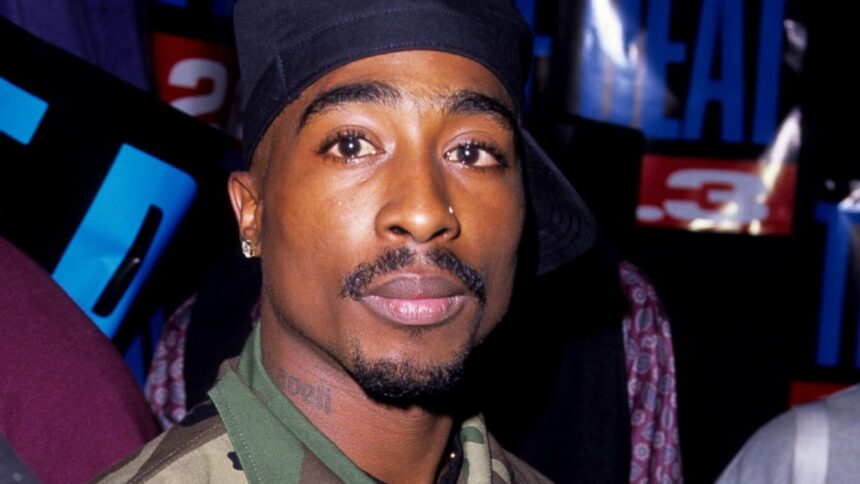
Nearly three decades after Tupac Shakur was gunned down on a Las Vegas street, the murder that shocked the music world is finally heading into a courtroom.
On Monday, former gang leader Duane “Keffe D” Davis will stand trial in Las Vegas over the 1996 killing of the rap icon.
The case could last about a month, but one question already hangs over the proceedings: Will the trial finally reveal who pulled the trigger?
Prosecutors do not need to prove that Davis fired the fatal shots. Instead, they plan to argue that he helped organize the attack, supplied the gun and played a key role in the events that led to Shakur’s death.
Davis, 63, has pleaded not guilty. If the jury finds him guilty, he could spend the rest of his life in prison without parole.
The trial comes after years of rumors, theories and conflicting accounts about one of the most famous unsolved murders in American music.
It all began on September 7, 1996. Shakur was 25 and at the height of his career. He had travelled to Las Vegas with Death Row Records boss Marion “Suge” Knight to watch heavyweight boxing champion Mike Tyson fight at the MGM Grand.
What happened after the fight would change hip-hop history forever. According to prosecutors, tensions between Shakur’s Death Row camp and the South Side Compton Crips had reached a dangerous point. After the Tyson fight, Shakur and Knight confronted and assaulted Orlando “Baby Lane” Anderson, a member of the Crips and Davis’s nephew.
The confrontation reportedly followed an earlier dispute involving the theft of a Death Row associate’s chain. Prosecutors say that confrontation gave Davis and his associates a reason to seek revenge. Later that night, Shakur and Knight travelled through Las Vegas in a BMW. A white Cadillac pulled alongside their vehicle, Then came the gunfire and several shots struck Shakur. Paramedics rushed him to hospital, but he died six days later, on September 13, 1996. He was only 25.
The shooter disappeared, and investigators failed to make an arrest for decades, the case seemed destined to remain another famous cold case, then Duane Davis published a book. In 2019, Davis released a memoir that would later draw intense attention from investigators.
In the book, he acknowledged that he sat in the front passenger seat of the Cadillac on the night Shakur was shot. He also said he handed a firearm to people sitting in the back of the vehicle.
However, Davis did not identify the person who opened fire. That detail could become critical during the trial.
Prosecutors do not simply have to establish that Davis was in the Cadillac. They must convince the jury that he took part in the plan to kill Shakur or knowingly helped make the attack possible. His own account could therefore become one of the prosecution’s most important pieces of evidence.
Davis had also discussed the shooting publicly before his memoir appeared. Those comments, combined with information in the book, helped investigators reopen the case. Las Vegas police arrested him in September 2023.
The arrest marked a major breakthrough in an investigation that had frustrated authorities and fascinated the public for almost 30 years.
Davis has since changed his account and insists that he is innocent. In a March 2025 interview with ABC News from prison, he denied killing anyone and argued that investigators had no evidence placing him in Las Vegas that night.
He also claimed that he never read the memoir himself. According to Davis, he simply gave his co-author details about his life, while the co-author carried out his own research and wrote the book. “I just gave him details of my life,” Davis said. “And he went and did his little investigation and wrote the book on his own.”
That explanation will now face scrutiny in court. One of the biggest questions surrounding the trial remains simple: If Davis did not pull the trigger, who did?
The other people believed to have travelled in the Cadillac that night have since died. That means prosecutors cannot rely on the alleged gunman to explain what happened inside the vehicle. Instead, they will build their case around Davis’s past statements, the events before the shooting, witness accounts and other evidence. The absence of the alleged shooter could leave one crucial part of the story unanswered.
It also raises another question: Can prosecutors prove murder without proving that Davis fired the gun himself?
The answer could determine the outcome of the trial. The case also takes the court back to one of the most bitter periods in hip-hop history.
During the 1990s, Shakur stood at the center of a fierce rivalry between the West Coast and East Coast rap scenes. Death Row Records, led by Suge Knight, represented much of the West Coast’s power in the music industry.
Across the country, Bad Boy Records, founded by Sean “Diddy” Combs, had become one of the leading forces on the East Coast. The label also represented Christopher Wallace, better known as The Notorious B.I.G. Shakur and Wallace had once been friends.
Their relationship changed after Shakur survived a 1994 shooting in New York. Shakur later accused people connected to the East Coast rap scene of knowing about the attack. The dispute grew through diss tracks, interviews and public accusations. Then tragedy struck Shakur died in September 1996 six months later, in March 1997, Wallace was shot and killed in Los Angeles.
Neither murder produced a criminal conviction at the time. The deaths turned what had started as a rivalry between music scenes into one of the darkest stories in hip-hop. Gang tensions added another layer to the conflict. Death Row had strong ties to the Mob Piru faction, which formed part of the wider Bloods alliance. Knight had ties to the group.
Davis, meanwhile, had links to the South Side Compton Crips. The two groups had a long history of rivalry.
According to prosecutors, Anderson’s confrontation with Shakur and Knight at the MGM Grand provided the immediate spark for the events that followed. But whether that confrontation alone explains Shakur’s murder remains a major question.
Was the shooting an act of revenge?
Did the wider Death Row-Bad Boy feud play a role?
Or did several conflicts come together that night?
Those questions have kept fans and investigators debating the case for decades. The investigation itself faced major obstacles.
Witnesses did not provide enough information to build a strong case, while physical evidence proved difficult to connect to a suspect. As the years passed, key people connected to the shooting died. Davis’s public statements eventually changed the direction of the investigation.
His memoir gave authorities an account of his presence in the Cadillac. His earlier comments to journalists and a 2008 interview with police also attracted attention. Davis’s lawyers later tried to prevent prosecutors from using the memoir and his earlier statements in court.
The legal fight over that evidence could become important as the trial unfolds. Another name has also entered the conversation: Sean Combs.
A television documentary, Sean Combs: The Reckoning, referenced an interview in which Davis allegedly told police that Combs offered him $1 million to kill Shakur. That claim has added another layer to a case already filled with unanswered questions.
However, an allegation does not prove that the alleged offer happened. It also does not establish that Combs played a role in Shakur’s murder. The central criminal case remains focused on Davis and his alleged involvement in the shooting.
Still, the claim is likely to draw attention because of the long-running rivalry between Death Row and Bad Boy Records. For Shakur’s family, however, the case is about more than the rivalry.
In May, Shakur’s stepbrother, Maurice Shakur, filed a wrongful-death lawsuit in civil court. The lawsuit argues that people involved in Tupac’s killing have avoided accountability for decades. That frustration reflects a feeling shared by many people who have followed the case.
For fans, the mystery has never been only about the identity of the shooter. They want to know why Shakur died at 25, who wanted him dead, what happened inside the Cadillac and why authorities needed almost three decades to bring a suspect before a jury.
Now, the court will have an opportunity to examine those questions. But the trial may not answer all of them.
The person who allegedly pulled the trigger is dead. The other men linked to the Cadillac are also dead. And Davis maintains that he did not kill Shakur. That leaves prosecutors with the difficult task of proving their case through the evidence that remains.
For nearly 30 years, Tupac’s death has lived somewhere between fact and legend.
His music survived him. His influence grew. His death became the subject of documentaries, books and countless theories. But a courtroom operates differently from popular culture. Rumors are not evidence, theories are not convictions, and suspicion alone cannot establish guilt.
As jury selection begins in Las Vegas, the world will once again turn its attention to the night of September 7, 1996.
The trial may finally establish what role Duane “Keffe D” Davis played in the killing.
It may also leave the biggest question unanswered.
Who actually pulled the trigger?
After nearly three decades, that may be the question everyone is still waiting to hear answered.