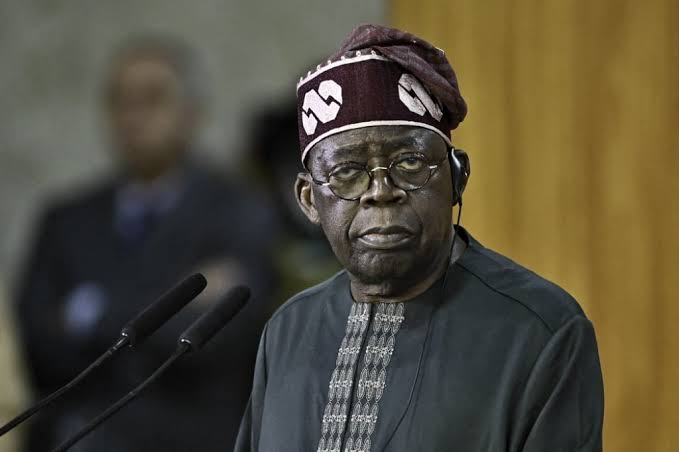
President Bola Ahmed Tinubu has assured Nigerians that the country’s refineries will be revived after undergoing a comprehensive reset, restructuring and technical review aimed at making them commercially viable and profitable.
The President gave the assurance on Thursday in Abuja when he received the National Executive Council of the Nigerian Union of Petroleum and Natural Gas Workers (NUPENG), led by its National President, Comrade Salimon Akanni Oladiti, at the State House.
Tinubu said the Federal Government would not allow the nation’s refineries to waste away, considering the huge investments made in the facilities over the years.
He explained that the government would adopt an evidence-based approach to addressing the structural, operational, financial and managerial challenges affecting the refineries.
“The refineries that you mentioned are going to come back to work; we’re just building a very firm, resetting, and structural reworking of the economy of it,” the President said.
He stressed that merely seeing flames and smoke from a refinery does not necessarily mean the facility is functioning effectively, arguing that the ultimate measure of success should be profitability and the ability to deliver value to Nigerians.
“Ordinary flame and smoke of a refinery doesn’t mean that it’s working until it’s profitable and yields the value for which it is built,” Tinubu said.
The President also said he had accepted responsibility for fixing the challenges associated with the country’s inherited assets and liabilities, regardless of what may have happened under previous administrations.
“No matter what has happened in the years past, it’s now my responsibility as president to fix it and make it work for the greatest common good of our population. I take responsibility for that, and we will do it,” he said.
Tinubu also appealed to Nigerians and stakeholders to support the democratic process, promising that the administration would continue working towards a better Nigeria.
On local government autonomy, the President said constitutional issues surrounding its implementation were being reviewed, with the possibility of fine-tuning some aspects of the policy.
He called for understanding among stakeholders as the government works through the constitutional considerations.
The President also recalled his relationship with the late former NUPENG President, Frank Kokori, whom he credited with contributing to Nigeria’s democratic struggle.
“You brought good memories of my relationship with Frank Kokori; may his soul rest in peace. We struggled for this democratic dispensation together, and it was very tough for us to have this democracy,” Tinubu said.
He further promised greater inclusion of NUPENG in the implementation of the Presidential Initiative on Compressed Natural Gas (CNG), while challenging the union to ensure that the benefits of the programme reach ordinary commuters.
Meanwhile, the Minister of Information and National Orientation, Mohammed Idris, commended NUPENG for acknowledging what he described as the positive outcomes of the Tinubu administration’s reform agenda.
Idris said the recognition from NUPENG was significant because trade unions have historically had disagreements with governments over economic policies.
He recalled previous engagements between the Federal Government and organised labour, including the approval of wage increases and discussions on the review of the national minimum wage.
The minister particularly noted NUPENG’s acknowledgement of the removal of fuel subsidy and ongoing infrastructure projects across the country.
Earlier, the NUPENG President, Comrade Salimon Akanni Oladiti, commended Tinubu for taking what he described as the bold decision to remove the fuel subsidy.
Oladiti said the policy had helped reduce what he described as decades of financial drain and depletion of national resources, while freeing funds for infrastructure and other sectors.
He also praised the administration’s efforts to rehabilitate and construct major highways across the country, highlighting the 750-kilometre Lagos-Calabar Coastal Highway and the 1,068-kilometre Sokoto-Badagry Superhighway.
According to him, improved roads have direct implications for the safety and welfare of NUPENG members, particularly tanker drivers and other road users.
“For our members, a good road is the difference between arriving home safely and never arriving at all,” Oladiti said.
He, however, urged the President to intensify efforts to revive Nigeria’s refineries, stressing that functional refineries would strengthen the country’s energy security, reduce dependence on imported petroleum products and create more employment opportunities.
The NUPENG leadership later decorated President Tinubu as the Grand Patron of the union.
The development comes amid continued efforts by the Federal Government to reposition Nigeria’s petroleum industry, with the administration maintaining that domestic refining capacity remains critical to reducing fuel import dependence and strengthening the country’s energy security.