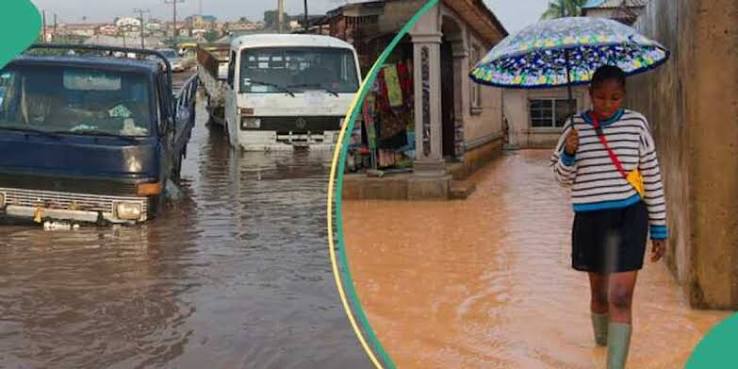
The Nigerian Meteorological Agency (NiMet) has issued a fresh 10-day flood warning for Lagos, Ogun and 25 other states. The agency said the risk of flash flooding will increase as the 2026 rainy season reaches its peak.
NiMet explained that weeks of heavy rainfall in June have left soils across many parts of the country fully saturated. Because the ground can no longer absorb much water, even moderate rainfall could trigger flash floods. The agency urged residents in low-lying communities, urban centres, coastal areas and places with poor drainage to remain alert.
The states listed as most vulnerable are Taraba, Sokoto, Borno, Zamfara, Kebbi, Katsina, Kaduna, Nasarawa, Plateau, Adamawa, Kwara, Kogi, Oyo, Ogun, Lagos, Osun, Ekiti, Delta, Edo, Abia, Imo, Anambra, Enugu, Akwa Ibom, Cross River, Rivers and Bayelsa.
NiMet warned that the expected rainfall could cause localised flooding in many communities. Floodwaters may block major roads, delay travel and disrupt public transport. The agency also warned that electricity and telecommunications services could suffer temporary interruptions.
Motorists may face poor visibility during heavy rain, while airlines could experience weather-related challenges. In addition, flooded farmlands may damage crops, affecting farmers and food production. Roads, bridges, drainage systems and other public infrastructure could also suffer damage.
Lagos and several coastal states remain on high alert because of their greater exposure to flooding. Ogun, Ondo, Rivers, Bayelsa, Delta, Cross River and Akwa Ibom have all experienced repeated flood alerts in recent weeks. NiMet said their coastal location, low-lying terrain and overstretched drainage systems make them especially vulnerable.
In Lagos, recent heavy rainfall has flooded roads and residential areas. Many commuters have been stranded, while businesses have recorded losses after floodwaters overwhelmed drainage channels. The repeated flooding has disrupted daily activities across several communities.
Health experts have also warned that stagnant floodwaters could increase the spread of diseases such as cholera, typhoid and malaria. They advised residents to drink clean water, maintain proper hygiene and ensure food is prepared safely.
NiMet urged residents to avoid driving or walking through floodwaters. Drivers should also exercise extra caution during heavy rainfall because visibility can reduce quickly. The agency further advised people not to seek shelter under tall trees during thunderstorms because of the danger of lightning strikes.
Residents should also stay alert for strong winds, which often occur before thunderstorms. Meanwhile, airline operators should obtain airport-specific weather reports to support safe flight operations throughout the warning period.
The agency stressed that early preparation remains the best way to reduce the impact of flooding. It called on State Emergency Management Agencies (SEMAs), the National Emergency Management Agency (NEMA), local authorities and community leaders to strengthen emergency response plans.
Finally, NiMet advised residents in flood-prone communities to clear blocked drainage channels, dispose of waste properly and remain vigilant as the rainy season intensifies. The agency said taking these preventive steps can help reduce the impact of flash floods and protect lives and property.