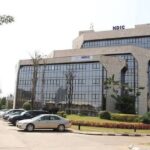

The Federal Government has strengthened efforts on health outbreak prevention Nigeria through new partnerships with health research centres, the move aims to improve disease control and strengthen national health security.
The Nigeria Centre for Disease Control and Prevention (NCDC) says this partnership will also strengthen Nigeria’s overall health security system. It will improve early detection and response to infectious diseases.
The Director-General of the NCDC, Dr Jide Idris, made this known during a technical visit to the Kano Independent Research Centre Trust (KIRCT) in Kano on Wednesday. The visit focused on expanding cooperation between government and research institutions.
Idris said the agency will deepen its relationship with KIRCT and other research centres nationwide. He explained that this will help improve disease surveillance and control efforts across the country.
He also stressed the need for closer work with state governments. According to him, stronger coordination will help health authorities identify and respond faster to potential outbreaks.
“We are also pushing for more collaborations with various state governments to support them in detecting and controlling factors that could lead to disease outbreaks,” he said.
Idris noted that Nigeria already has a large number of skilled scientists. However, he said their work must be better coordinated to achieve stronger results.
He added that the NCDC plans to fast-track collaboration by relying more on local expertise. This, he said, will reduce dependence on foreign-led research and strengthen national capacity.
“Our plan for collaboration needs to be fast-tracked because we have many scientists across the country,” he said. “We need to bring them together and encourage them to do work that was hitherto done by people outside Nigeria.”
He said stronger local research capacity will improve national health security. It will also position Nigeria as a stronger voice in global health research.
Idris also commended KIRCT for its facilities and professional staff. He described the centre as well structured and capable of supporting national health goals.
“We are going to work together,” he said. “We will exchange materials, train jointly, link with each other on public health decisions, and see how we can support them.”
In his response, KIRCT Director-General Professor Hamisu Salisu welcomed the NCDC team. He said the visit reflects growing recognition of the centre’s role in public health research.
“He has come, he has seen what we have, and I am very excited that he has a positive impression of our work here,” he said.
Salisu said KIRCT already works with the Kano State public health system. However, he called for stronger collaboration with the NCDC, especially in handling sensitive bio-specimens.
He explained that while the centre operates independently, it still depends on regulatory guidance from the NCDC for high-risk infections.
“We are a private entity. We collaborate with the government and with everybody,” he said. “But for certain sensitive areas, especially deadly infections, we must have the green light from the NCDC because the Centre is the lead agency for health security in this country.”