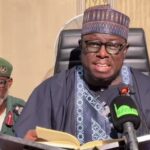

A policy advocate, Ameer Lukman Haruna, has called on President Bola Ahmed Tinubu and other stakeholders to consider the establishment of a National Community Police Model as an alternative to the proposed creation of State Police in Nigeria.
In an open letter addressed to President Tinubu, Haruna argued that Nigeria requires a policing system that is closer to communities while maintaining national standards, professionalism, and accountability.
He commended the Federal Government’s efforts toward addressing insecurity but expressed concerns that the establishment of separate state-controlled police forces could create additional challenges if adequate safeguards are not put in place.
Nigeria has continued to face security threats including terrorism, banditry, kidnapping, communal conflicts, farmer-herder clashes, and other forms of violent crimes. According to Haruna, these challenges require a policing approach that is intelligence-driven, community-focused, and trusted by citizens.
Under the proposed National Community Police Model, officers would be recruited from the communities they serve but remain fully integrated into the Nigeria Police Force.
He proposed that recruitment, training, discipline, welfare, and operational standards should remain under the responsibility of the Federal Government to ensure uniformity across the country.
According to him, community-based officers would have better knowledge of local terrain, culture, languages, and security concerns, which would improve intelligence gathering and early response to criminal activities.
“Security should be local in presence, national in standards and impartial in service,” Haruna stated.
He argued that officers drawn from local communities would have stronger commitment because they would be protecting their own families, neighbours, schools, markets, and places of worship.
The policy advocate also highlighted that the model could improve public confidence in law enforcement by encouraging cooperation between citizens and security agencies.
He further noted that nationwide recruitment of community police officers could provide employment opportunities for young Nigerians while strengthening grassroots security structures.
Concerns Over State Police
While acknowledging the arguments supporting State Police, Haruna urged policymakers to carefully examine possible risks associated with the model.
One of his major concerns is political interference, warning that state-controlled police structures could become vulnerable to misuse by political actors, especially during elections or periods of political tension.
He also questioned the financial capacity of some state governments to sustain a professional police service, noting that effective policing requires consistent funding for salaries, equipment, training, housing, insurance, and welfare.
“An armed security officer who goes months without receiving a salary may face challenges in maintaining morale and professionalism,” he said.
Haruna also raised concerns about Nigeria’s diversity, stressing that any policing structure must guarantee equal protection for all citizens regardless of ethnicity, religion, or political affiliation.
He warned that differences in funding and institutional capacity among states could lead to unequal policing standards across the federation.
The possibility of conflicts between federal and state security structures, duplication of responsibilities, and coordination challenges during national security operations were also listed among his concerns.
Call for Stronger Community-Based Security
Haruna urged President Tinubu, the National Assembly, state governors, and security stakeholders to consider the National Community Police Model as part of ongoing security reforms.
He argued that Nigeria does not necessarily need multiple police forces but rather a stronger Nigeria Police Force supported by an effective community policing framework.
According to him, the proposed model would strengthen intelligence gathering, improve emergency response, create jobs, protect minority communities, and promote national unity.
Haruna, who signed the letter as a Policy Advocate and Banker, said the focus of security reforms should be on building a system that is close to citizens while maintaining professionalism and impartiality.