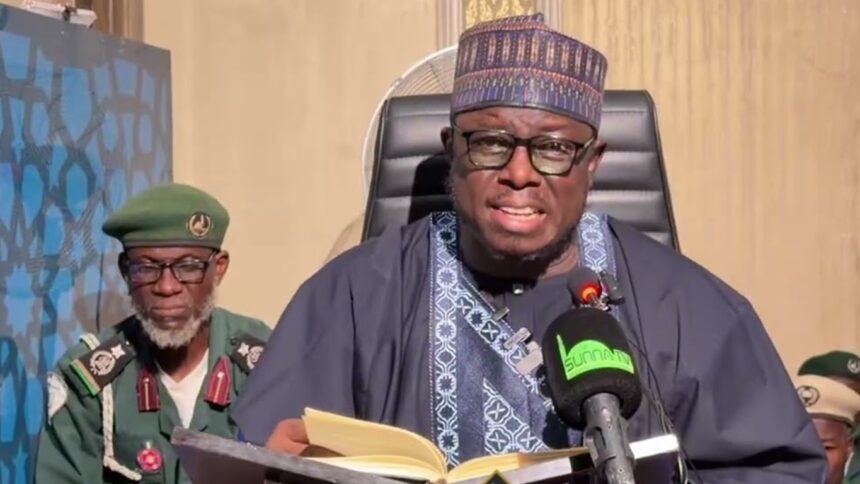
Malam Aminu Daurawa Ibrahim, a respected Islamic scholar and Commander of Hisbah, has shared a message highlighting the qualities of a teacher from whom Muslims should acquire religious knowledge.
In his message published through his Facebook page, he emphasized that seeking knowledge holds a very high position in Islam. However, the teacher from whom knowledge is obtained must possess certain qualities and characteristics to ensure that his teachings are based on the correct path.
Scholars have explained that not everyone who speaks about religious matters is qualified to be followed or taken as a source of knowledge. A teacher’s belief system, level of knowledge, character, and commitment to practicing what he teaches are important factors that must be considered before learning from him.
Among the important qualities of a teacher worthy of receiving knowledge from are:
Sound Creed (Aqeedah):
A teacher should possess a correct Islamic creed based on the Qur’an and authentic Sunnah, with the understanding of the righteous early generations (Salafus Salih).
Deep Knowledge:
He should have strong religious knowledge supported by evidence and should not speak about religious matters without proper understanding and proof.
Practicing His Knowledge:
A good teacher practices what he teaches because applying knowledge gives it value and makes it beneficial to others.
Sincerity (Ikhlas):
His intention should be to seek the pleasure of Allah, not fame, status, wealth, or worldly recognition.
Truthfulness and Trustworthiness:
He should be truthful in his speech and trustworthy in delivering knowledge to people.
Following the Sunnah:
He should follow the teachings of Prophet Muhammad ﷺ and avoid practices that have no authentic basis in Islam.
Good Character:
Humility, patience, compassion, and good manners are among the qualities of a righteous teacher.
Wisdom in Teaching:
A teacher should teach with wisdom, simplicity, and consideration of the level of understanding of his students.
Accepting the Truth:
When evidence becomes clear that he has made a mistake, he should accept the truth without arrogance.
Respect for Scholars:
A good teacher respects other scholars and does not belittle them or create conflict and division among them.
Avoiding Personal Desires and Seeking Fame:
He should not follow personal desires or seek popularity through unnecessary arguments and controversies.
Good Reputation Among People:
He should be known for righteousness, commitment to religion, and good conduct.
Allah the Almighty says in the Qur’an:
﴿فَاسْأَلُوا أَهْلَ الذِّكْرِ إِن كُنتُمْ لَا تَعْلَمُونَ﴾
“So ask the people of knowledge if you do not know.” (Surah An-Nahl: 43)
The Prophet Muhammad ﷺ also said:
«إِنَّ الْعُلَمَاءَ وَرَثَةُ الْأَنْبِيَاءِ»
“Indeed, scholars are the inheritors of the Prophets.”
He also said:
«مَنْ يُرِدِ اللَّهُ بِهِ خَيْرًا يُفَقِّهْهُ فِي الدِّينِ»
“When Allah intends good for someone, He gives him understanding of the religion.”
Scholars have consistently emphasized that Muslims should not take knowledge from everyone who presents themselves as religious teachers. Instead, they should examine the teacher’s creed, character, trustworthiness, and commitment to practicing his knowledge.
In conclusion, the teacher from whom knowledge should be taken is one who combines sound creed, deep knowledge, practice of knowledge, sincerity, adherence to the Sunnah, good character, and trustworthiness. Such a teacher is expected to provide knowledge that benefits his students in this world and the Hereafter.