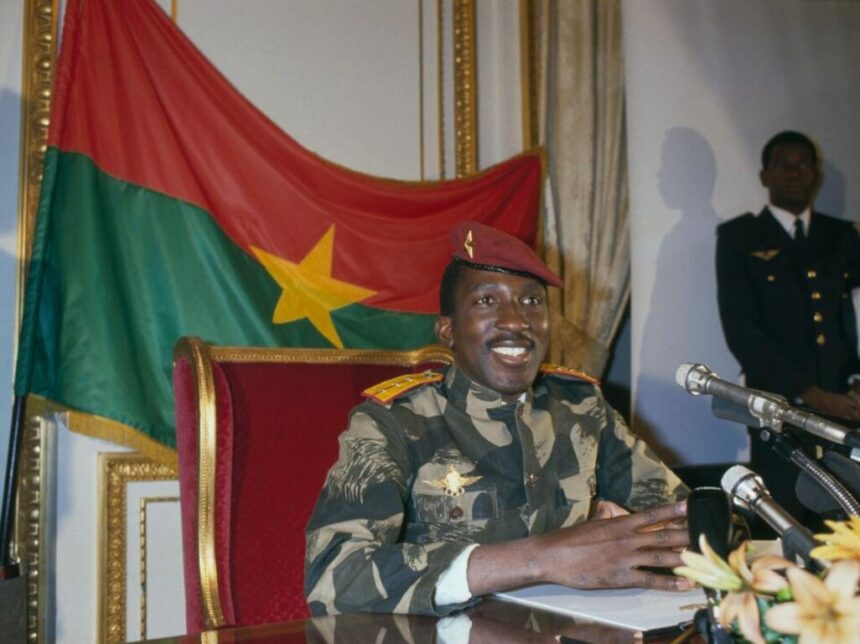
Thomas Sankara became president of Burkina Faso at the age of 33, at the time, the country ranked among the poorest in the world, however, the young leader believed poverty was not Africa’s destiny.
Instead, he wanted a nation that relied on its own people and resources. Although he ruled for only four years, his ideas still inspire many people today
Born in 1949 in Yako, Sankara trained as a military officer, later, he embraced Marxist and Pan-African ideas. In 1983, he came to power through a revolution. From the beginning, he argued that political freedom meant little without economic independence.
One of his first decisions was to rename the country. He changed Upper Volta to Burkina Faso, which means “Land of Upright People.” As a result, the new name reflected his vision of honesty, dignity, and national pride.
Unlike many leaders of his time, Sankara rejected luxury. He reduced his own salary and sold the government’s expensive cars. Instead, officials drove modest Renault 5 vehicles. He also refused special treatment for himself and his family. When people asked why his portrait did not hang in public offices, he answered, “There are seven million Thomas Sankaras.”
Sankara introduced major reforms across the country. First, his government vaccinated millions of children against measles, meningitis, and yellow fever. Consequently, the campaign saved countless lives.
Next, his administration redistributed land to farmers and encouraged local food production. These policies helped Burkina Faso move closer to food self-sufficiency.
Meanwhile, the government planted millions of trees to fight desertification. Communities also built schools, health centres, and roads with local labour. Therefore, many people saw rapid improvements in their daily lives.
Sankara believed women should enjoy equal rights and opportunities. For that reason, his government banned forced marriages and female genital mutilation. It also discouraged polygamy and appointed women to senior government positions.
Moreover, Sankara often argued that no revolution could succeed without women’s freedom. As a result, Burkina Faso became one of Africa’s most progressive countries on women’s rights during the 1980s.
Beyond domestic reforms, Sankara criticised neo-colonialism. He warned African countries against depending too heavily on foreign aid and loans. According to him, economic independence was essential for lasting development.
His best-known statement remains, “He who feeds you controls you.” In addition, he encouraged African leaders to unite and reject unfair foreign debts.
Despite his popularity, Sankara made many powerful enemies. Some politicians opposed his reforms. Others in the military resisted his leadership. Traditional elites also rejected several of his policies.
On October 15, 1987, soldiers killed Sankara and 12 of his aides during a military coup. Afterwards, his former ally, Blaise Compaoré, took power and reversed many of the reforms.
Justice arrived many years later. In 2022, a military court in Burkina Faso convicted Compaoré in absentia for his role in Sankara’s assassination. The ruling marked an important step toward accountability.
Today, Thomas Sankara remains a symbol of honest leadership, self-reliance, and social justice. Even though his presidency lasted only four years, his vision continues to inspire people across Africa and around the world. His story shows that courage, integrity, and service can leave a lasting mark on history.