
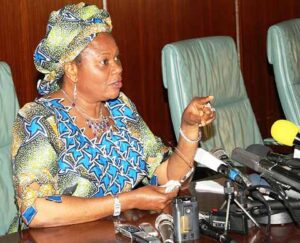
Dora Nkem Akunyili was more than a pharmacist, professor and public administrator. She became one of the most recognisable faces of Nigeria’s battle against counterfeit and substandard medicines.
At a time when fake drugs were openly circulated across Nigeria, Akunyili took charge of the National Agency for Food and Drug Administration and Control (NAFDAC) in 2001 and began a campaign that would transform the agency’s public image and attract international attention.
Her tenure was marked by aggressive enforcement, public awareness campaigns, institutional reforms and a direct confrontation with the networks involved in the manufacture and distribution of counterfeit medicines.
The battle came at a personal cost.
Akunyili faced threats and an assassination attempt in 2003. The World Health Organization later highlighted her work as an exceptional example of the fight against corruption and counterfeit medicines in Nigeria.
Her story is therefore not simply the story of a government official who ran a regulatory agency.
It is the story of a woman who turned a public-health assignment into a national crusade.
From Makurdi to the University of Nigeria
Dora Edemobi was born on July 14, 1954, in Makurdi, Benue State, to Chief Paul Young Edemobi, who hailed from Nanka in present-day Anambra State.
She received her primary education at St Patrick’s Primary School, Isuofia, and later attended Queen of the Rosary Secondary School, Nsukka.
Her academic performance earned her scholarships from the Eastern Nigerian Government and the Federal Government of Nigeria.
She proceeded to the University of Nigeria, Nsukka, where she studied pharmacy and graduated in 1978.
She later obtained a PhD in ethnopharmacology in 1985.
Her academic background would eventually become important to her public-service career because the fight she would later lead was not merely administrative. It involved understanding medicines, their manufacture, their regulation and the potentially fatal consequences of adulteration.
The Nigeria She Inherited at NAFDAC
When Akunyili became Director-General of NAFDAC in 2001, Nigeria’s pharmaceutical regulatory environment faced serious problems.
Counterfeit and unregistered medicines were widespread.
The WHO reported that a NAFDAC survey around the beginning of Akunyili’s tenure found that 68 per cent of medicines in the country were unregistered and therefore potentially counterfeit or substandard.
The situation was sufficiently serious that neighbouring countries had imposed restrictions on Nigerian pharmaceutical products.
Fake medicines were also being sold openly in markets and even hawked on buses.
For Akunyili, the problem was not simply economic.
A fake medicine could mean the difference between life and death.
The WHO later described counterfeit medicines as a major public-health threat, particularly because falsified products could involve medicines used to treat serious illnesses such as malaria, tuberculosis and HIV/AIDS.

Her First Battle Was Inside NAFDAC
One of Akunyili’s most significant decisions was to confront corruption within the regulatory institution she had been appointed to lead.
The problem was structural.
If corrupt officials inside a regulatory agency accepted bribes from manufacturers and distributors of fake medicines, enforcement would inevitably be compromised.
The WHO reported that, before Akunyili’s reforms, some NAFDAC personnel were accused of abusing their positions by extorting legitimate manufacturers while accepting bribes from counterfeiters seeking access to the Nigerian market.
Akunyili responded by dismissing some of the agency’s most corrupt officials.
At the same time, she sought to improve staff morale through training, better working conditions and incentives.
Her philosophy was straightforward: an agency tasked with protecting the public could not effectively perform that role if its own officials were compromised.

Taking the Fight to the Fake Drug Market
Akunyili’s strategy went beyond arrests and seizures.
NAFDAC increased surveillance at ports and airports, inspected pharmaceutical shops and markets, strengthened laboratory testing and pursued counterfeiters through the courts.
The agency also launched an extensive public-awareness campaign.
Radio and television jingles warned Nigerians about counterfeit medicines. Newspapers published information about fake products, while members of the public were encouraged to report suspicious medicines.
The strategy was designed to turn ordinary Nigerians into an additional line of defence.
Instead of leaving the fight entirely to regulators, Akunyili wanted consumers, pharmacists, doctors and businesses to recognise the danger and report suspected counterfeit products.
The approach produced measurable signs of progress.
According to the WHO, a repeat of the earlier NAFDAC survey in 2004 found that the quantity of unregistered medicines had fallen by 80 per cent.
That did not mean counterfeit drugs had disappeared.
Akunyili herself acknowledged that the problem remained.
But it demonstrated that a previously entrenched problem could be confronted through coordinated regulation, enforcement and public education.
Onitsha and the Battle Against Drug Counterfeiters
One of the most difficult fronts in the campaign was the open drug market in Onitsha.
Akunyili identified the market as a major source of counterfeit medicines circulating in Nigeria.
Enforcement operations there were not always straightforward.
According to the WHO, NAFDAC officials conducting raids encountered resistance from traders, with some officers forced to flee from hostile crowds.
The confrontation illustrated the scale of the problem.
The counterfeit-drug business was not merely an informal market involving isolated individuals. It had become an organised commercial ecosystem involving money, supply chains, distribution networks and, in some cases, corrupt officials.
Akunyili’s determination to confront the problem was captured in her statement that if the counterfeiters defeated NAFDAC, “they have defeated Nigeria.”
Billions of Naira Worth of Fake Drugs Seized
The campaign increasingly produced seizures and prosecutions.
The WHO reported that in one year alone, fake medicines worth approximately two billion naira were voluntarily surrendered by counterfeiters or seized following information from the public.
By June 2006, Akunyili said NAFDAC had secured convictions against 45 counterfeiters, with another 56 cases pending.
The agency also expanded its laboratory capacity, including facilities in Port Harcourt and plans for another laboratory in Calabar.
The objective was to move enforcement beyond suspicion and into scientific verification.
A product could be tested, identified as counterfeit or substandard and subsequently removed from circulation.
The 2003 Assassination Attempt
The campaign made Akunyili enemies.
Her work earned international recognition, including Transparency International’s Integrity Award, but it also exposed her to threats.
The WHO reported that she received numerous death threats and survived an assassination attempt in 2003.
The attack became one of the defining moments of her public career.
It demonstrated that the fight against counterfeit drugs was not an abstract regulatory exercise.
There were people making enormous profits from the illegal trade, and those profits created powerful incentives to intimidate anyone capable of disrupting the business.
Akunyili nevertheless continued.
A Public Health Campaign Becomes a National Crusade
What distinguished Akunyili from many public officials was her ability to turn a bureaucratic responsibility into a public campaign.
She understood that regulation alone could not solve the problem.
Consumers needed to know what they were buying.
Doctors needed to recognise suspicious products.
Pharmacists needed to demand legitimate supplies.
Manufacturers needed to know that counterfeiting would attract consequences.
And regulators needed to be sufficiently independent and disciplined to enforce the rules.
NAFDAC’s campaign therefore combined enforcement with communication.
This was particularly significant in a country where many consumers had limited access to reliable information about medicines.
Her public visibility also transformed the image of NAFDAC.
The agency became associated with seizures, raids, public warnings and the destruction of counterfeit products.
For many Nigerians, Akunyili herself became the face of the fight.
International Recognition
The impact of her work attracted international attention.
The World Health Organization described Nigeria as being at the forefront of the global fight against counterfeit medicines after Akunyili took over NAFDAC.
Her campaign was also recognised by Transparency International, which gave her its Integrity Award.
The significance of the recognition was not simply personal.
It reflected a broader recognition that corruption within medicine regulation could directly endanger lives.
As Akunyili argued, counterfeit drugs did not merely damage pharmaceutical companies.
They could kill patients.
From NAFDAC to the Federal Ministry of Information
Akunyili left NAFDAC in 2008 after seven years at the helm.
Her career did not end there.
She was subsequently appointed Minister of Information and Communications under President Umaru Musa Yar’Adua.
In that position, she became associated with the government’s “Re-brand Nigeria” campaign, an effort designed to improve Nigeria’s international image and encourage citizens to rethink negative perceptions about the country.
The transition from drug regulation to information management represented another dimension of her public career.
At NAFDAC, she had tried to rebuild confidence in medicines and regulation.
At the Information Ministry, she attempted to address what she saw as a crisis of confidence in Nigeria’s national image.
Politics and Public Service
Akunyili later moved into elective politics.
She contested for the Anambra Central senatorial seat under the All Progressives Grand Alliance (APGA) and served in the Senate.
Her political career, however, was relatively brief.
She remained better known nationally for her years at NAFDAC and her campaign against counterfeit medicines.
For many Nigerians, the image of the determined pharmacist confronting fake-drug networks remained more powerful than her later political career.
Her Final Battle
Akunyili was diagnosed with cancer and underwent treatment.
Her health deteriorated in her final years.
She died on June 7, 2014, in an Indian hospital at the age of 59.
Her death prompted tributes across Nigeria and beyond.
The woman who had spent years fighting counterfeit medicines and corruption within the regulatory system had become an enduring symbol of public service for many Nigerians.
What Made Dora Akunyili Different?
Akunyili’s story is significant because she confronted corruption from inside government.
She did not operate from outside the system as an activist.
She was a government official responsible for enforcing government regulations.
That position gave her authority, but it also placed her directly in the path of powerful interests.
Her strategy had several elements.
First was institutional reform.
She understood that an anti-counterfeit campaign could not succeed if regulators themselves were corrupt.
Second was enforcement.
NAFDAC increased inspections, seizures, prosecutions and laboratory testing.
Third was public education.
She understood that regulation would fail if consumers continued buying suspicious medicines without knowing the risks.
Fourth was personal courage.
The threats against her, including the 2003 assassination attempt documented by WHO, demonstrated the risks associated with confronting an entrenched criminal market.
The Limits of One Woman’s Success
But Akunyili’s legacy should not be reduced to the idea that one heroic individual solved Nigeria’s counterfeit-drug problem.
She did not.
Counterfeit and substandard medicines remain a public-health challenge in Nigeria and across Africa.
NAFDAC continues to issue alerts about falsified and unregistered medicines. The agency’s current regulatory systems include databases for registered products and public alerts concerning unsafe or falsified products.
That continuing challenge reinforces an important point.
A strong individual can transform an institution.
But sustainable reform requires institutions capable of maintaining standards after the individual leaves.
The Dora Akunyili Legacy
Dora Akunyili’s greatest legacy may therefore be bigger than the number of fake drugs seized during her tenure.
She demonstrated what regulatory leadership could look like when public health was treated as a matter of national security.
She challenged corrupt practices within her own agency.
She confronted counterfeiters.
She pushed for stronger surveillance and scientific testing.
She used mass communication to educate millions of Nigerians.
She endured threats.
And she made the issue of fake medicines impossible to ignore.
Her career also provides a broader lesson about public administration in Nigeria.
Institutions do not become effective simply because they are created by law.
They become effective when leaders enforce their mandates, reform compromised systems and make public interest the organising principle of their work.
NAFDAC already existed before Akunyili.
But under her leadership, Nigerians began to associate the agency with an aggressive fight against counterfeit medicines.
That transformation became one of the defining achievements of her public life.
A Woman Who Made Integrity Visible
Dora Akunyili died at 59, but her name remains closely associated with integrity, regulatory enforcement and public service.
Her story is ultimately about the power — and limits — of individual leadership.
She inherited an institution struggling with corruption and a country where counterfeit medicines could be openly sold.
She responded with enforcement, public education and institutional reform.
She paid a personal price for that fight.
And although counterfeit medicines remain a problem, the reforms and public awareness generated during her tenure helped change the national conversation around medicine safety.
For a country still searching for public officials willing to put institutional responsibility above personal convenience, Akunyili’s career remains a reference point.
She showed that fighting corruption does not always begin with politics.
Sometimes, it begins with one public servant deciding that a government institution must actually do the job for which it was created.
And in Akunyili’s case, that decision was about something even more fundamental:
protecting human life.