
Nigeria has recorded more than 40,000 confirmed diphtheria cases and over 2,000 deaths since the current outbreak began — with children making up nearly two-thirds of confirmed infections. So, why is a disease that vaccines can prevent still spreading?
For a disease many Nigerians may associate with another era, diphtheria has become a serious and persistent public health problem. The bacterial infection has spread across dozens of states, placed pressure on healthcare facilities and claimed thousands of lives.
More troubling is where much of the burden lies: children.
And the numbers suggest that the problem is not simply the disease itself. It is also about vaccination gaps, access to healthcare, surveillance, misinformation and the ability of health systems to reach vulnerable communities.
What is diphtheria?
Diphtheria is a contagious bacterial infection caused mainly by toxin-producing Corynebacterium diphtheriae.
It commonly affects the nose and throat and spreads through respiratory droplets when an infected person coughs or sneezes. Some infected people may have mild or no symptoms but can still transmit the bacteria. The disease can begin with symptoms such as fever, sore throat, weakness and swollen glands.
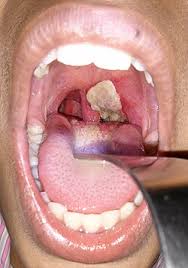
In severe cases, a thick membrane can develop in the throat and make breathing difficult. The toxin produced by the bacteria can also damage vital organs, including the heart and nervous system.
WHO considers diphtheria a serious disease that can cause severe complications and death, particularly among people who are not adequately vaccinated.
The good news is that diphtheria is vaccine-preventable.
That is what makes Nigeria’s experience particularly concerning.
Nigeria’s outbreak
Nigeria’s current diphtheria outbreak dates back to 2022, with cases subsequently spreading across the country.
WHO reported that between May 2022 and October 2023, Nigeria recorded 15,569 suspected cases and 9,772 confirmed cases, with 547 deaths. At the time, Kano, Yobe, Bauchi and the Federal Capital Territory were among the worst affected areas.
The outbreak, however, did not end there.
According to cumulative NCDC surveillance data covering epidemiological week 19 of 2022 to week 3 of 2026, Nigeria recorded:
- 61,930 suspected cases
- 40,460 confirmed cases
- 2,151 deaths among confirmed cases
- Confirmed infections in 31 states
- Confirmed cases across 300 Local Government Areas
The reported case fatality ratio among confirmed cases stood at 5.3 per cent. The figures show that diphtheria has moved beyond a series of isolated outbreaks. It has become a sustained public health challenge.
Kano carries the biggest burden
The geographical distribution of the disease tells another important story. Kano has recorded by far the largest number of confirmed cases in the cumulative NCDC data.
The state recorded 24,687 confirmed cases, followed by:
- Borno – 5,077
- Bauchi – 4,139
- Yobe – 3,159
- Katsina – 2,589
- Kaduna – 156
- Sokoto – 146
- Plateau – 137
Kano’s figure alone represents about 61 per cent of all confirmed cases in the cumulative dataset. That concentration matters.
It suggests that the outbreak is not affecting every part of Nigeria in the same way. Instead, transmission has been particularly intense in specific areas where immunity gaps and other health-system challenges may be creating pockets of vulnerability.
NCDC’s figures show that seven states — Kano, Borno, Yobe, Katsina, Bauchi, Kaduna and Sokoto — accounted for 94.6 per cent of suspected cases during the reporting period.
When confirmed cases are considered, eight states — Kano, Yobe, Bauchi, Katsina, Borno, Plateau, Sokoto and Kaduna — accounted for 99.1 per cent of the confirmed cases.
That is a striking concentration of the national burden.
Children are bearing the brunt
Perhaps the most worrying part of the data is the age distribution. Of the 40,460 confirmed cases, 26,226 were children between one and 14 years old.
That represents 64.8 per cent of confirmed infections. In simple terms, nearly two out of every three confirmed cases occurred among children in that age group.
This raises an important question:
Why are so many children still vulnerable to a disease for which vaccines are available?
The answer becomes clearer when vaccination status is examined.
The vaccination gap
Only 5,974 people, representing 14.3 per cent of the 40,460 confirmed cases, were recorded as fully vaccinated with a diphtheria-containing vaccine.
That means the overwhelming majority of confirmed cases were not fully vaccinated.
The figure does not mean that vaccination provides an absolute guarantee against infection. Rather, it highlights how strongly the outbreak is associated with gaps in vaccination protection.
When large numbers of children miss routine immunisation, communities can gradually accumulate people who have little or no protection.
Once the bacteria enters such a community, transmission becomes easier.
That creates a cycle:
Missed vaccination → immunity gaps → transmission → illness → hospital pressure → deaths.
And unless the underlying vaccination gap is addressed, the cycle can return.
Why are vaccination gaps happening?
There is no single explanation.
Nigeria’s immunisation challenges reflect several factors. Some children simply do not receive all their routine vaccines. In other communities, insecurity makes it difficult for health workers to reach families. Displacement can also interrupt access to routine healthcare. Misinformation and vaccine hesitancy can discourage some families from accepting vaccination.
And where primary healthcare services are weak, children can fall through the cracks.
WHO has linked the resurgence of diphtheria in Africa to persistent immunity gaps, disruption to immunisation services, fragile primary healthcare systems and limited access in conflict-affected settings.
Nigeria is not alone
The resurgence of diphtheria is not restricted to Nigeria.
WHO has reported outbreaks in several African countries, including Algeria, Chad, Guinea, Mali, Mauritania, Niger, Nigeria and South Africa.
The World Health Organisation says the resurgence reflects continuing gaps in routine immunisation and weaknesses in health systems in some affected settings.
A March 2026 WHO risk assessment reported that, across the African Region, more than 29,000 suspected diphtheria cases and 1,420 deaths had been reported between the beginning of 2025 and March 1, 2026.
This places Nigeria’s outbreak within a wider regional problem.
Why this is bigger than a health story
Diphtheria does not only affect hospitals.
It can affect the wider Nigerian economy.
When a child becomes seriously ill, parents and caregivers may have to stop working or lose income while providing care.
When children miss school, they lose valuable learning time.
Hospitals must also devote staff, medicines, laboratory capacity and beds to treating preventable infections.
An outbreak that continues for years therefore creates costs for families, communities and government.
There is also a public health security concern.
Nigeria has a highly mobile population. People travel between states every day for work, education, trade, religious activities and family commitments. A disease concentrated in one state can therefore move with people.
That makes strong surveillance and high vaccination coverage important not only for the communities currently experiencing outbreaks but for the entire country.
What happens if Nigeria does not close the gap?
The biggest danger is a repeating cycle.
An outbreak begins.
Emergency vaccination campaigns are launched.
Cases fall.
Public attention shifts elsewhere.
But if children continue to miss routine vaccination, immunity gaps remain.
Eventually, another outbreak can emerge.
This is why emergency response alone cannot solve Nigeria’s diphtheria problem.
The country needs to prevent the next outbreak before it begins.
What can Nigeria do?
Strengthen routine immunisation
Routine childhood vaccination must remain the first line of defence. Emergency campaigns can help control outbreaks, but routine immunisation protects children before they are exposed.
Find children who have missed vaccines
Health authorities need to identify communities with large numbers of zero-dose and under-immunised children and make vaccination easier to access.
Prioritise outbreak hotspots
The data clearly points to states carrying the largest burden, particularly Kano, Borno, Bauchi, Yobe and Katsina. These areas need sustained attention rather than short-term interventions.
Improve surveillance
Health workers need to recognise suspected cases quickly, report them and begin appropriate response measures. Early detection can reduce transmission and improve the chances of successful treatment.
Improve access to treatment
People suspected of having diphtheria need prompt medical attention. Treatment can include diphtheria antitoxin, antibiotics and supportive care, depending on the clinical situation. Close contacts may also require assessment, preventive treatment and vaccination according to public-health guidance.
Fight misinformation
Health authorities cannot leave the information space empty. Parents need clear, simple answers about what diphtheria is, how it spreads, how vaccination protects children and where vaccines are available.
What can parents and communities do?
Parents should make sure children receive their recommended routine vaccinations. Anyone who develops symptoms that could suggest diphtheria should seek medical care promptly rather than relying on self-treatment.
During an outbreak, people should follow public-health advice and avoid close contact with suspected cases until health professionals provide guidance. People who have been in close contact with a confirmed case should also follow instructions from health authorities.
The question Nigeria must answer
Nigeria has already spent years responding to diphtheria outbreaks.
The numbers show the cost.
61,930 suspected cases.
40,460 confirmed cases.
2,151 deaths.
31 states affected by confirmed cases.
300 LGAs reporting confirmed infections.
And 64.8 per cent of confirmed cases occurring among children aged one to 14.
Yet only 14.3 per cent of confirmed cases were recorded as fully vaccinated.
The figures point to a problem that goes beyond treating people after they become sick.
It is about reaching children before they become vulnerable.
Diphtheria is dangerous. But it is also preventable.
So the question facing Nigeria is no longer simply:
How do we treat the next diphtheria outbreak?
It is:
How do we make sure there is no next outbreak?