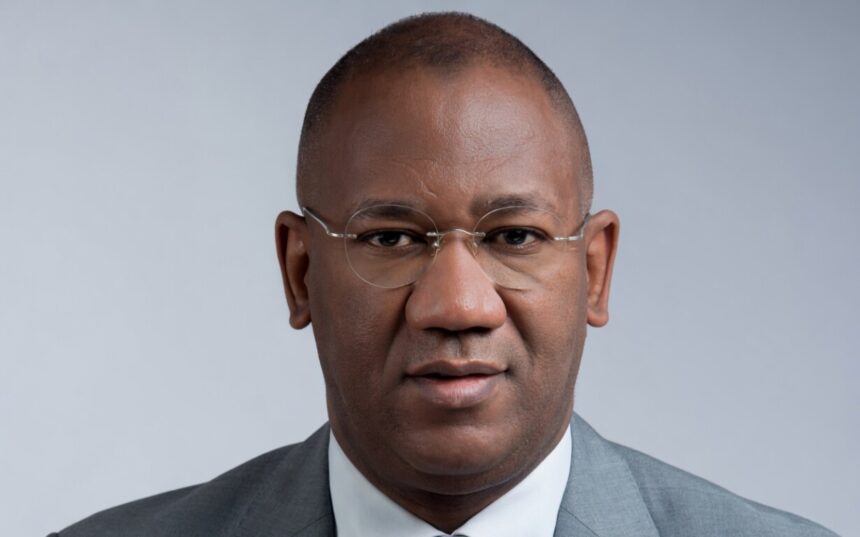
Former Labour Party presidential candidate Peter Obi’s running mate in the 2023 election, Datti Baba-Ahmed, has declared that none of the politicians challenging President Bola Ahmed Tinubu in the 2027 presidential election has the capacity to improve Nigeria.
Baba-Ahmed, a former federal lawmaker and prominent opposition figure, specifically included his former political ally, Obi, and former Vice President Atiku Abubakar among those he believes cannot deliver the transformation Nigeria needs.
Speaking on the MIC ON Podcast hosted by Seun Okinbaloye, Baba-Ahmed said Tinubu should leave office at the end of his tenure but argued that Nigerians should not expect meaningful change from the politicians currently seeking to replace him.
“I will simply advise uncle (Tinubu) to please prepare to hand over and move away, but not to the people contesting against him because none of them will improve Nigeria,” he said.
Baba-Ahmed Includes Peter Obi
The most striking aspect of Baba-Ahmed’s remarks was his inclusion of Peter Obi, with whom he contested the 2023 presidential election on the Labour Party platform.
Asked specifically whether his criticism included Obi, Baba-Ahmed replied: “Including Peter Obi, I’m sorry to say.”
He questioned the ability of politicians with long histories in Nigeria’s established political parties to present themselves as agents of fundamental change.
“Tell me one politician who has never been in a ruling party. Tell me,” he said.
Obi and Baba-Ahmed finished third in the 2023 presidential election, behind Tinubu of the All Progressives Congress and Atiku of the Peoples Democratic Party.
Their political relationship has since changed significantly as the opposition landscape has shifted ahead of 2027.
Why Baba-Ahmed Warned Obi About ADC
Baba-Ahmed also revealed that he warned Obi against joining the African Democratic Congress (ADC).
According to him, he personally approached Obi at the Yar’Adua Centre before the proposed move and advised him against the political platform.
“When he was going to join ADC, I had to go to Yar’Adua Centre ahead of him, so I called him aside,” Baba-Ahmed said.
He maintained that he had explained his reservations to Obi and told him: “This is not a place for you.”
Baba-Ahmed said Obi’s subsequent political movement vindicated his warning.
“Within four months, Peter Obi left ADC,” he said.
He added that Obi’s decision to move beyond the political position he had recommended ended his ability to influence his former running mate’s choices.
“Peter Obi moved out of his comfort zone against my advice. Beyond that point, I could no longer help him,” he stated.
Baba-Ahmed Defends His Own Political Record
Baba-Ahmed’s criticism was challenged during the interview because he, too, has a political history and previously served in the National Assembly.
He distinguished his record from those of the politicians he was criticising, insisting that he had never belonged to a ruling party.
He said he was associated with the Congress for Progressive Change (CPC), which was an opposition party before its merger with other parties to form the APC.
Baba-Ahmed said he subsequently resigned from the APC after the party came to power and insisted that he never held an APC membership card.
“I have never had a membership card of APC. Never,” he said.
Atiku Attacks Tinubu’s Economic Policies
Baba-Ahmed’s comments came as Atiku intensified his criticism of the Tinubu administration’s economic policies.
Atiku, who is associated with the ADC opposition platform, accused Tinubu of supporting friends and international oil companies while refusing to provide similar relief for Nigerians struggling with rising living costs.
In a statement issued by his Senior Special Assistant on Public Communication, Phrank Shaibu, Atiku said the administration’s policies had weakened purchasing power and increased the cost of fuel, food, transportation and other essentials.
He also criticised the removal of fuel subsidy and defended his proposed “Production Subsidy”, arguing that government support should encourage domestic production and refining and ultimately reduce costs for consumers.
“Tinubu made life expensive. Atiku will make life affordable again,” he said.
Atiku cited rising prices of fertiliser, petrol and cement, as well as exchange-rate pressures, as evidence of the economic hardship confronting households and businesses.
He argued that businesses were also being affected as consumers with reduced purchasing power cut spending or struggled to pay their bills.
The 2027 Opposition Challenge
The contrasting positions of Baba-Ahmed and Atiku highlight one of the major challenges facing Nigeria’s opposition ahead of the 2027 election.
While Atiku is attempting to make the election a referendum on Tinubu’s economic record, Baba-Ahmed is questioning whether the politicians seeking to replace the president actually represent a meaningful break from the political establishment.
The argument could become increasingly important as opposition parties and politicians attempt to build a coalition capable of challenging the APC.
For the opposition, the challenge is not simply to defeat Tinubu. It is to convince voters that replacing the incumbent would produce a fundamentally different style of governance.
A Contest Over Nigeria’s Future
The 2027 presidential election is already taking shape as a contest over economic direction, political credibility and the future of Nigeria’s opposition.
Tinubu’s government will defend its reforms and argue that difficult policies are necessary to stabilise the economy.
Opposition politicians are likely to focus on inflation, declining purchasing power, insecurity, unemployment and the cost of living.
Baba-Ahmed, however, has introduced a different question: whether Nigerians should trust the same political class to deliver the transformation they have promised repeatedly.
His conclusion is blunt.
Tinubu should prepare to leave office, he says, but none of the major politicians currently challenging him has demonstrated the capacity to improve Nigeria.
The 2027 election will ultimately test that argument at the ballot box.