

Commercial transport operators across Nigeria have criticised the Federal Government’s petrol discount scheme at Nigerian National Petroleum Company Limited (NNPCL) retail outlets, saying the initiative has failed to provide meaningful relief from rising operating costs.
The transporters, who spoke to Daily Trust correspondents in several states, described the discount as too small to make a significant difference, while complaining that the mobile application requirement, poor network access and long queues had made the scheme difficult to use.
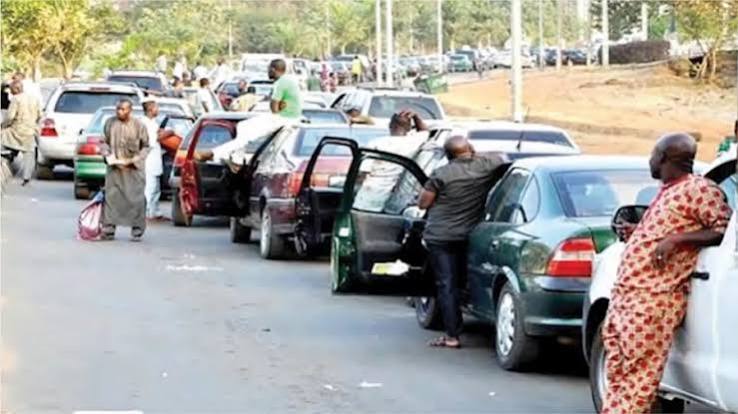
Some drivers said travelling to NNPCL stations and waiting to purchase discounted petrol could cost them valuable working hours and reduce the number of trips they make daily.
The Federal Government announced the 30-day initiative on October 8, 2026, prioritising public transport operators. The scheme has also sparked debate over whether it amounts to a return of petrol subsidy, which President Bola Tinubu ended in May 2023.
However, the Minister of Finance and Coordinating Minister of the Economy, Taiwo Oyedele, maintained that the arrangement was not a subsidy, but a temporary discount on petrol sold at NNPCL outlets.
“We are offering a discount on petrol dispensed by NNPC Limited for the next 30 days in the first instance, with priority for public transporters nationwide,” Oyedele said while announcing the initiative.
He added that the government was offering the product at a reduced cost rather than reintroducing a subsidy.
Nearly two weeks after the announcement, however, many commercial drivers said they had yet to experience any substantial benefit.
In Kano, tricycle riders and mini-truck operators said the savings were too small to justify going out of their way to buy petrol at NNPCL stations.
Mamman Sani, a commercial tricycle rider operating along the Gyadi-Gyadi to Darmanawa route, said he usually bought no more than five litres of petrol daily and preferred purchasing fuel from whichever station was convenient.
A mini-truck operator, Magaji Inuwa, said the need to use an application to access the discount made the process less attractive, particularly for drivers who bought fuel only when they had goods to deliver.
In Lagos, Ibadan and Akure, some commercial drivers said they could not access the discount because they lacked smartphones or the digital skills required to use the application.
Olowolewa David, a motorist in Akure, said he was aware of the offer but could not benefit because he did not own an Android phone.
Other drivers called on NNPCL to introduce alternative methods that would allow motorists without smartphones or digital literacy to access the discount.
Some motorists also complained about unreliable network connections, saying repeated difficulties using the application had pushed them towards other filling stations.
However, a Lagos-based schoolteacher said he had downloaded the application and benefited from the discount without experiencing difficulties.
In Maiduguri, Borno State, a survey of filling stations showed petrol selling at N1,430 per litre at NNPCL outlets, while independent marketers charged between N1,450 and N1,500.
Commercial driver Malam Mustapha Lawan said he had expected a more substantial reduction, arguing that the difference of less than N50 per litre offered little relief from the high cost of operating his vehicle.
In Ilorin, Kwara State, checks at NNPCL stations along Asa Dam Road and Adewole showed petrol selling at N1,375 per litre. An attendant at one of the outlets reportedly told Daily Trust that the discount had not been implemented there.
Commercial driver Malik Sulyman said fuel expenses, spare parts and other operating costs continued to put pressure on his business. He argued that a much larger reduction would be needed to provide meaningful relief.
In Abuja, drivers also questioned the practicality of using an application to purchase discounted fuel, saying cash payments were more convenient and time spent accessing the offer could affect their earnings.
Some operators further argued that the scheme had made little difference to passengers because transport fares had not fallen.
In Bayelsa State, drivers in Yenagoa complained that the limited number of NNPCL stations and the distance they had to travel to access the discount made the initiative difficult to benefit from.
Sadiq Usman, a commercial tricycle operator, said he lacked a phone capable of downloading the required application. Another driver, Keme David, said he initially welcomed the announcement and downloaded the app but later became discouraged by the process involved.
David said commercial drivers who made several trips daily could lose income if they spent too much time queuing for discounted petrol.
Meanwhile, NNPCL said the initiative was intended to provide direct relief to Nigerians amid heightened uncertainty in global markets.
In a statement announcing an extension of the discount, the company’s Chief Corporate Communications Officer, Andy Odeh, said the initiative applied to NNPCL retail outlets and did not establish a uniform national petrol price or change the market-based pricing framework.
Efforts by Daily Trust to reach Odeh for comments on the difficulties reported by motorists were unsuccessful.
With the scheme’s October 31 deadline approaching, transport operators have called for a more accessible and substantial intervention to address the high cost of fuel and other expenses affecting their livelihoods.