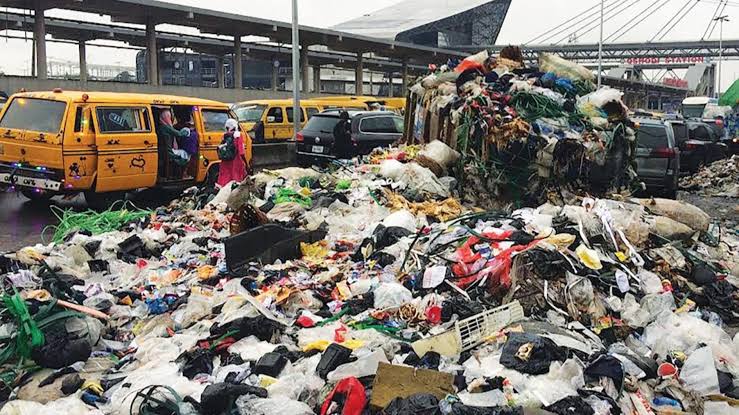
Lagos is battling a worsening waste management crisis as inaccessible dumpsites slow refuse evacuation, leave streets littered with garbage and increases flooding risks and exposes residents to serious health hazards.
Recent floods destroyed homes, vehicles, and other properties across the mainland and island, many residents blamed indiscriminate dumping for clogged drains. However, waste experts pointed to the shortage of accessible dumpsites as a major factor.
They explained that existing sites have reached capacity. PSP operators now struggle to dispose of collected waste. As a result, refuse piles up across the city.
Residents in Ikotun, Idimu, Ejigbo, and Egbeda complained about abandoned refuse on streets. Although LAWMA reported evacuating 418,500 tonnes of waste in May, residents said PSP trucks often failed to arrive despite regular payments.
Industrial chemist Harrison Chinaka warned that improper disposal creates serious health risks. He explained that decomposing waste releases methane and ammonia, polluting the air and worsening global warming. Burning refuse adds toxic fumes, while rainfall washes harmful substances into soil and water sources. Plastics and batteries release chemicals that persist for years. Piles of refuse also breed mosquitoes, flies, and rodents.
Health consultant Joy Oriaku described how roads have become dumpsites. She lamented that families already struggling with tight budgets now face hospital bills for preventable illnesses. “The gutters are filled with black water, nylon bags, and bottles everywhere. People have just accepted it as part of living there,” she said.
Dr Olugbenga Adebola, National President of the Association of Waste Managers of Nigeria, called the situation “very unfortunate.” He explained that trucks which once made up to 12 trips a week now manage only two. Poor access to dumpsites, he said, has crippled waste collection. He welcomed the governor’s approval of funding for dumpsite rehabilitation and plans for a transfer loading station but stressed that interim disposal remains a pressing challenge.
Adebola also urged a review of PSP operators’ tariffs. Diesel costs have risen sharply since 2022, yet payments remain unchanged. LAWMA’s Director of Public Affairs, Mukaila Sanusi, meanwhile, blamed residents’ attitudes. He said many fail to pay PSP operators and continue to dump refuse illegally, undermining the system.