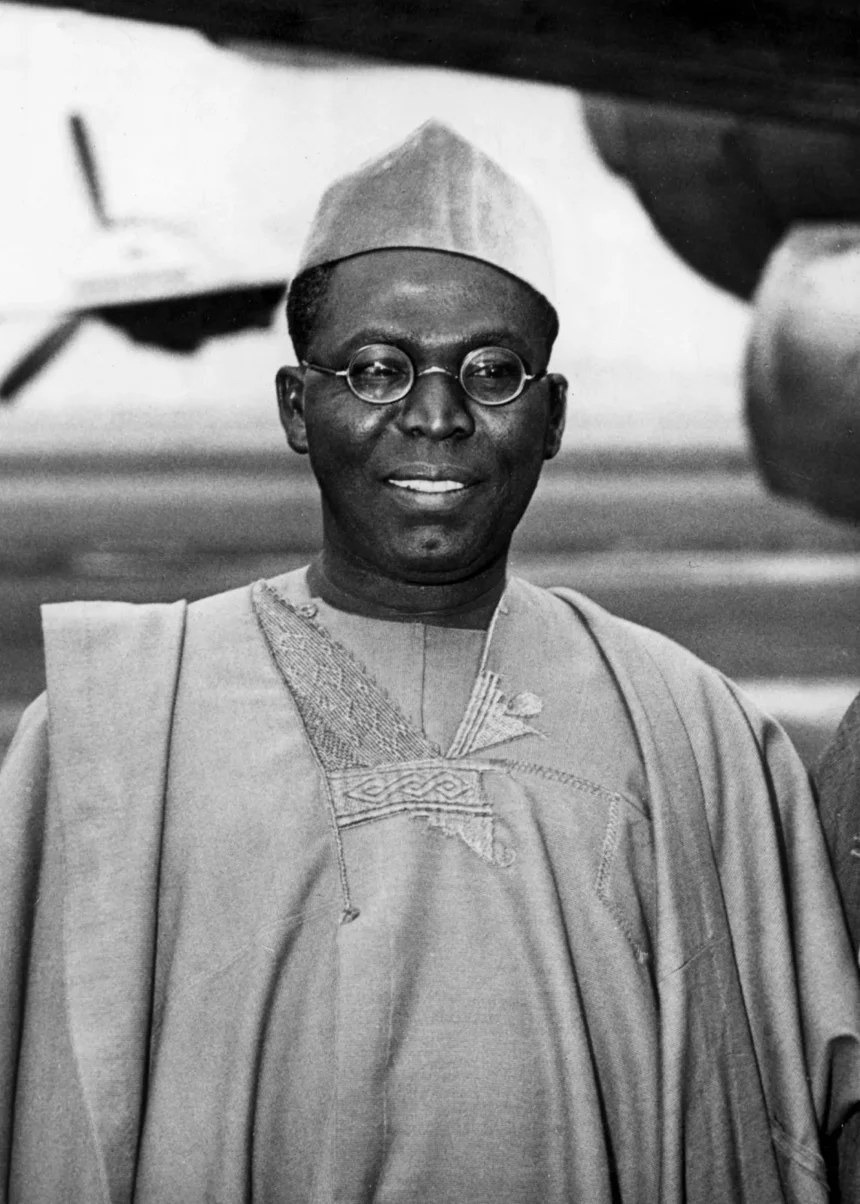
The face on the ₦100 note is more than a face, it tells the story of a resilient man.
Chief Obafemi Jeremiah Oyeniyi Awolowo was not just a political figure; he symbolized endurance, vision, and disciplined leadership. His life helped shape the foundations of modern Nigeria.
His image on the currency reminds Nigerians daily that leadership is not only about holding office, but about the lasting impact a person leaves on a nation.
Born on March 6, 1909, in Ikenne, present-day Ogun State, Awolowo rose from humble beginnings marked by early hardship. The death of his father forced him into responsibility at a young age and shaped the discipline and determination that defined his later life. He moved through teaching, clerical work, journalism, and law before entering politics.
As a nationalist thinker and leader of the Action Group, Awolowo became one of the strongest voices for self-governance in colonial Nigeria. He believed education drives development. As Premier of the Western Region in 1955, he introduced Free Universal Primary Education, which expanded access to schooling and raised literacy levels across the region. His government also introduced free healthcare for children, launched industrial development programmes, and invested heavily in infrastructure. These policies turned the Western Region into one of the most progressive areas in Africa at the time.
Awolowo strongly supported federalism. He argued that Nigeria’s diversity required a system that allowed regions to govern themselves while remaining united at the national level. His book Path to Nigerian Freedom still shapes debates on governance and restructuring in Nigeria today.
His political journey included major struggles. In 1963, a court convicted him of treasonable felony and sentenced him to prison after a highly controversial trial. Even in prison, he continued to write and refine his political ideas.
The government released him in 1966. He later served as Federal Commissioner for Finance during the Nigerian Civil War. In that role, he helped stabilize the economy during a difficult national crisis and contributed to major fiscal reforms that strengthened Nigeria’s financial system.
Although he never became President of Nigeria, he remained a major political force. He contested the 1979 and 1983 presidential elections on a platform of education, social welfare, and disciplined governance but did not win. Despite this, his ideas continued to influence national policy long after his campaigns.
People often describe his philosophy as “Awoism.” It rests on integrity, education, social welfare, discipline, and responsible leadership. Across Nigeria, his name lives on through institutions, roads, policies, and public memory.
On May 9, 1987, Chief Obafemi Awolowo died peacefully at his home in Ikenne at the age of 78. His death drew tributes from across political, ethnic, and religious lines. People across Nigeria recognized him as one of the nation’s most respected statesmen. He was buried in his hometown of Ikenne.
Today, the face on the ₦100 note is not just a portrait ,it stands as a reminder of a resilient man whose vision for education, justice, and good governance continues to shape Nigeria’s search for progress.