Nigeria is taking a bold step toward industrial transformation. The Federal Government has signed a landmark $1 billion agreement that could reshape the country’s steel industry and reduce its dependence on imports.
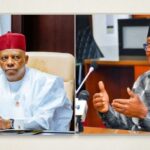
At the center of this development is the Minister of Steel Development, Prince Shuaibu Abubakar Audu, who formalized a Memorandum of Understanding (MoU) with India-based Rashmi Metaliks Group in Kolkata. This strategic partnership signals renewed momentum in Nigeria’s long-standing ambition to become a major steel producer in Africa.
The goal is clear: increase domestic crude steel production to 10 million tonnes annually by 2030. If achieved, this would significantly cut down Nigeria’s reliance on imported construction materials saving foreign exchange and strengthening the local economy.
For years, Nigeria’s manufacturing and construction sectors have struggled with high costs due to imported steel. This investment aims to change that by boosting local production capacity, creating jobs, and stimulating industrial growth across multiple sectors.
Beyond economic gains, the move positions Nigeria as a potential regional steel hub, capable of supplying neighboring countries and competing globally. It also aligns with broader government efforts to diversify the economy away from oil dependency.
Industry analysts see this as a turning point. If properly executed, the partnership could revive dormant steel assets, attract further foreign investment, and accelerate infrastructure development nationwide.
However, success will depend on consistent policy support, infrastructure improvements, and transparent implementation.
For now, the MoU marks a promising step forward one that could redefine Nigeria’s industrial future.