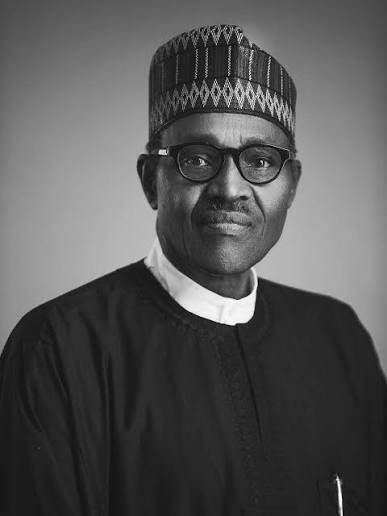
Nigeria’s Late President, Muhammadu Buhari legacy remains one of the most significant in political history as his Life reflects decades of military service, democratic leadership, anti-corruption campaigns and national transformation.
From his early years in Daura to his death in 2025, Muhammadu Buhari legacy continues to shape conversations about governance, security and leadership in Nigeria.
A Career Forged in the Military
Buhari trained in Nigeria and the United Kingdom. He attended the Mons Officer Cadet School in Aldershot and later studied at the Army Mechanical Transport School in Borden.
He served during the Nigerian Civil War and steadily rose through the ranks. He commanded military units and later became Brigade Major. After the July 1966 counter-coup, he joined Nigeria’s new military leadership.
He later served as Governor of the former North Eastern State. He also became Federal Commissioner for Petroleum Resources and Chairman of the Nigerian National Petroleum Corporation (NNPC).
Many colleagues described him as disciplined, austere and firm.
Military Head of State
A military coup removed President Shehu Shagari from office on December 31, 1983. Buhari then became Nigeria’s military Head of State.
His administration launched the War Against Indiscipline. The campaign promoted punctuality, sanitation, orderly queues and civic responsibility.
The government arrested hundreds of politicians, businessmen and public officials over corruption allegations.
Many Nigerians, however, criticised the government’s authoritarian style.
Decree No. 2 allowed security agencies to detain suspects without trial. Decree No. 4 limited press freedom by criminalising reports that embarrassed the government. Security agents also detained journalists, activists and musician Fela Kuti.
The government later faced international criticism after operatives attempted to kidnap former Transport Minister Umaru Dikko in London.
General Ibrahim Babangida overthrew Buhari’s government in August 1985.
Historic Democratic Victory
The All Progressives Congress nominated Buhari as its presidential candidate in 2015.
He campaigned on fighting corruption, improving security and rebuilding the economy. He defeated incumbent President Goodluck Jonathan in a historic election.
Jonathan accepted defeat before the final declaration. Many observers praised his decision because it strengthened Nigeria’s democracy.
Buhari took the oath of office on May 29, 2015. Nigerians re-elected him for a second term in 2019.
His Presidency
Buhari focused his administration on security, anti-corruption and economic recovery.
His government intensified military operations against Boko Haram. Despite those efforts, banditry, kidnapping and farmer-herder clashes spread across many parts of the country.
The administration introduced the Treasury Single Account, expanded the Bank Verification Number system and strengthened anti-corruption institutions. It also launched social investment programmes, including TraderMoni, N-Power and conditional cash transfers.
The government completed major infrastructure projects. These included new rail lines, highways, airport upgrades and the Second Niger Bridge.
Nigeria also faced major economic challenges. The country entered two recessions. Inflation, unemployment and public debt increased during his tenure.
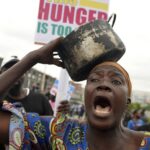
The #EndSARS protests in 2020 exposed widespread frustration among young Nigerians. Many citizens also criticised the government’s response to worsening insecurity.
Family Life
Buhari kept much of his family life private.
He married Safinatu Yusuf in 1971. They had five children before ending their marriage in 1988.
He married Aisha Halilu Buhari in 1989. She served as Nigeria’s First Lady from 2015 to 2023.
The couple had five children: Aisha, Halima, Yusuf, Zahra and Amina.
During Buhari’s presidency, Aisha Buhari occasionally spoke publicly about governance and politics. Her comments offered Nigerians a rare glimpse into the First Family.
Health Challenges and Death
Buhari spent several months in London for medical treatment, especially in 2017. His prolonged absence sparked nationwide debate and speculation.
The government released only limited information about his health. That lack of transparency fueled conspiracy theories, including the false claim that a Sudanese body double named “Jubril” had replaced him. Government officials and independent fact-checkers repeatedly disproved the claim.
Buhari died in London on July 13, 2025, at the age of 82. Former First Lady Aisha Buhari later revealed that doctors attributed his death to pneumonia.
Vice President Kashim Shettima accompanied Buhari’s remains back to Nigeria. His family buried him in Daura on July 14, 2025, according to Islamic rites.
President Bola Ahmed Tinubu attended the funeral alongside governors, traditional rulers, military officers and thousands of mourners.
President Tinubu also declared seven days of national mourning and ordered national flags to fly at half-mast.
A Legacy That Endures
Muhammadu Buhari left behind one of Nigeria’s most debated political legacies.
Supporters remember him for his discipline, personal integrity and anti-corruption campaign. They also credit his administration with major infrastructure projects.
Critics argue that his governments failed to protect civil liberties, improve the economy and end insecurity.
Despite those disagreements, Buhari remains one of the few Nigerians who led the country both as a military ruler and as a democratically elected president. His life reflected Nigeria’s political evolution and its continuing search for stability, accountability and national development.