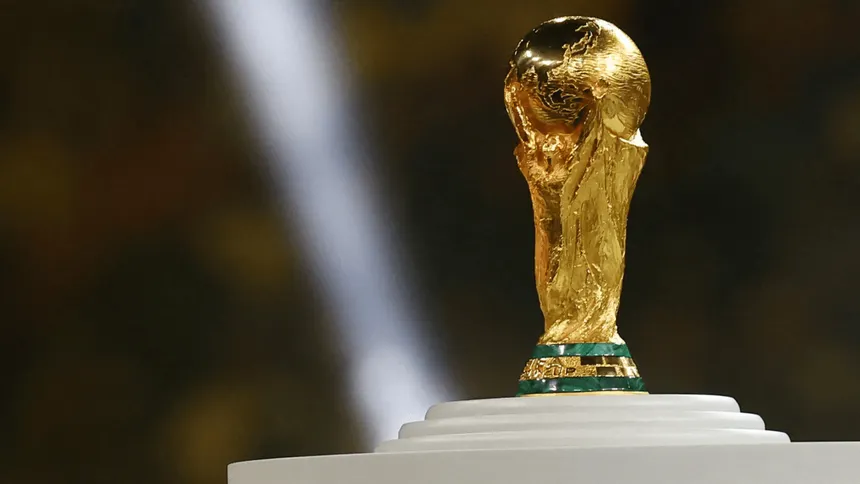
Every four years, billions of people tune in to watch the FIFA World Cup, a competetion celebrated as a festival of football that brings nations together through a shared love of the game.
However, history tells a more complicated story, as the FIFA World Cup has never been just about football.
For nearly a century, the football competetion has been shaped by politics, diplomacy, propaganda, and international tensions.
While the controversies surrounding the 2026 tournament have dominated headlines, they are far from a new phenomenon. They are part of a long tradition of politics influencing football’s biggest stage.
1934: When Mussolini Used Football as Propaganda
One of the earliest examples came during the 1934 FIFA World Cup in Italy.
Italian dictator Benito Mussolini understood the power of football and used the tournament to promote his fascist regime. Stadiums became symbols of national pride, fascist imagery surrounded the competition, and Italy’s eventual victory was celebrated as proof of the regime’s strength.
Although historians still debate the extent of political influence over officiating, there is little doubt that the tournament served as a powerful propaganda tool for Mussolini.
1978: Argentina’s Military Junta and the World Cup
More than four decades later, Argentina hosted the World Cup while under military rule.
As the world focused on football, thousands of political opponents were being imprisoned, tortured, or disappearing under the dictatorship. The government used the tournament to improve its international image, while Argentina’s victory became a source of national pride amid widespread human rights concerns.
The 1978 World Cup remains one of the clearest examples of sport being used to shape political perception.
Qatar 2022: Human Rights Took Center Stage
The 2022 FIFA World Cup showed that politics had not disappeared from football.
Before the tournament even began, debates over migrant workers’ rights, LGBTQ+ issues, and corruption allegations surrounding Qatar’s hosting bid dominated global headlines.
For many people, the biggest conversations were happening off the pitch rather than on it.
2026: A New Tournament, Familiar Controversies
The 2026 FIFA World Cup has continued the tournament’s long history of political controversy.
Iran’s national team faced visa restrictions that disrupted its preparations, while Somali referee Omar Abdulkadir Artan was denied entry into the United States despite being selected by FIFA to officiate. Both incidents reignited debates about whether politics and immigration policies should influence a global sporting event.
The tournament also drew attention after U.S. striker Folarin Balogun’s red card became the subject of widespread controversy. Reports and online speculation claimed that U.S. President Donald Trump had contacted FIFA President Gianni Infantino to seek a review of the decision. Although those claims remain unverified, they fueled fresh debate about political influence and the integrity of football’s biggest tournament.
Whether confirmed or merely perceived, the controversy reinforced a familiar reality: when the World Cup captures the world’s attention, politics is rarely far behind.
Why Politics Always Finds Football
The World Cup is more than a football tournament. It is one of the most watched events on Earth, giving governments an opportunity to shape their global image and project national influence.
That is why political issues repeatedly find their way into the competition. Sometimes the debates are about propaganda. Other times they involve human rights, immigration, diplomacy, or security. The issues change with the times, but the connection between football and politics remains.
On a Final Note
Many fans see today’s World Cup controversies as something new.
History suggests otherwise.
From Mussolini’s Italy in 1934 to Argentina’s military dictatorship in 1978, from Qatar’s human rights debates in 2022 to the immigration and visa disputes of 2026, politics has consistently been part of football’s biggest tournament.
The World Cup has always reflected the world around it.
Therefore, while the players, stadiums, and headlines may change, one thing remains remarkably consistent: the FIFA World Cup has never been just about football. It has always been, in one way or another, about politics too.