
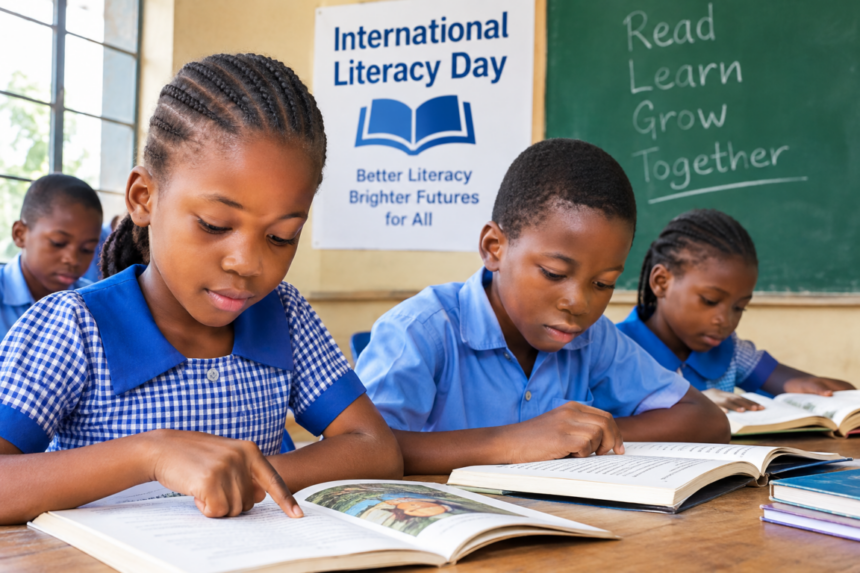
Millions of people around the world still lack basic literacy skills as the global community marks International Literacy Day 2026 on September 8, with UNESCO using this year’s observance to highlight literacy as a foundation for inclusion, sustainable development and economic opportunity.
The 2026 celebration is being held under the theme “Literacy for People, the Planet and Prosperity.” The theme reflects the connection between literacy, education, livelihoods, social inclusion and sustainable development, while calling for stronger efforts to ensure people have the skills needed to learn, work and participate fully in society.
60 Years of International Literacy Day
International Literacy Day was proclaimed by UNESCO in 1966, with the first global observance taking place in 1967, the 2026 celebration therefore marks the 60th anniversary of the international literacy campaign.
Despite decades of efforts, UNESCO says at least 739 million young people and adults worldwide lacked basic literacy skills in 2024, withthe organisation also reports that four in ten children are not reaching minimum proficiency in reading, while 272 million children and adolescents were out of school in 2023.
The figures highlight the scale of the challenge and the barriers that continue to prevent millions of people from accessing quality education.
Literacy Goes Beyond Reading and Writing
Literacy affects almost every aspect of daily life. Reading and writing skills can help people access information, find employment, manage finances, understand health information and engage with public services.
The importance of literacy has also expanded with the growth of digital technology. People increasingly need to navigate online platforms, assess information, use digital services and distinguish reliable information from misleading content.
This makes literacy not only an educational issue but also an important part of economic participation, social inclusion and informed citizenship.
Global Celebration in Mexico
The global International Literacy Day 2026 celebration is taking place in Chiapas, Mexico, from September 8 to 9, organised by UNESCO in collaboration with the Mexican government.
The event brings together education ministers, teachers, students, experts and other stakeholders to examine progress in literacy and discuss persistent and emerging challenges. It will also feature the 2026 UNESCO International Literacy Prizes, which recognise outstanding literacy programmes from around the world.
UNESCO says the global celebration will also provide an opportunity to identify policies, practices and partnerships capable of advancing literacy and supporting more inclusive and sustainable societies.
What International Literacy Day Means for Nigeria
For countries such as Nigeria, the global observance offers an opportunity to examine the barriers that continue to affect access to quality education.
Poverty, school dropouts, inadequate learning resources and unequal access to education can make it difficult for children and adults to acquire basic literacy skills. Addressing these challenges requires investment in schools, teacher training, learning materials and programmes that give adults who missed formal education another opportunity to learn.
As International Literacy Day marks its 60th anniversary, its central message remains relevant: literacy is a fundamental right and a foundation for opportunity.
Improving literacy can open doors to education, employment, economic participation and a better quality of life. The challenge for governments, schools, communities and development partners is to ensure that those opportunities reach everyone.