
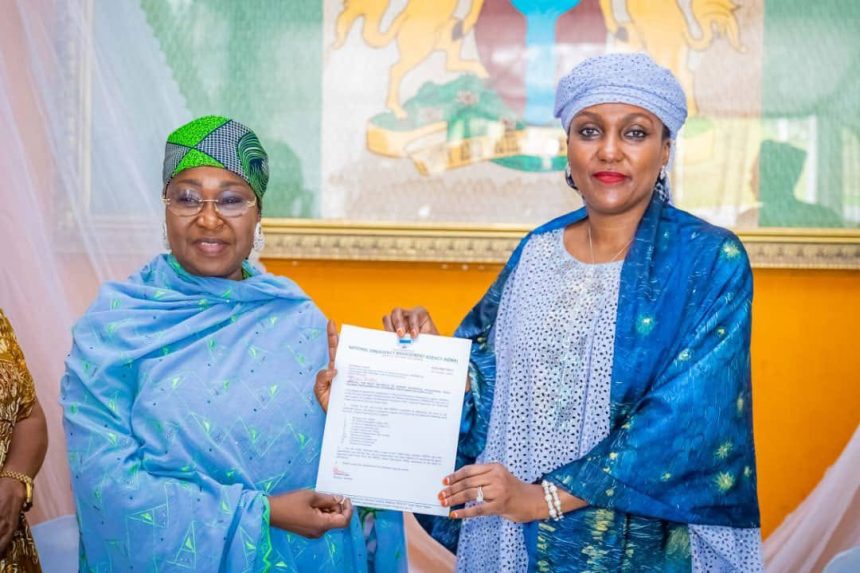
The Director General of the National Emergency Management Agency (NEMA), Mrs. Zubaida Umar, has reaffirmed the Agency’s commitment to building resilience among Internally Displaced Persons (IDPs) and vulnerable youth through vocational empowerment initiatives.
Speaking at the graduation ceremony of 200 beneficiaries of a skills acquisition programme organized by the Maryam Babangida National Centre for Women Development (MBNCWD) in Abuja on Saturday, Mrs. Umar said emergency management must extend beyond disaster response to include recovery and livelihood support.
“Emergency management goes beyond responding to disasters; it is also about building resilience, restoring hope, and supporting sustainable livelihoods for those affected by crises—especially our vulnerable populations, including women, youth, and displaced persons,” she stated.
The NEMA boss commended the Maryam Babangida Centre for its role in promoting skills acquisition as a tool for empowerment and poverty reduction. She urged the graduates to apply their skills productively to uplift their communities and contribute to national development.
As part of its support for the programme, NEMA provided livelihood support materials to assist the beneficiaries in establishing small-scale enterprises and sustaining the gains of the training.
Read Also: NEMA Partners to Strengthen Ties on Humanitarian Collaboration
Mrs. Umar reaffirmed that the Agency would continue collaborating with relevant institutions and partners to strengthen resilience and reduce vulnerability nationwide.
In her remarks, the Director General of the Maryam Babangida National Centre for Women Development, Dr. Vilita Asabe Bashir, appreciated NEMA’s continuous partnership, describing it as a demonstration of the Agency’s dedication to humanitarian service and disaster management.
She noted that the programme was designed to equip IDPs and other vulnerable persons from insecurity-affected communities with skills to become economically independent and less exposed to social risks.
The event also featured testimonies from beneficiaries and stakeholders, who commended the Federal Government and its partners for supporting empowerment and inclusive recovery efforts.