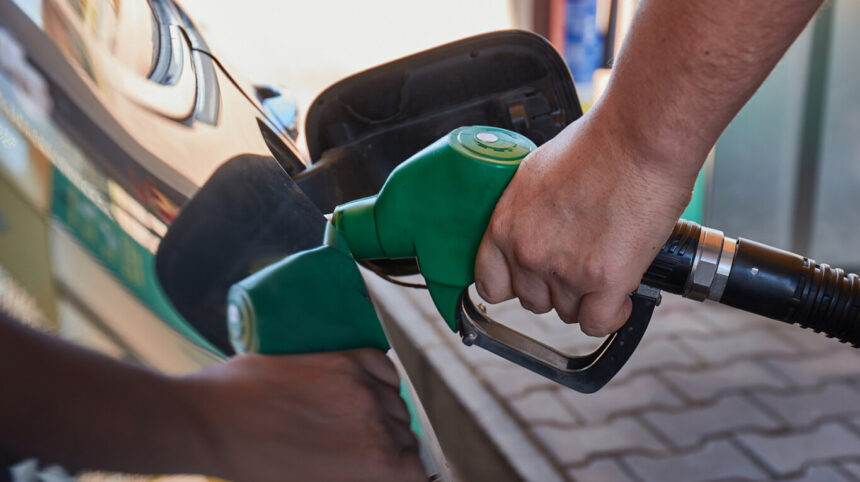
The price of diesel has risen to about N2,100 per litre in Lagos and Ogun, putting more pressure on Nigerian manufacturers.
The Manufacturers Association of Nigeria (MAN) says energy costs now take up more than 50 per cent of manufacturers’ operating expenses.
Manufacturers rely heavily on diesel-powered generators because of unreliable electricity supply. The rising cost of diesel has therefore increased the cost of running factories.
MAN Director-General, Segun Ajayi-Kadir, said energy previously accounted for about 40 per cent of manufacturers’ operating costs.
That figure has now risen above 50 per cent.
Diesel sold for about N1,200 per litre in February. The price later increased to between N1,700 and N1,800 before reaching about N2,100.
This represents an increase of about 75 per cent since February.
The rising cost of diesel is already affecting factory operations.
Frank Onyebu, Executive Director of Universal Luggage Ltd, said his company has reduced its production shifts because of the high cost of running generators.
He said the company moved from three shifts to two, and later to one shift. It now operates every other day, depending on available orders.
Manufacturers warn that continued increases in energy costs could lead to lower production, job losses and business closures.
Manufacturers are also spending more on alternative energy because of unreliable power supply.
The sector spent about N782 billion on alternative energy in 2023.
That figure rose to N1.1 trillion in 2024 and N1.34 trillion in 2025.
MAN said spending in the first half of 2026 had already reached the same level as the total recorded in 2025.
MAN Head of Energy, Ibrahim Usman, described energy costs as one of the biggest threats to Nigerian manufacturers.
He said power accounts for more than 45 per cent of production costs for many manufacturers.
The high cost of energy is also making Nigerian products less competitive.
This could become a bigger challenge as local businesses seek to increase exports under the African Continental Free Trade Area (AfCFTA).
The Lagos Chamber of Commerce and Industry (LCCI) has called for urgent government intervention.
Its Director-General, Dr Chinyere Almona, urged the government to consider a temporary diesel duty waiver for verified manufacturers and industrial small businesses.
She also called for faster conversion of industrial clusters to compressed natural gas (CNG).
The LCCI further urged the government to liberalise Automotive Gas Oil import licensing to encourage competition and improve supply.
The Association of Small Business Owners of Nigeria also warned that higher diesel prices could increase the cost of goods, reduce profits and lead to job losses.
The pressure is not limited to diesel.
Petrol prices in several filling stations in Lagos and Ogun have increased to between N1,300 and N1,370 per litre.
The price was previously around N1,200 to N1,220 per litre.
The increase has been linked to higher crude oil prices, wholesale costs and logistics expenses.
Brent crude was reported at about $97 per barrel, amid renewed tensions in the Middle East and concerns about global oil supply.
For manufacturers, the rising energy costs create a wider problem.
Without reliable and affordable electricity, factories must spend more on diesel and other energy sources. That pushes up production costs and makes it harder for businesses to remain competitive.