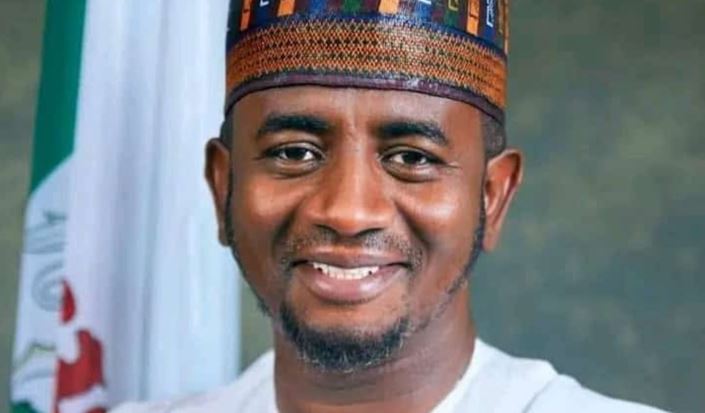
Senator Shehu Buba has rejected fresh allegations linking him to banditry, describing the claims as part of a sustained campaign of disinformation aimed at damaging his reputation and political career.
The senator, who represents Bauchi South Senatorial District and chairs the Senate Committee on Livestock and Animal Husbandry, responded to the allegations in a statement issued on Sunday.
Buba, who is also seeking the Bauchi State governorship on the platform of the Peoples Redemption Party (PRP), titled his statement “Setting the Record Straight: My Response to Fabricated Videos, False Allegations and a Sustained Campaign of Disinformation.”
The controversy follows videos circulated on social media by a content creator identified as “D English Alhaji,” who alleged that suspected bandit leaders had visited the senator’s residence.
The allegations were later repeated by a resident identified as Hassan Husseini during an interview with the content creator.
Husseini accused Buba of being among politicians allegedly supporting bandits operating in the area. He also claimed that individuals linked to suspected bandit kingpin Dogo Gide travelled to Abuja for specialised training, alleging that an aide to the senator helped facilitate the process.
Buba has denied the allegations and challenged those making them to provide verifiable evidence.
According to Buba, the latest controversy can be traced to an incident that occurred on September 15, 2024.
The senator said Umar Shayi led a militia group that allegedly operated under the guise of hunters through the Bauchi State Agency for Vigilante and Youth Empowerment.
Buba alleged that two charcoal sellers were killed during the incident, he subsequently visited the families of the victims, condemned the killings and called for those responsible to face justice.
According to the senator, his intervention following the killings later became the basis for allegations connecting him to banditry.
Buba specifically accused Abubakar Bununu, a former Bauchi State Commissioner for Internal Security and Home Affairs, of publicly linking him to banditry following the incident.
The senator rejected the allegation, insisting that authorities had not produced evidence establishing such a connection.
Buba said the allegations currently circulating should be subjected to proper investigation rather than accepted on the basis of social media claims.
He also denied an allegation involving an aide who was purportedly said to have facilitated specialised training for individuals linked to Dogo Gide.
According to the senator, he does not have an aide by the name being circulated in connection with the allegation.
He consequently invited security agencies to investigate the claim.
The senator maintained that if credible evidence exists linking him to criminal activity, the appropriate authorities should examine it.
The Bauchi senator also addressed questions surrounding the beneficiaries of programmes and assistance associated with his office.
He said he regularly supports religious pilgrims, education initiatives, medical interventions and empowerment programmes.
Buba explained that community and religious leaders frequently recommend individuals who benefit from such interventions.
He said these relationships and community engagements should not automatically be interpreted as evidence of criminal associations.
The senator maintained that his public position does not exempt him from scrutiny.
Buba said he accepts that public officials must answer questions about their conduct, decisions and associations.
However, he argued that scrutiny should be based on evidence.
“There is a difference between investigation and fabrication, between criticism and blackmail, and between political opposition and deliberate character assassination.”
The senator accused those behind the allegations of recycling previous claims, editing videos and attaching new captions to create what he described as misleading narratives.
He called on journalists, editors, fact-checkers and civil society organisations to independently verify the allegations before publishing or amplifying them.
He also urged them to consider his response alongside the allegations before reaching conclusions.
Buba also addressed an earlier allegation concerning the 2024 Hajj pilgrimage, saying he had previously been accused of sponsoring a suspected bandit kingpin to undertake the pilgrimage.
The allegation claimed that the senator used an aide identified as Yahaya Ibrahim to arrange the sponsorship.
Buba has rejected the allegation.
The latest controversy has therefore revived several claims previously made against the senator, with Buba arguing that old allegations are being repackaged and circulated as new information.
The allegations come as Buba seeks to position himself for the Bauchi governorship, making the controversy politically significant.
As a serving senator and chairman of a key Senate committee, allegations connecting him to criminal networks carry potentially serious political and reputational consequences.
Buba, however, says the allegations are politically motivated and form part of a sustained campaign to discredit him.
The senator has maintained that he is open to legitimate scrutiny but wants claims against him to be subjected to evidence-based investigation.
The claims linking Senator Shehu Buba to banditry remain allegations and have not, on the information provided, been established as facts by a court.
Buba has categorically denied the claims and challenged those making them to provide evidence.
That distinction is particularly important because some of the issues referenced in the controversy are connected to matters requiring investigation and, where applicable, judicial determination.
For now, the senator’s position is clear: he denies any connection to banditry and says the allegations are part of a deliberate campaign of disinformation and character assassination.
The controversy also places renewed attention on the responsibilities of political actors, journalists, social media creators and members of the public when dealing with serious allegations involving public officials.
As the political atmosphere ahead of the next Bauchi governorship contest develops, scrutiny of Buba and other political figures is likely to intensify.
The question, ultimately, is whether the allegations will be supported by independently verifiable evidence—or remain claims circulating primarily through political and social media channels.