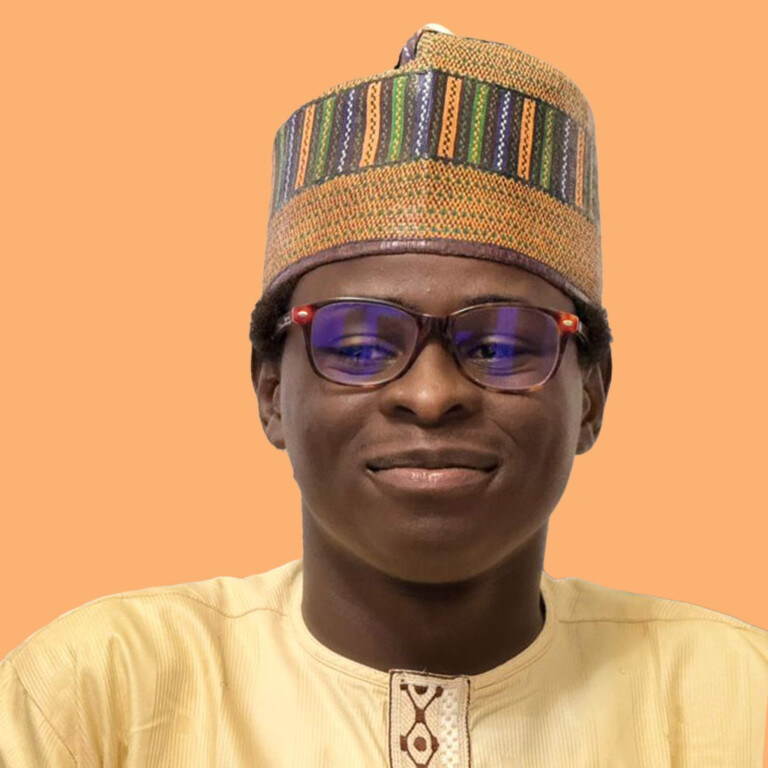
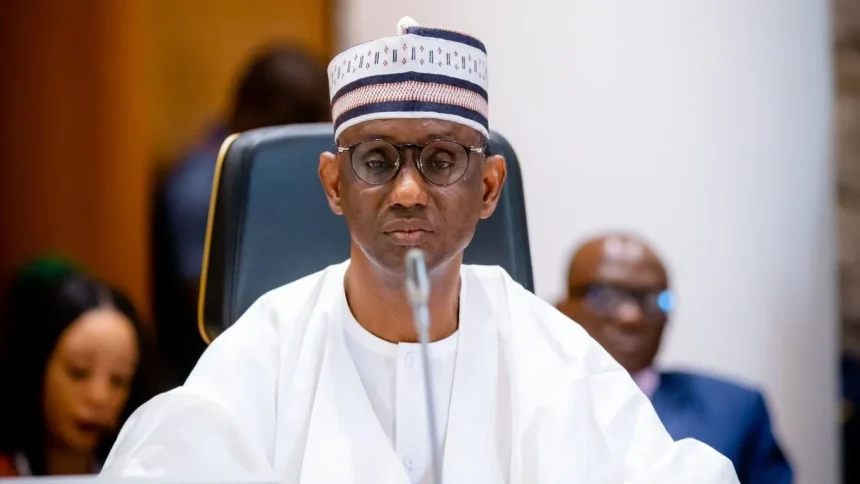
For a generation of Nigerians who watched the country’s anti-corruption battles unfold in the early 2000s, the name Nuhu Ribadu became synonymous with fearlessness.
He was not a politician. He was a police officer who found himself at the centre of Nigeria’s most consequential fight against corruption.
As the pioneer chairman of the Economic and Financial Crimes Commission (EFCC), Ribadu went after people many considered untouchable — powerful politicians, senior public officials, businessmen and even the Inspector-General of Police who had been his superior.
His methods, his public statements and his willingness to confront political power made him one of the most prominent anti-corruption figures Nigeria had produced.
But his story was not simply one of arrests, prosecutions and recovered assets. It was also a story about the limits of institutions, political power and what can happen when an anti-corruption campaign begins to threaten powerful interests.
From Police Officer to Anti-Corruption Czar
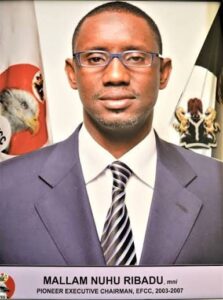
Nuhu Ribadu began his career in the Nigeria Police Force and rose through the ranks as a police officer and lawyer.
In 2003, President Olusegun Obasanjo appointed him the pioneer Executive Chairman of the newly established Economic and Financial Crimes Commission.
The assignment placed a relatively young police officer at the head of an institution that would soon become one of the most feared law-enforcement agencies among Nigeria’s political and business elite.
Under Ribadu, the EFCC rapidly developed a reputation for aggressive investigations into financial crimes, advance-fee fraud, money laundering and corruption.
The commission did not restrict itself to ordinary fraudsters. It began pursuing people occupying some of the most powerful positions in the country.
By 2006, Ribadu told the Senate that the EFCC was investigating 31 of Nigeria’s 36 state governors for alleged corruption.
That declaration was extraordinary.
It meant that the agency was not merely chasing internet fraudsters and bank cheats. It was turning its attention toward the political establishment itself. (Human Rights Watch)
The Police Chief Who Went After His Own Boss
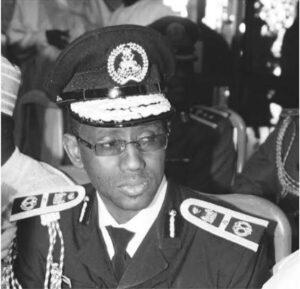
One of Ribadu’s most remarkable cases involved Tafa Balogun, the Inspector-General of Police who was, at the time, effectively Ribadu’s superior within the police hierarchy.
The EFCC investigated Balogun over allegations of financial crimes.
The former police chief eventually pleaded guilty to corruption charges, was convicted and was ordered to forfeit substantial assets.
The case became an important demonstration of the message Ribadu’s EFCC wanted to send: rank and office would not necessarily provide protection from investigation.
The agency’s actions helped establish Ribadu’s reputation as an anti-corruption official willing to confront people within the same system that had produced him. (Human Rights Watch)
Governors Became Prime Targets
The EFCC under Ribadu also pursued several former governors after they left office and lost the constitutional immunity they enjoyed while serving.
Among those charged during his tenure were Diepreye Alamieyeseigha of Bayelsa, Abubakar Audu of Kogi, Joshua Dariye of Plateau, Orji Kalu of Abia, Saminu Turaki of Jigawa, Jolly Nyame of Taraba and Chimaroke Nnamani of Enugu.
These cases helped change public perceptions about the possibility of prosecuting politically powerful Nigerians for alleged corruption.
Some of the cases would continue for years, with convictions eventually secured in some instances.
But Ribadu’s aggressive approach also generated controversy. Human Rights Watch documented concerns about selective prosecution and the possibility of political influence over which cases were pursued. That criticism is an important part of the historical record and should not be ignored when assessing Ribadu’s legacy. (Human Rights Watch)
The James Ibori Affair
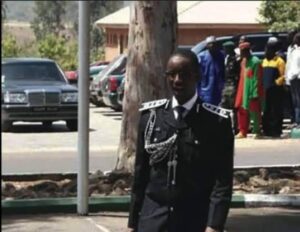
Perhaps no episode better captures the intensity of Ribadu’s final days at the EFCC than his confrontation with former Delta State Governor James Ibori.
Ibori was an influential politician with extensive political connections and considerable wealth.
The EFCC investigated him over corruption allegations and eventually arrested him in 2007.
Ribadu later said Ibori attempted to bribe him with $15 million to make the investigation disappear. According to Ribadu’s account, the money was taken to the Central Bank of Nigeria as evidence.
The allegations became part of the wider corruption investigation surrounding Ibori.
Years later, the case would take a dramatic international turn.
In the United Kingdom, Ibori eventually pleaded guilty in 2012 to money laundering, conspiracy to defraud and forgery and was sentenced to 13 years in prison. British authorities estimated that he had embezzled about $250 million from Nigerian public funds. (PBS)
The British government later facilitated the return of more than £4.2 million recovered from Ibori and his associates to Nigeria. (GOV.UK)
The Ibori case therefore became much bigger than an EFCC investigation. It became an example of how financial crimes involving Nigerian public officials could cross borders — and how international law-enforcement cooperation could eventually help trace and recover suspected proceeds of corruption.
When the System Turned Against Ribadu
Then came the turning point.
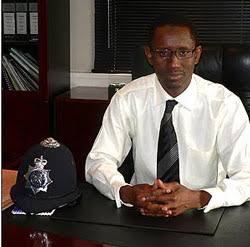
In December 2007, shortly after the EFCC moved against Ibori, Ribadu was removed from his position as EFCC chairman and ordered to attend a mandatory course at the National Institute for Policy and Strategic Studies in Kuru, Plateau State.
Human Rights Watch described the move as a serious setback for Nigeria’s anti-corruption campaign and said the timing raised concerns about political interference. (Human Rights Watch)
Ribadu’s troubles did not end with his removal.
In 2008, he was demoted within the police service. He was subsequently dismissed from the police force after failing to report to a posting he considered unsafe.
He also faced threats to his life.
Human Rights Watch reported that Ribadu told the organisation he feared for his life and that he had received threatening calls. The organisation also documented an apparent assassination attempt and said he eventually left Nigeria in early 2009. (Human Rights Watch)
The irony was striking.
The man who had built his reputation fighting powerful people accused of stealing public resources suddenly found himself fighting for his own career and safety.
“When You Fight Corruption, It Fights Back”
One of the most enduring descriptions of Ribadu’s experience came from Ribadu himself:
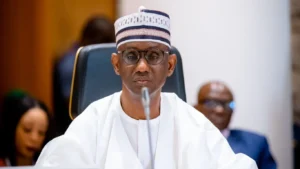
“When you fight corruption, it fights back.”
The statement captures the central contradiction of his career.
Corruption is rarely just about an individual stealing public money. It can involve political relationships, business networks, institutions, legal battles and powerful interests capable of influencing the environment in which investigations take place.
Ribadu discovered this first-hand.
His removal demonstrated that an anti-corruption agency can be powerful in law yet vulnerable in practice if its leadership and institutional independence remain dependent on political authority.
Human Rights Watch subsequently argued that Nigeria’s anti-corruption institutions needed greater independence from political interference. (Human Rights Watch)
A Legacy That Survived the Fall
Despite the turbulence surrounding his departure from the EFCC, Ribadu’s influence did not disappear.
His tenure helped establish the EFCC as a major institution in Nigeria’s fight against economic and financial crimes.
It also demonstrated that investigations into corruption could reach the highest levels of government.
His approach was not without controversy. Critics accused the Ribadu-era EFCC of selective enforcement and of sometimes allowing political considerations to influence investigations.
But even his critics could not easily dismiss the significance of what happened during those years.
A police officer had confronted a sitting political class.
A police chief had been prosecuted.
Governors had been investigated.
Former governors were charged.
Money laundering investigations crossed international borders.
And one of Nigeria’s most politically connected former governors eventually ended up in a British prison.
That is why Ribadu’s story remains relevant to Nigeria’s anti-corruption debate.
From Anti-Corruption Chief to National Security Adviser
Ribadu’s career eventually entered another chapter.
After leaving the EFCC and later contesting the 2011 presidential election on the platform of the Action Congress of Nigeria, he continued to participate in public policy and international anti-corruption initiatives.
He later returned to government service at the highest level.
In 2023, President Bola Ahmed Tinubu appointed Nuhu Ribadu as National Security Adviser.
As of 2026, Ribadu remains Nigeria’s NSA, working primarily on national security, counterterrorism, intelligence coordination and international security cooperation. The State House continues to identify him as the National Security Adviser.
His career has therefore travelled an unusual distance: from police officer, to anti-corruption czar, to presidential candidate, and eventually to the country’s top national security coordination position.
The Bigger Question
The most important lesson from Ribadu’s story may not be about one man.
It is about institutions.
Ribadu’s rise demonstrated what a determined investigator could accomplish when given political backing and institutional authority.
His downfall demonstrated the opposite: how quickly an anti-corruption campaign can become vulnerable when political interests, institutional control and enforcement powers collide.
The central question is therefore not whether Nigeria can produce another Nuhu Ribadu.
It is whether Nigeria can build institutions strong enough that the success or failure of the fight against corruption does not depend on the courage of one individual.
A fearless investigator can expose corruption.
A determined prosecutor can build cases.
A courageous police officer can confront powerful people.
But only strong institutions can make the fight sustainable.
That may ultimately be the most enduring lesson of Nuhu Ribadu’s extraordinary journey.
He became feared by people who believed their wealth and political connections could protect them.
He became celebrated by Nigerians who wanted to see powerful officials held accountable.
He became controversial because the fight against corruption itself became entangled with politics.
And, eventually, the system he had served turned against him.
But the cases, investigations and institutional battles of the Ribadu era remain part of Nigeria’s anti-corruption history — a reminder that in the struggle against corruption, confronting the powerful can be only the beginning of the battle.