For centuries, the waters of the Osun River have carried a cultural and spiritual story that extends far beyond the river itself, with Ọ̀ṣun standing at its centre as one of the most revered female òrìṣà in Yoruba tradition.
Known as a goddess associated with fresh water, fertility, love, beauty, healing and prosperity, Ọ̀ṣun remains deeply connected to Osogbo in Osun State, where the Osun River flows through the renowned Osun-Osogbo Sacred Grove.
For many Yoruba people, Ọ̀ṣun represents both the power of nature and the importance of feminine influence in society. Her worship has survived across generations through oral traditions, rituals, festivals and other sacred practices.
The Stories and Traditions Surrounding Ọ̀ṣun
Yoruba oral traditions contain different accounts of Ọ̀ṣun, meaning there is no single version of her history or mythology.
One widely told tradition connects Ọ̀ṣun with the founding of Osogbo. According to the story, early settlers encountered Ọ̀ṣun while searching for a suitable place to establish their community. She instructed them to move their settlement away from the river and promised to protect them if they continued to honour her.
The tradition helped establish the enduring relationship between Ọ̀ṣun, the river and the people of Osogbo.
Other Yoruba traditions place Ọ̀ṣun among the spiritual forces involved in the creation of the world. In one account, male spiritual forces struggled because they had failed to recognise her importance. Their success came only after they acknowledged her role.
The story is often interpreted as a reflection of the importance of feminine power, balance and cooperation.
Ọ̀ṣun and the Meaning of Fertility
Fertility is one of the strongest themes associated with Ọ̀ṣun’s worship.
Water sustains life, while fertility supports the growth of families and communities. As a result, devotees have traditionally sought Ọ̀ṣun’s blessings for children, healthy families, prosperity and general wellbeing.
Her traditional symbols include water, honey, beads, mirrors, fans and brass objects. These objects are associated with qualities such as beauty, sweetness, wealth and femininity.
The symbolism surrounding Ọ̀ṣun also reflects the broader Yoruba understanding of the relationship between humans, nature and the spiritual world.
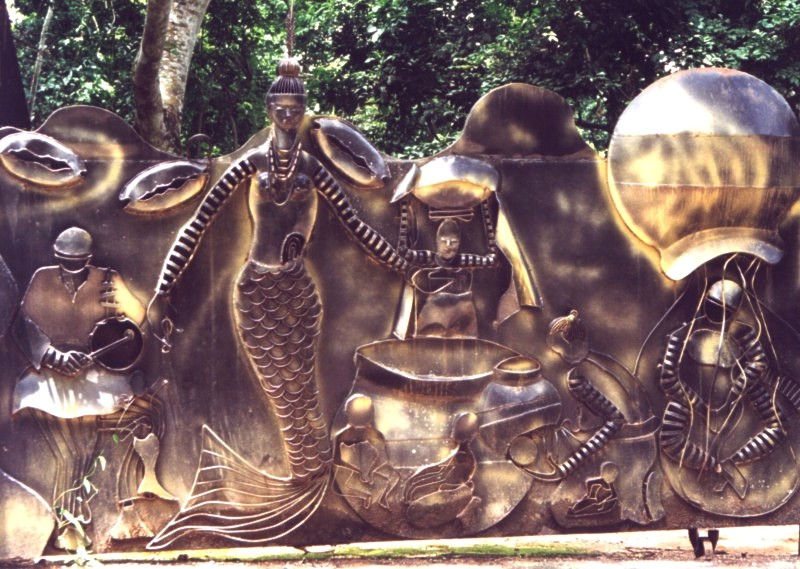
The Osun-Osogbo Sacred Grove is one of the most important physical expressions of Ọ̀ṣun’s enduring cultural legacy.
Located on the outskirts of Osogbo, the forest contains shrines, sculptures and other works of Yoruba religious and artistic heritage. Beyond its spiritual significance, the grove also preserves part of the natural vegetation that once covered large areas of southern Nigeria.
UNESCO recognised the cultural and historical importance of the site by inscribing the Osun-Osogbo Sacred Grove on the World Heritage List in 2005.
Unlike a historical monument that exists only as a reminder of the past, the grove remains a living religious site where traditional practices continue to be observed.
The Osun-Osogbo Festival
Every year, the Osun-Osogbo Festival brings the traditions surrounding Ọ̀ṣun into public view.
Devotees, traditional leaders, residents and visitors gather for prayers, music, dancing, rituals and processions. One of the most recognisable figures in the festival is the Arugba, a young woman who carries a sacred calabash during the procession to the river.
The procession represents an important renewal of the relationship between the community and Ọ̀ṣun.
The festival also demonstrates how Yoruba cultural traditions continue to adapt and survive in the modern world while maintaining connections with generations of the past.
Ọ̀ṣun Beyond Nigeria
The cultural influence of Ọ̀ṣun extends far beyond southwestern Nigeria.
As Yoruba people were dispersed across the Atlantic through migration and the transatlantic slave trade, Yoruba religious traditions travelled with them. Ọ̀ṣun became associated with Ochún in Cuba and Oxum in Brazil, where related traditions remain part of wider Afro-Atlantic religious and cultural practices.
Her presence across different countries demonstrates the lasting influence of Yoruba spirituality and its ability to survive across generations and geographical boundaries.
A Living Symbol of Yoruba Identity
Today, Ọ̀ṣun remains an important symbol of Yoruba identity, spirituality and cultural heritage.
Her story brings together nature, fertility, femininity, art, history and community. The Osun River and the sacred grove provide a physical connection to these traditions, while the annual festival keeps many of the associated practices visible to new generations.
More than a story from the past, the legacy of Ọ̀ṣun continues to live through the people, rituals and cultural institutions that preserve it.
The waters of the Osun River therefore represent more than a natural resource. For generations of Yoruba people, they have remained part of a living cultural tradition connecting the present with the ancestors and the generations yet to come.