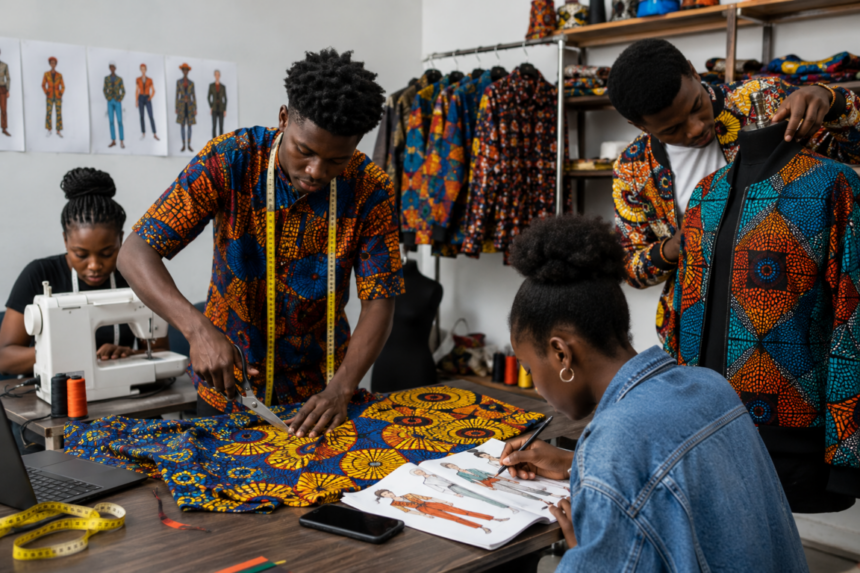
Ankara is taking on a new identity in Nigeria as young tailors and fashion designers transform the colourful fabric into streetwear pieces such as oversized shirts, cargo trousers, jackets, bucket hats and matching sets.
For decades, Ankara has been strongly associated with weddings, church services, traditional celebrations and other formal occasions. But a new generation of Nigerian fashion creators is challenging that image by incorporating the fabric into everyday clothing and contemporary street style.
For many young Nigerians, Ankara is no longer simply a traditional fabric. It has become a medium for creativity, self-expression and cultural identity.
Nigeria’s Gen Z fashion community is helping push Ankara beyond its traditional uses.
Young people are combining Ankara with sneakers, denim, thrift clothing and other streetwear pieces, creating outfits that blend familiar Nigerian aesthetics with international fashion trends.
The result is a style that feels distinctly Nigerian while remaining connected to the global streetwear movement.
Fashion coverage in Nigeria has highlighted the role of young designers and social media in this transformation, with mix-and-match styling, experimental tailoring and online fashion communities helping popularise new interpretations of African fabrics.
From Traditional Outfits to Modern Streetwear
The transformation is particularly visible in the work of young Nigerian tailors.
Instead of requesting only traditional dresses, agbadas and other formal outfits, younger customers are increasingly approaching designers with photographs, mood boards and social media references.
Tailors then reinterpret these ideas using Ankara, creating customised pieces that fit contemporary tastes.
Some designers are experimenting with:
- Oversized Ankara shirts
- Cargo trousers
- Cropped tops
- Patchwork shirts
- Flared trousers
- Bomber jackets
- Puffer-style pieces
- Reversible bucket hats
- Ankara bags
- Matching two-piece and three-piece sets
This shift is expanding the role of tailoring from traditional garment production into a more experimental form of fashion design.
Social Media Is Driving the Ankara Streetwear Movement
Platforms such as TikTok and Instagram have become important tools for young Nigerian fashion designers.
A tailor no longer has to depend entirely on customers within their immediate neighbourhood. Designers can showcase their work online, attract followers and receive orders from customers in other Nigerian cities and even overseas.
Short videos showing the design process, before-and-after transformations and finished outfits can also help small fashion brands reach large audiences.
For emerging designers, social media has therefore become both a marketing platform and a creative showroom.
The Reinvention of African Fabrics
The Ankara streetwear movement is part of a broader evolution taking place within Nigerian fashion.
Designers are increasingly combining traditional and familiar African fabrics with contemporary silhouettes and everyday clothing.
Premium Times reported in 2025 on Nigerian designers reinventing fabrics including Ankara, Adire and Aso Oke through modern designs and silhouettes.
This approach is helping Nigerian fashion develop an identity that is simultaneously rooted in African culture and connected to global fashion.
Why Ankara Works for Streetwear
Part of Ankara’s appeal comes from its distinctive colours, patterns and visual character.
The Victoria and Albert Museum describes Ankara as a printed cotton cloth that has been fashionable in West and East Africa since the late 19th century, while also highlighting the fabric’s complex history and its role in African cultural expression.
Its bold prints make Ankara particularly suitable for statement pieces.
An oversized Ankara shirt, for example, can become the centrepiece of an otherwise simple outfit. A pair of Ankara cargo trousers or a brightly patterned bucket hat can similarly introduce African identity into contemporary streetwear.
The Surprising History of Ankara
Despite its strong association with African fashion today, Ankara has a complex history.
The production of the fabric is linked to Dutch attempts to reproduce Indonesian batik using industrial manufacturing techniques. Over time, the resulting printed textiles became deeply embedded in West African fashion and culture.
African consumers and designers gave the fabrics new meanings, patterns and uses, helping establish Ankara as an important part of African fashion identity.
That process of reinvention continues today.
Young Nigerian designers are taking a fabric historically associated with African clothing and placing it within modern street culture.
From Lagos to the World
One of the most interesting aspects of the Ankara streetwear movement is its potential global reach.
A designer working in Lagos can create an outfit, post it on TikTok or Instagram and potentially reach audiences in London, Accra, New York and other cities around the world.
This creates opportunities for small Nigerian fashion brands to build international audiences without necessarily having physical stores outside the country.
It also gives Nigerian designers an opportunity to present African fashion from their own creative perspective.
Ankara as a Business Opportunity
For Nigeria’s young fashion entrepreneurs, Ankara represents more than a material for making clothes.
It can be a business opportunity, creative outlet and vehicle for cultural expression.
A designer who understands modern customer preferences can turn Ankara into products that appeal to younger consumers while maintaining a connection to Nigerian culture.
The combination of tailoring skills, creativity and social media marketing can also allow small fashion businesses to build recognisable brands.
A tailor with a sewing machine, a strong design concept and an effective social media strategy can potentially reach customers far beyond their immediate community.
Can Ankara Become a Global Streetwear Staple?
The growing interest in African-inspired fashion suggests that Ankara has room to move further into global streetwear.
Its bold patterns give designers plenty of opportunities to experiment with silhouettes, colour combinations and unconventional clothing pieces.
The challenge will be maintaining cultural authenticity while creating designs that appeal to international consumers.
For young Nigerian designers, however, that balance may be precisely what makes the movement exciting.
They are demonstrating that traditional fabrics do not have to be limited to traditional designs.
Nigeria’s Gen Z fashion creators are giving Ankara a new future by taking it beyond formal occasions and incorporating it into contemporary streetwear.
Through oversized shirts, cargo trousers, jackets, bucket hats, bags and matching sets, young designers are combining Nigerian cultural identity with global fashion influences.
Social media is helping amplify the movement, giving emerging designers access to audiences far beyond their local communities.
Ankara may have a long and complex history, but its story is still being written. In the hands of Nigeria’s young fashion creators, the fabric is becoming a symbol of creativity, entrepreneurship and modern African identity.