
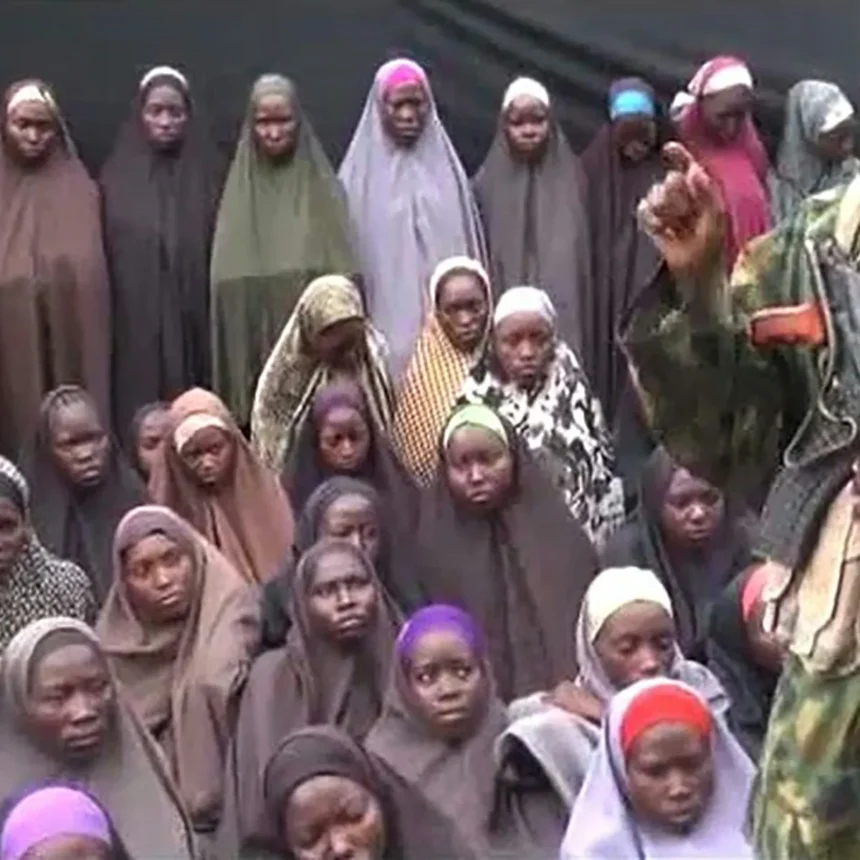
The Safe Schools Initiative Nigeria was launched in 2014 after the Chibok schoolgirls’ abduction with a promise to protect students, teachers and schools from attack.
More than a decade later, the Safe Schools Initiative Nigeria faces renewed scrutiny as kidnappings continue across Nigeria, With 2,531 students reportedly abducted in the last three years, many Nigerians are asking whether the programme has fulfilled its mission
Has the Safe Schools Initiative delivered on its promise?
That question has become more urgent as school kidnappings continue across northern Nigeria. Reports indicate that at least 2,531 students have been abducted during school-related attacks in the past three years.
For many parents, the statistics point to a troubling gap between policy and reality.
In May 2014, then-President Goodluck Jonathan announced a $10 million government contribution to the Safe Schools Initiative. Nigerian business leaders matched that amount with another $10 million.
The programme aimed to make schools safer through better security, emergency response systems, student relocation programmes and support for displaced learners.
Former UN Special Envoy for Global Education Gordon Brown described the initiative as a turning point for Nigeria. He envisioned a future where millions of children could attend school without fear.
The initiative also sought to reduce Nigeria’s growing number of out-of-school children. At the time, more than 10 million children were outside the classroom.
The goal appeared ambitious but achievable.
Despite years of planning and policy reforms, armed groups continue to target schools.
Bandits and insurgents have attacked schools in Kaduna, Niger, Katsina, Zamfara, Sokoto and Borno states. Many of those attacks ended in mass abductions.
Each incident revived painful memories of Chibok.
Parents pulled children out of school. Communities shut down classrooms. Teachers demanded greater protection.
While government officials announced new security measures, many rural schools remained vulnerable.
Several schools still lack perimeter fencing, surveillance equipment and trained security personnel. Others operate without reliable communication systems that could help authorities respond quickly during emergencies.
For families living in high-risk areas, school attendance remains a gamble.
The Safe Schools Initiative began with a combined $20 million commitment from government and private-sector partners.
Since then, additional support has reportedly come from development agencies and international organisations.
Yet many questions remain unanswered.
How much money has entered the programme since 2014?
How much has been spent?
Which schools have benefited from the funding?
How many schools received security upgrades?
What systems exist to track results?
Education advocates say the public deserves clear answers.
Transparency experts argue that regular reporting would help citizens assess whether funds have produced measurable improvements.
Without detailed public records, it remains difficult to determine the initiative’s overall impact.
The Federal Government has not abandoned the programme.
In recent years, authorities introduced the Safe School Protection Strategy. The government also established the National Safe Schools Response Coordination Centre in Abuja.
Officials say these measures improve intelligence gathering, early warning systems and emergency response.
The Nigeria Security and Civil Defence Corps now plays a leading role in implementation.
However, critics argue that policies alone cannot protect children.
They point to continued school attacks as evidence that implementation remains weak in many vulnerable communities.
For them, success should not be measured by the number of policies launched but by the number of attacks prevented.
Behind every kidnapping statistic is a family living with fear.
Many abducted students return home traumatised. Others lose months or even years of education.
Some never return to school.
The impact extends beyond individual victims. Entire communities suffer when schools close or parents decide it is too dangerous to send children to class.
Education experts warn that prolonged insecurity could reverse years of progress in school enrolment, especially for girls.
That outcome would undermine one of the central goals that inspired the Safe Schools Initiative after Chibok.
The Safe Schools Initiative emerged from one of Nigeria’s darkest moments.
It promised safer classrooms, stronger protection and renewed confidence in education.
More than a decade later, many Nigerians still want evidence that those promises have translated into results.
They want to know how much money has been invested, where it has gone and what impact it has achieved.
Most importantly, they want to know why schoolchildren continue to face the threat of abduction despite years of commitments and reforms.
Until those questions receive clear answers, concerns about the Safe Schools Initiative will persist.
For the families of the 2,531 students reportedly kidnapped in the last three years, accountability is no longer an abstract policy issue.
It is a matter of trust, safety and the future of Nigeria’s children.