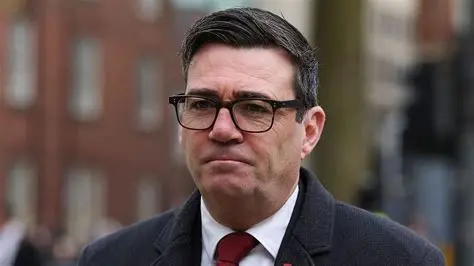
Andy Burnham became Britain’s new prime minister on Monday, taking over from Keir Starmer after his resignation.
The new Labour leader now faces major challenges including a weak economy, rising public debt and growing support for Reform UK.
Burnham will deliver his first speech outside 10 Downing Street after Starmer formally resigns to King Charles III at Buckingham Palace.
He is expected to outline plans to restore public confidence, improve economic growth and address the cost-of-living crisis.
Burnham replaces Starmer after months of political pressure.
Starmer resigned as Labour leader and prime minister following criticism over policy changes, scandals and falling public support.
He became prime minister in 2024 after Labour ended 14 years of Conservative rule with a landslide election victory.
However, his government struggled to maintain public confidence.
Burnham returns to national politics after serving as mayor of Greater Manchester.
He previously represented a parliamentary seat between 2001 and 2017 also serving as a minister under former Labour prime ministers Tony Blair and Gordon Brown.
His regional leadership style earned him the nickname “King of the North”.
Labour MPs believe his experience outside Westminster can help reconnect the party with voters.
Deputy Labour leader Lucy Powell said Burnham understands the need for “bigger, bolder measures” to deliver Labour’s promises.
Burnham inherits a difficult economic situation.
The new prime minister must deal with slow growth, high borrowing costs and rising welfare spending.
He also faces pressure over irregular migration and small boat crossings in the English Channel.
Unstable energy prices could create further challenges for households and businesses.
Burnham has promised to reform Britain’s political system.
He wants to reduce central government control and give more powers to regional communities.
Burnham announced his first major policy decision before taking office cancelling Starmer’s proposed nationwide digital identity scheme.
The project was expected to cost about £1.8bn over three years.
A Burnham spokesperson said the funds would support areas such as reducing the cost-of-living burden.
Burnham’s leadership comes as Reform UK gains support among some voters.
Labour hopes his working-class background and regional experience will help the party challenge Nigel Farage’s party.
Burnham has only three years to improve Labour’s position before the next general election, expected in 2029.
He recently described his leadership as Labour’s “last chance” to regain public trust.
One of Burnham’s first tasks will be appointing his cabinet.
Political observers are watching closely for the person who will replace Rachel Reeves as finance minister.
The new prime minister has promised action on Britain’s economic problems.
His early decisions will determine whether Labour can regain confidence and strengthen its position before the next election.