
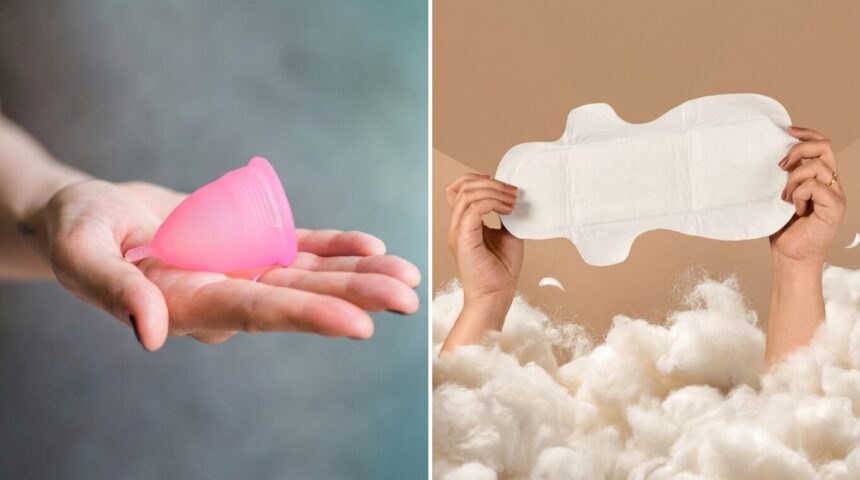
A debate over menstrual cups and sanitary pads has generated mixed reactions among Nigerian women, with about 60 per cent of respondents in an interview conducted by S24 Television expressing a preference for sanitary pads and calling on relevant authorities to make them more affordable and readily available.
The women cited comfort, ease of use, personal preference, hygiene concerns and fear of inserting or removing menstrual cups as some of their reasons for rejecting the reusable menstrual products.
The discussion highlights the challenges women face in choosing suitable menstrual hygiene products, particularly amid concerns about affordability, access to information and menstrual health education.
Women Express Concerns Over Menstrual Cups
Several respondents who spoke to S24 said they preferred sanitary pads because they considered them more comfortable, easier to change and simpler to dispose of after use.
One respondent said she had never used a menstrual cup but was convinced that sanitary pads would be a more comfortable option for her.
“I will always go for sanitary pads because they are comfortable and easy to dispose of compared with menstrual cups,” she said.
Another respondent, Maryam, also expressed her preference for sanitary pads, questioning whether menstrual cups would provide the same level of comfort.
“Sanitary pad, please. It is more comfortable and safe. I don’t really think there will be comfort when using a menstrual cup,” Maryam said.
Other respondents expressed concerns about inserting and removing menstrual cups, while some said they lacked sufficient information about how to use and maintain them properly.
Some also raised questions about whether menstrual cups were suitable for unmarried women and those who had never had sexual intercourse.
However, medical experts note that virginity is not a medical contraindication to menstrual cup use. The hymen varies naturally from person to person, and its appearance or condition cannot reliably establish whether someone has had sexual intercourse. Women should make informed choices based on their comfort, individual circumstances and professional medical advice.
Gynaecologist Highlights Possible Risks
In a telephone interview with S24, gynaecologist Dr Fatima Hassan outlined some potential challenges associated with menstrual cup use, particularly for first-time users.
She highlighted the learning curve involved in inserting and removing the cup, explaining that users may initially experience difficulty breaking the suction seal before removal.
Other challenges include possible spillage when emptying the cup, difficulties cleaning it in public restrooms and the need for proper washing and sterilisation according to the manufacturer’s instructions.
She also noted that choosing an unsuitable size or shape may cause discomfort or leakage in some users.
On potential health concerns, menstrual cups may cause vaginal irritation or allergic reactions in some individuals. Improper handling or cleaning can also increase the risk of infection. Although rare, toxic shock syndrome has been reported in menstrual cup users.
Women who use intrauterine devices (IUDs) should also seek professional advice on menstrual cup use because incorrect removal or suction may increase the risk of displacing the device.
However, menstrual cups are generally considered safe when used correctly. The risks highlighted do not mean that the products are inherently unsafe or unsuitable for all women.
Affordability Remains a Major Concern
Beyond concerns about comfort and hygiene, respondents called on relevant authorities to ensure that sanitary pads are available and affordable for women across Nigeria.
Some women said sanitary pads made them feel more comfortable and secure during menstruation, adding that they preferred a product they could easily change and dispose of.
One respondent argued that menstrual discomfort, rashes and unpleasant odour associated with pad use could sometimes be linked to infrequent changes or poor menstrual hygiene.
Health professionals advise changing sanitary pads regularly, maintaining proper personal hygiene and following product instructions to reduce irritation and other complications.
While menstrual cups can be more economical over time because they are reusable, their initial cost may be a barrier for some users. Sanitary pads, meanwhile, require repeated purchases, making consistent affordability and availability important for menstrual health.
Menstrual Cups or Sanitary Pads?
Menstrual cups are reusable devices that collect menstrual blood and can offer long-term cost savings and convenience when used and maintained properly. Depending on the product and individual circumstances, they may be worn for several hours before emptying, as directed by the manufacturer.
Sanitary pads are worn externally, are generally straightforward to use and do not require insertion. However, they must be changed regularly, and some users may experience irritation or discomfort.
Neither option is universally suitable for every woman. The choice depends on personal preference, comfort, access, cost, health considerations and the user’s ability to maintain proper hygiene.
The reactions gathered by S24 reflect the views of the women interviewed and should not be interpreted as a nationally representative survey unless the sample size and methodology establish that.
As the debate continues, respondents have called for greater access to menstrual health education and affordable sanitary products, stressing that women should be able to make informed decisions about their menstrual hygiene without financial pressure or stigma.