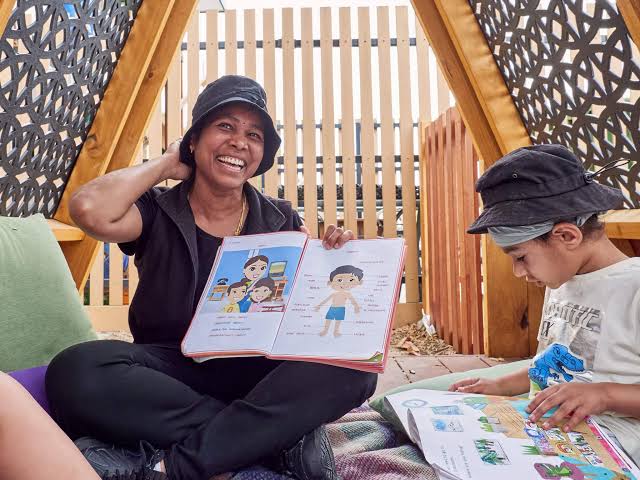
We’ve heard the word “storytelling” many times but have you ever wondered why you still remember the stories your grandparents told you as a child?
Long before schools, textbooks, and smartphones, stories were Africa’s first classrooms, around village squares and evening fires, elders taught children about honesty, courage, leadership, respect, and survival not through lectures, but through memorable tales.
That tradition still holds remarkable value today.
In many classrooms, students struggle to connect with lessons because they often feel distant from their daily experiences, african storytelling changes that. It brings learning closer to home by using familiar characters, local settings, and cultural experiences to explain important ideas. A lesson becomes more meaningful when students can relate it to stories they already understand.
Storytelling also encourages active participation. Instead of simply memorising facts, learners imagine, ask questions, discuss different perspectives, and think critically about the choices made by characters. This process strengthens comprehension while making learning enjoyable.
Storytelling and Education
Beyond improving academic performance, storytelling helps children develop essential life skills. As they listen and retell stories, they build vocabulary, improve communication, strengthen their confidence, and learn how to organise their thoughts. These skills benefit them far beyond the classroom.
Perhaps even more importantly, African storytelling preserves culture in a rapidly changing world. As technology continues to shape how young people consume information, many indigenous languages, traditions, and folktales risk being forgotten. Bringing these stories into schools helps preserve cultural heritage while teaching children to appreciate their identity and history.
Storytelling can also transform how different subjects are taught. A folktale can introduce environmental conservation, a market story can explain mathematics, and historical legends can make civic education and history more engaging. When lessons reflect students’ own communities, learning becomes more practical and memorable.
Education is not only about passing examinations; it is about preparing young people to understand the world and their place in it. African storytelling reminds us that knowledge does not exist only in books. Sometimes, the most powerful lesson begins with a simple story shared across generations.